



கம்பராமாயணம் 1686 · அயோத்தியா 4.4
பாடல் · The poem
Tap a word to see its gloss in the commentary and where else it occurs.
பொருள் · Meaning in Tamil
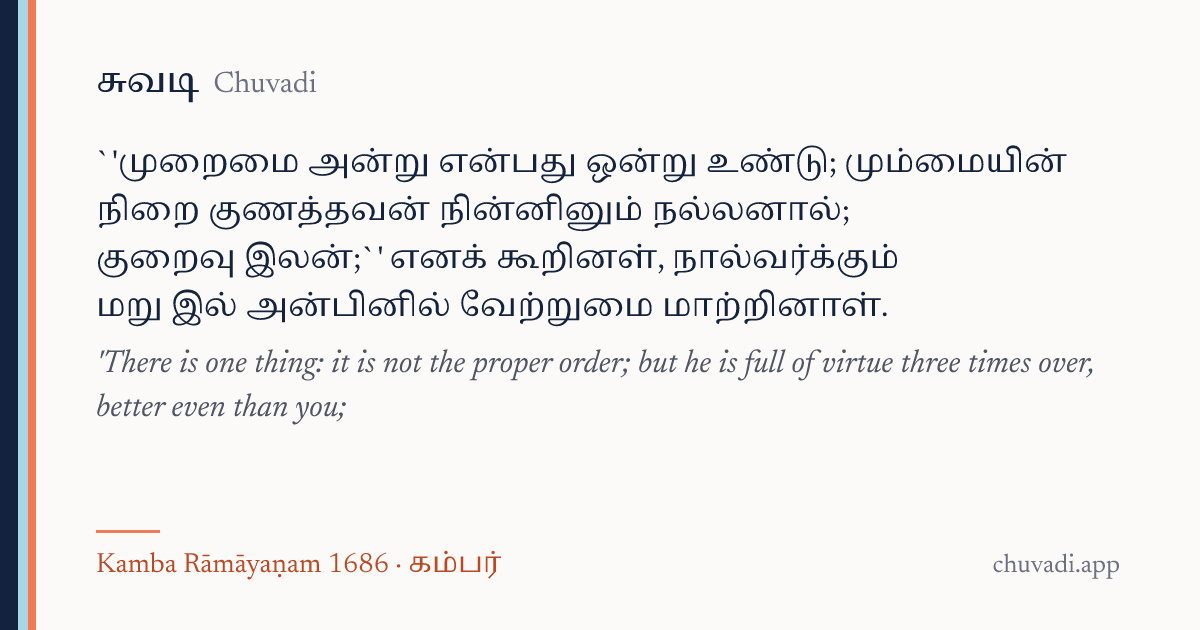
நால்வர்க்கும் - இராமலக்குமண பரத சத்துருக்கனர்களாகிய நால்வரிடத்தும்; மறு இல் அன்பினில் - குற்றம் அற்ற அன்பு செலுத்துவதில்; வேற்றுமை மாற்றினாள் - வேறுபாட்டை நீக்கி ஒரே தன்மையளாய் உள்ள கோசலை; “முறைமை அன்று என்பது ஒன்று உண்டு - மூத்தவன் இருக்கும் போது இளையவன் அரசாளுவது முறைமை அன்று என்ற ஒரு குறை உண்டு; மும்மையின் நிறை குணத்தவன் - மூன்று மடங்கு எல்லாரினும் மேம்பட்டு நிறைந்த குணத்தினை உடையவன்; நின்னினும் நல்லன் - உன்னையும்விட நல்லவன்; குறைவு இலன் - கல்வி, இளமை, வீரம், குணம் முதலிய யாவற்றாலும் யாதொரு குறைவும் இல்லாதவன்;” எனக் கூறினாள் - என்று சொன்னாள்.
கைகேயியின் அன்பு பெரிதும் இராமனுக்கும், கோசலையின் அன்பு பெரிதும் பரதனுக்கும் அமைந்துள்ளதை இக்காவிய ஓட்டத்தில் காணலாகும். ‘நின்னினும் நல்லன்’ என்பதைப் பின் வரும் ‘எண்ணில் கோடி இராமர்கள் என்னினும், அண்ணல் நின் அருளுக்கு அருகாவரோ’ என்ற (10181) கோசலைக் கூற்றை ஒப்பு நோக்கி உணர்க.
ஆங்கிலம் · English translationAI
Translation
- 'There is one thing: it is not the proper order; but he is full
- of virtue three times over, better even than you;
- he lacks nothing,' she said, she who had done away with any difference
- in her flawless love for all four sons.
What the poem says
Kōcalai, who loves all four princes without distinction, has only one reservation: it is not the customary order for a younger brother to be crowned while the elder lives.
Otherwise she has no objection at all, because Paratan is supremely virtuous, even better than Irāmaṉ, and lacks nothing. The commentary notes that across the epic Kaikēyi has been especially devoted to Irāmaṉ, and Kōcalai to Paratan, and points to a later verse where Kōcalai tells Paratan that countless Irāmaṉs could not equal his goodness.