



கம்பராமாயணம் 1687 · அயோத்தியா 4.5
பாடல் · The poem
Tap a word to see its gloss in the commentary and where else it occurs.
பொருள் · Meaning in Tamil
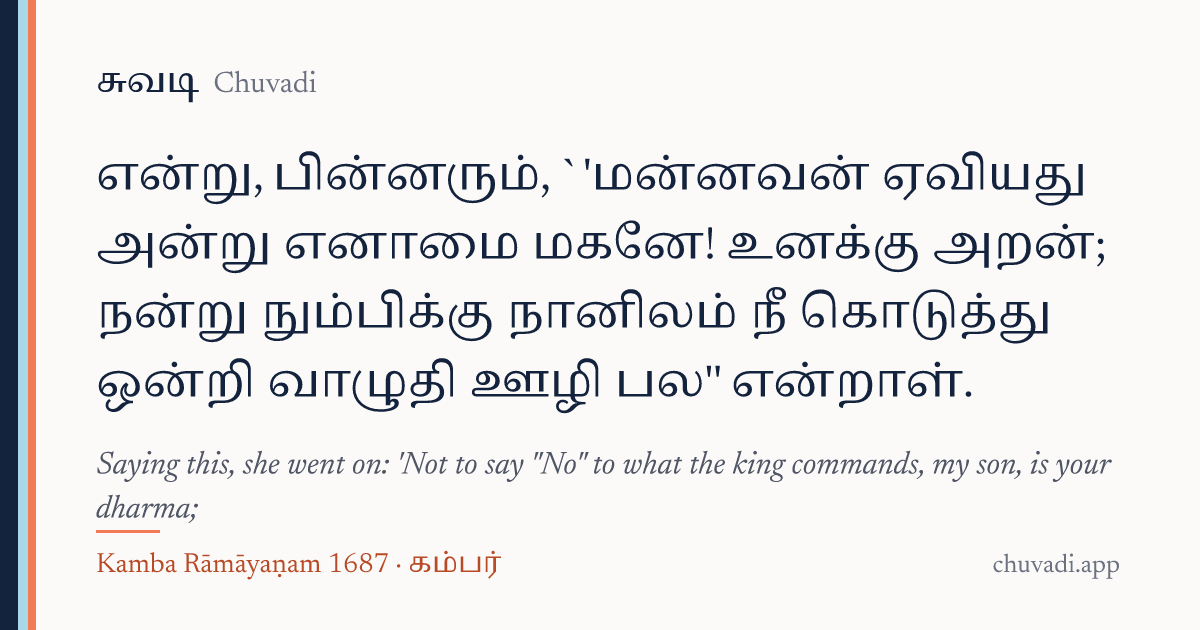
என்று - என்று கூறி; பின்னரும் - பிறகும்; “மகனே - இராமனே; மன்னவன் ஏவியது - சக்கரவர்த்தி ஆணையிட்டது எதுவாயினும்; அன்று எனாமை - நீதியன்று என்று மறுக்காமல் அப்படியே ஏற்றுச் செய்வது; உனக்கு அறன் - உனக்குரிய தருமம் ஆகும்; நன்று - நல்லது; நீ -; நும்பிக்கு - உன் தம்பியாகிய பரதனுக்கு; நானிலம் கொடுத்து - இவ்வுலகை ஆளும் உரிமையைத் தந்து; (அவனுடன்) ஊழி பல - பல நெடுங்காலங்கள்; ஒன்றி வாழுதி - ஒன்றுபட்டு வாழ்வாயாக,” என்றாள்.
தந்தை சொல்லை மகன் மறுக்கவும் கூடுதல் உலகியல், ஆயினும் அரசன் ஆணை மீறமுடியாதது. ஆகையால் அதுபற்றித் ‘தந்தை ஏவியது’ என்று கூறாமல், ‘மன்னவன் ஏவியது’ என்று கோசலை கூறினாள் என்க. ‘ஏவினன் அரசன்’ (1601) என முன்னும் வந்தது. ‘மூத்தவனுக்கு அரசு உரியது’ என்ற கருத்தில் உள்ளவள் கோசலை ஆதலின், ‘நும்பிக்கு நானிலம் நீ கொடுத்து’ என்று கூறினாள். ‘ஆல்’ உரையசை.
ஆங்கிலம் · English translationAI
Translation
- Saying this, she went on: 'Not to say "No" to what the king
- commands, my son, is your dharma;
- it is good; give the land to your brother,
- and live in harmony with him for many ages.'
What the poem says
Kōcalai tells Irāmaṉ that it is his duty never to refuse what the king commands. She deliberately says 'the king' rather than 'your father', since a son might in some cases decline a father's wish, but a royal order cannot be disobeyed.
Because she still regards the kingdom as rightfully Irāmaṉ's as the elder son, she speaks of him 'giving' the land to his brother, and blesses the two to live together in harmony for ages. She does not yet know the second boon.