



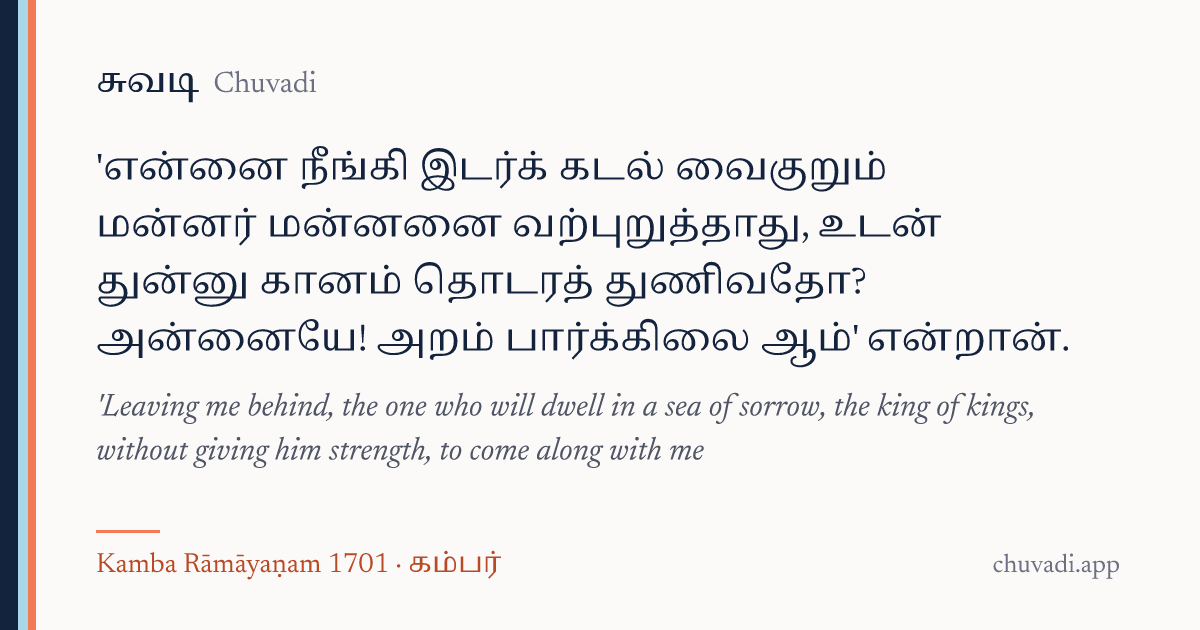
கம்பராமாயணம் 1701 · அயோத்தியா 4.19
பாடல் · The poem
Tap a word to see its gloss in the commentary and where else it occurs.
பொருள் · Meaning in Tamil
“அன்னையே! - தாயே; என்னை நீங்கி - என்னைப் பிரிந்து; இடர்க்கடல் வைகுறும் - துன்பக்கடலில் தங்கியுள்ள; மன்னர் மன்னனை - சக்கரவர்த்தியை; வற்புறுத்தாது - மன உறுதி செய்து தைரியப்படுத்தாமல்; உடன் - என்னோடு; துன்னு கானம் - நெருங்கிய காட்டிற்கு; தொடர - பின்பற்றிவர; துணிவதோ? - மனத்தில் நிச்சயிப்பது தகுமோ; அறம் பார்க்கிலை ஆம்! - மனைவிக்குள்ள தருமத்தை ஆராய்ந்து கருதவில்லை போலும், ' என்றான் -.
மனைவியின் தர்மம் கணவனைக் காத்தல். 'தற்காத்துத் தற் கொண்டான் பேணித் தகைசான்ற, சொற்காத்துச் சோர்விலாள் பெண்' என்றார் வள்ளுவரும். (குறள். 56)
இந்தப் பத்தினிதர்மத்ததை இராமன் தன் தாய்க்கு நினைவு படுத்தினான்.
ஆங்கிலம் · English translationAI
Translation
- 'Leaving me behind, the one who will dwell in a sea of sorrow,
- the king of kings, without giving him strength, to come along with me
- into the dense forest, are you resolved on that?
- Mother, you are not weighing what dharma asks,' he said.
What the poem says
Kōcalai, Irāmaṉ's mother, has said she will follow her son into the forest. Irāmaṉ gently refuses: the king, Tacarataṉ, is about to be left drowning in grief, and it is her duty as his wife to stay and hold him up.
The commentary recalls the Kuṟaḷ's description of a good wife as one who guards herself and cares for her husband; Irāmaṉ is reminding his mother of that wifely duty.