



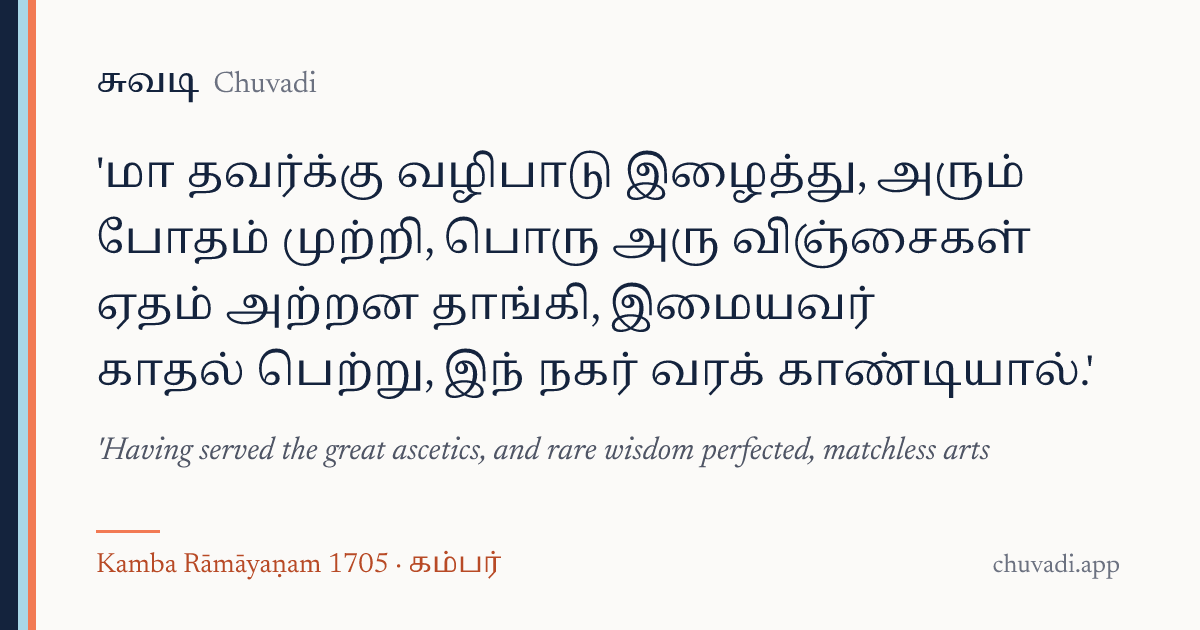
கம்பராமாயணம் 1705 · அயோத்தியா 4.23
பாடல் · The poem
Tap a word to see its gloss in the commentary and where else it occurs.
பொருள் · Meaning in Tamil
“மாதவர்க்கு வழிபாடு இயற்றி - சிறந்த முனிவர்களுக்குப் பணி விடைகளைச் செய்து; அரும் போதம் முற்றி - (அவரால்) பெறுதற்கு அரிய ஞானம் நிரம்பப் பெற்று; பொருஅரு விஞ்சைகள் - ஒப்பற்ற வித்தைகள்; ஏதம் அற்றன - குற்றம் இல்லாதனவற்றை; தாங்கி - பெற்று; இமையவர் காதல் பெற்று - தேவர்களின் அன்பை அடைந்து; இந்நகர் வரக் காண்டி- (யான் இந்நகரத்துக்குத் திரும்பி வருதலைப் பார்ப்பாயாக.
போதம் என்பது வீடுபேற்றிற்குரியதாகிய பரமஞானம். பின்னர் அகத்தியர் முதலிய முனிவர்களால் இவ் அரும் போதம் இராமனுக்குக் கிடைக்கிறது. இராவணாதி வதத்தால் தேவர்களின் அன்பையும் இராமன் பெறுகிறான் என்பது இங்கே குறிப்பிற் புலப்படும். ஆல் ஈற்றசை. தேற்றம் என்பதும் பொருந்தும்.
ஆங்கிலம் · English translationAI
Translation
- 'Having served the great ascetics, and rare
- wisdom perfected, matchless arts
- free of all flaw having gained, and of the gods
- the love having won, you shall see me come back to this city.'
What the poem says
Irāmaṉ promises Kōcalai that his exile will make him greater: he will serve the sages, attain the highest spiritual knowledge, gain flawless powers, earn the love of the gods, and return to Ayōttī.
The commentary points out that this foreshadows the story: sages such as Akattiyar will later give him wisdom and weapons, and by killing Irāvaṇaṉ and his kind he will indeed win the gods' affection.