



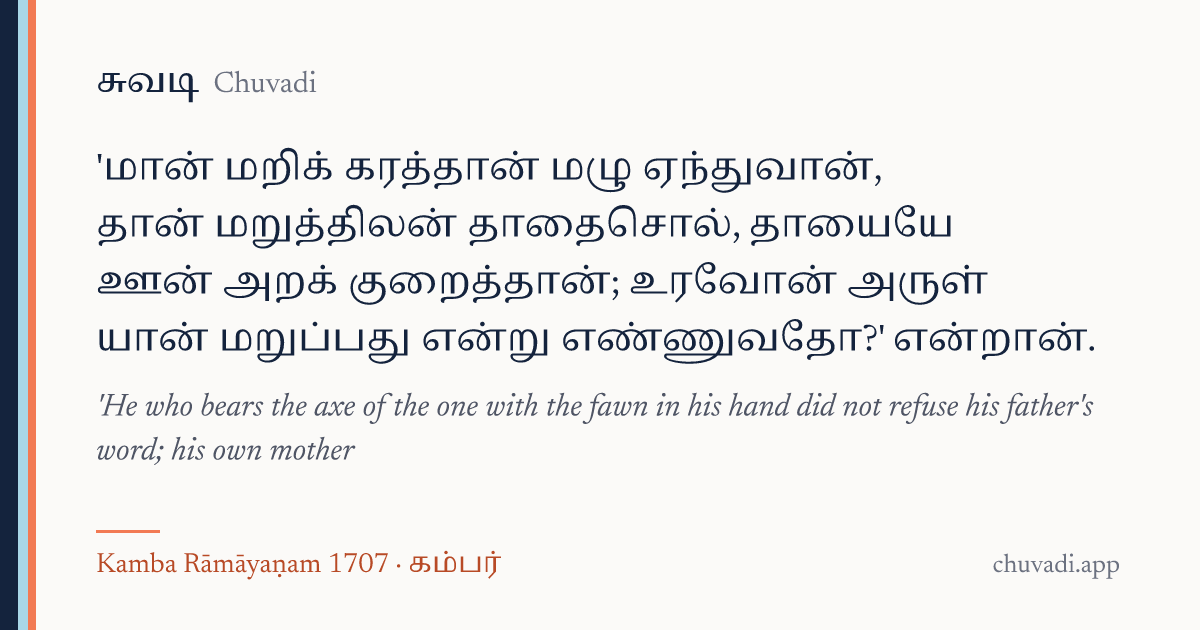
கம்பராமாயணம் 1707 · அயோத்தியா 4.25
பாடல் · The poem
Tap a word to see its gloss in the commentary and where else it occurs.
பொருள் · Meaning in Tamil
“மான் மறிக் கரத்தான் - மான் குட்டியைக் கையிலே ஏந்திய சிவ பெருமானுடைய மழு - கோடரிப் படையை; ஏந்துவான் தான் - சுமந்துள்ள பரசுராமன் ஆனவன்; தாதை சொல் மறுத்திலன் - தந்தையாகிய சமதக்கினியின் ஆணையை மறுக்கவில்லை; தாயையே ஊன் அறக் குறைத்தான்- தன் தாயாகிய இரேணுகையைத் தந்தை கட்டளைப்படி உடம்புதுண்டாகும்படி வெட்டினான்; (அவ்வாறே) உரவோன் - தசரதனது; அருள் - ஆணையை; யான் மறுப்பது என்று எண்ணுவதோ? - நான் மறுப்பதாக நினைத்தலும் தகுமோ: ' என்றான்.
தாயையே வெட்டும்படி கூறிய தந்தையின் ஆணையை மீறாது அப்படியே மைந்தன் பரசுராமன் நிறைவேற்றினானாக, அவ்வளவு கொடிய ஆணை இடாது என் நலன் குறித்த ஆணையை இட்டுள்ள என் தந்தையை நான் மீறி நடத்தல் தகுதியோ' என்றான் இராமன். 'ஊன்' என்பது தசை. அது 'ஊன்உளதுணை இங்கே ஆகுபெயராய் உடலை உணர்த்திற்று. குகப்படலத்து 'ஊன் உளதுணை நாயேன் உயிர் உள'என்ற இடத்தும் இவ்வாறே 'உடல்' எனப் பொருள்படுதல் காண்க. (1981.) “ஊனில் வாழ் உயிரே” என்ற திருவாய்மொழி (திவ்ய. 3031) யிலும் 'ஊன்' உடம்பு என்னும் பொருளில் வருதல் காண்க. இவ் வரலாற்றைப் பரசுராமப் படலம் கொண்டு அறிக. கும்பகருணன் வதைப் படலத்துள் (7415.) அறத்தினை நோக்கி, ஈன்ற, தாய்வினை செய்ய அன்றோ கொன்றனன் தவத்தின் மிக்கான்' என்று பின்னும் இவ்வரலாறு பேசப்படுகிறது.
ஆங்கிலம் · English translationAI
Translation
- 'He who bears the axe of the one with the fawn in his hand
- did not refuse his father's word; his own mother
- he cut down till the flesh was gone; the command of my mighty father,
- shall I think of refusing it?' he said.
What the poem says
Irāmaṉ gives a second example: Paracurāmaṉ, who carries the axe given by Civaṉ (the god who holds a young deer), obeyed his father Jamadagni even when told to kill his own mother Reṇukā.
If Paracurāmaṉ carried out so terrible an order, how could Irāmaṉ refuse his own father's command, which is far milder? The commentary explains that ūṉ, flesh, here stands for the body.