



கம்பராமாயணம் 1712 · அயோத்தியா 4.30
பாடல் · The poem
Tap a word to see its gloss in the commentary and where else it occurs.
பாட வேறுபாடு · Project Madurai reads
பொருள் · Meaning in Tamil
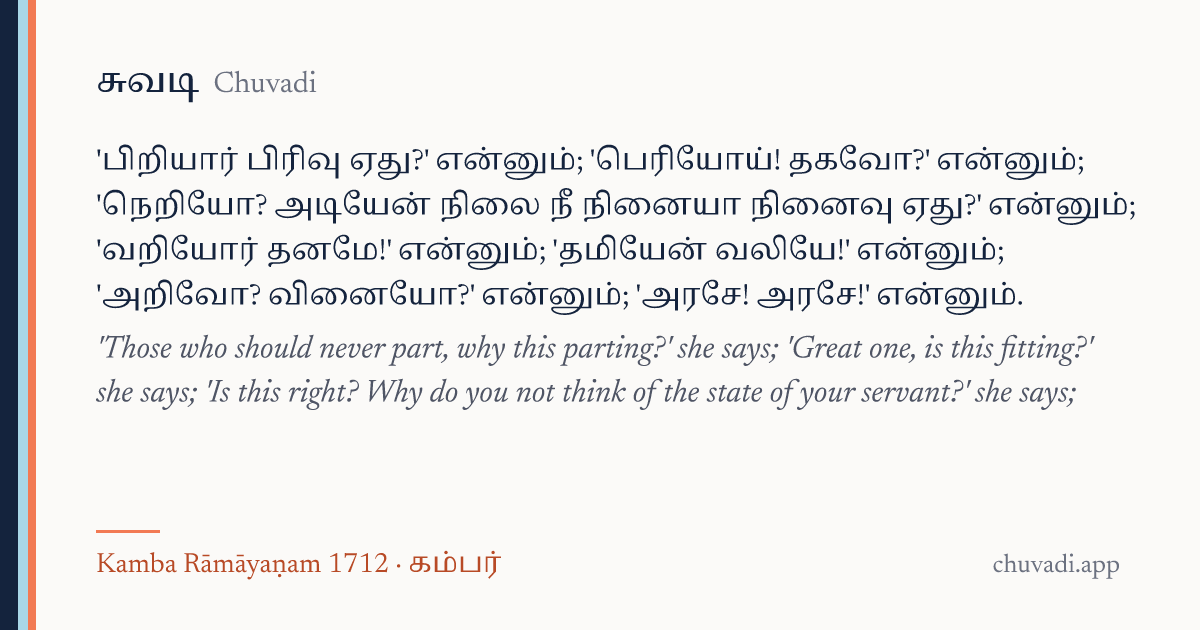
(கோசலை தயரதன் நிலை கண்டு) “பிறியார் பிரிவு ஏது?” என்னும் - பிரியக்கூடாதவர்களுடைய பிரிவுக்குக் காரணம் என்ன என்பாள்; பெரியோய்! தகவோ” என்னும் - பெருமை உடையவனே! இது உனக்குத் தகுதியோ என்பாள்; நெறியோ, “அடியேன்நிலை - அடியோங்களாகிய எங்கள் தற்போதைய நிலை நீதியாகுமா?; நீ நினையா நினைவுஏது” என்னும் - இந்த நிலையை நீ நினையாமல் இருப்பது என்ன காரணம் என்பாள்; “வறியோர் தனமே!” என்னும் - வறுமையுற்றவர்களுக்குச் செல்வமானவனே என்பாள்; “தமியேன் வலியே!” என்னும் - தனியளான எனக்கு வலிமையான துணையே என்பாள்; “அறிவோ, வினையோ?: என்னும் - இது உனக்கு அறிவு தானோ, அறிந்து செய்யாது ஊழ்வினையால் ஏற்பட்டதோ என்பாள்; “அரசே! அரசே!” என்னும் - மன்னனே மன்னனே என்று புலம்புவாள்.
'பிரியார்' என்பது எதுகை நோக்கி 'பிறியார்' என வல்லினமாயிற்று என்றும் பிரியாதவர்களாகிய நாம் இன்று பிரிய நேருமோ என்று கூறிக் கோசலை அஞ்சினாள் ஆயிற்று. “அறிவு ஒலினையோ” என்ற ஆக்கி, அறிவு நீங்கினையோ என்று பொருள் உரைப்பதும் உண்டு, செய்யுளின் போக்கிற்குத் தனித்தனி அறிவோ, வினையோ' என உரைப்பதே சிறப்பாகும்.
ஆங்கிலம் · English translationAI
Translation
- 'Those who should never part, why this parting?' she says; 'Great one, is this fitting?' she says;
- 'Is this right? Why do you not think of the state of your servant?' she says;
- 'Wealth of the poor!' she says; 'Strength of me, who am alone!' she says;
- 'Is it your mind? Is it fate?' she says; 'O king! O king!' she says.
What the poem says
Kōcalai laments over the stricken Tacarataṉ in a string of short cries. She asks why those who should never be parted must now be separated, whether this befits him, and why he does not think of her plight. She calls him the wealth of the poor and her only support.
'Is it your mind, or fate?' asks whether he did this knowingly or whether old karma brought it about. The commentary notes that piṟiyār is written with the hard consonant to keep the rhyme.