



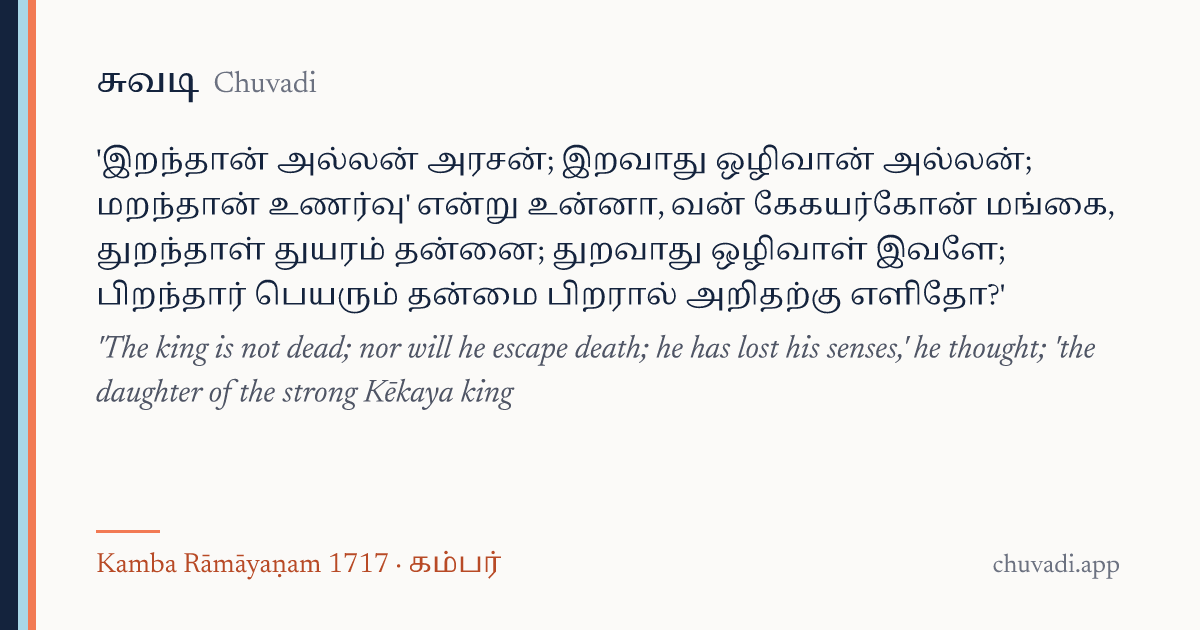
கம்பராமாயணம் 1717 · அயோத்தியா 4.35
பாடல் · The poem
Tap a word to see its gloss in the commentary and where else it occurs.
பொருள் · Meaning in Tamil
“அரசன் இறந்தான் அல்லன் - தசரத மன்னன் உண்மையில் இறப்பு அடையவில்லை; இறவாது ஒழிவான் அல்லன் - இனிச் சாவாமல் இருப்பவனும் இல்லை; உணர்வு மறந்தான்” - நினைவு இழந்து மூர்ச்சித்தான்; என்று உன்னா- என்று தன் மனத்தில் கருதி; “வன் கேகயர் கோன் மங்கை துயரம் தன்னைத் துறந்தாள் - வலிய கேகய நாட்டு அரசன் மகளாகிய கைகேயியோ துன்பம் இல்லாமல் இருக்கிறாள்; இவளே துறவாது ஒழிவாள் - இக்கோசலையோ துன்பத்தால் விடாமல் அழுகிறாள்; பிறந்தார் பெயரும் தன்மை - உலகத்துப் பிறந்தவர்கள் நிலை வேறுபடுகின்ற இயல்பு; பிறரால் அறிதற்கு எளிதோ?- மற்றொருவரால் அறியக் கூடியதோ (இல்லை என்றபடி).
கைகேயி துன்பமற்றிருப்பதால் அவள் மனம் மாறியபடி கண்டு வசிட்டன் இவ்வாறு கூறினான் என்க. அரசன் பிரக்ஞை இழந்திருப்பதும், இனி நிச்சயம் இறந்து படுவான் என்பதும் உணர்ந்த வசிட்டன், அவ்விடத்தே கைகேயி துக்கமின்றி இருப்பதும், கோசலை வருந்திப் புலம்புவதும் கண்டு கைகேயி இந்நிலைக்குக் காரணமாயிருத்தல் வேண்டும் என உய்த்துணர்ந்து உலகிற் பிறந்தார் மனம் வேறுபடல் யாராலும் அறியமுடியாது. நேற்றுவரை மன்னன்பால் பெருங்காதலுடைய கைகேயி இன்று அவன் மூர்ச்சிக்கவும் வருந்தாதுள்ளபடியால் யாருடைய மனம் எப்போது எப்படி மாறுபடும் என்பதை அறிய இயலாது என்று கருதி மேலும் கைகேயியை வினாவச் செல்கிறான் என்று அடுத்த செய்யுளில் தொடரும். அறுபதினாயிரம் ஆண்டுகளுக்கு மேலாக ஆட்சி நடத்திய மன்னவன் இறந்துபடும் நிலை கிட்டியது கண்டு “பிறந்தார் பெயரும் தன்மை பிறரால் அறிதற்கெளிதோ' என்றான் எனலும் ஆம். இங்கே பிறந்தார் பெயர்தல் என்பது பிறந்தவர் இறத்தலாம்.
ஆங்கிலம் · English translationAI
Translation
- 'The king is not dead; nor will he escape death;
- he has lost his senses,' he thought; 'the daughter of the strong Kēkaya king
- has put away sorrow; this one cannot put it away;
- the way the born change, is it easy for others to know?'
What the poem says
Vacittaṉ reads the scene. The king is not dead but has fainted, and will not survive long. Kaikēyi shows no grief, while Kōcalai cannot stop weeping.
From this he guesses that Kaikēyi must be the cause, and reflects that no one can know how the hearts of mortals may change: yesterday she loved the king dearly, today she does not grieve when he collapses. The last line can also be read as 'how the born pass away', thinking of a king who ruled for sixty thousand years now near death.