



கம்பராமாயணம் 1718 · அயோத்தியா 4.36
பாடல் · The poem
Tap a word to see its gloss in the commentary and where else it occurs.
பாட வேறுபாடு · Project Madurai reads
பொருள் · Meaning in Tamil
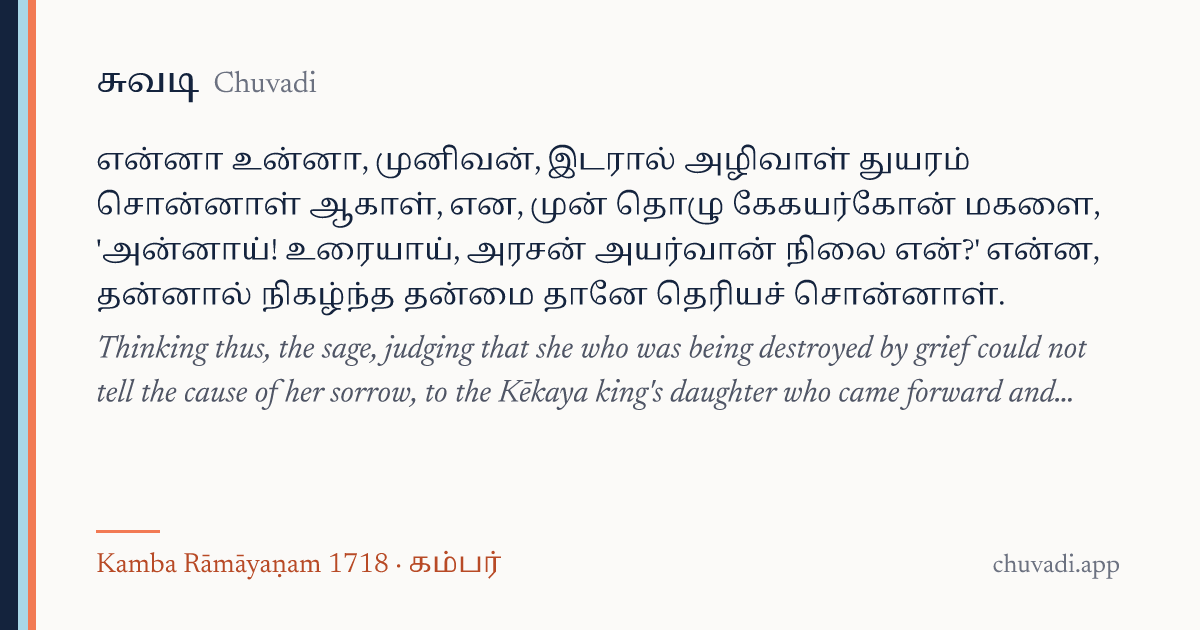
முனிவன் என்னா உன்னா - வசிட்டன் இவ்வாறு கருதி; “இடரால் அழிவாள் துயரம் சொன்னாள் ஆகாள்' என - துன்பத்தால் வருந்துபவளாகிய கோசலை துயர்க்குரிய காரணத்தைச் சொல்லுதற்கு இயலாள் எனக் கருதி; முன் தொழு கேகயர் கோன் மகளை - தன்னை முன்வந்து வணங்குகின்ற கைகேயியை; “அன்னாய்! - தாயே; அயர்வான் அரசன் நிலை என்? உரையாய்” என்ன - மூர்ச்சித்துச் சோர்ந்துள்ளவனாகிய சக்கரவர்த்தியின் நிலைக்குக் காரணம் என்ன, சொல்வாயாக என்று கேட்க; தன்னால் நிகழ்ந்த எல்லாம் தானே தெரியச் சொன்னாள் - (அவள் தன்னால் உண்டாகிய செயல்கள் எல்லாவற்றையும் தானே (முனிவனுக்கு) நன்கு விளங்கும்படி சொன்னாள்.
கோசலையால் சொல்ல இயலாது என்று கருதி, துயரற்றவளாக உள்ள கைகேயியை வினாவினான் வசிட்டன் என்க. அரசனது நிலைக்குக் காரணம் கைகேயியாக இருக்கலாம் என்னும் ஐயம் முனிவனுக்கு இருக்கலாம் அன்றி அவள்தான் என்னும் உறுதி முன் இல்லாமையால் அறிந்து வினாவினான் ஆகாமை அறிக.
ஆங்கிலம் · English translationAI
Translation
- Thinking thus, the sage, judging that she who was being destroyed by grief
- could not tell the cause of her sorrow, to the Kēkaya king's daughter who came forward and bowed
- said, 'Mother! Tell me, what is the state of the fainting king?' and
- what had come about through her she herself told plainly.
What the poem says
Vacittaṉ sees that Kōcalai is too overwhelmed to explain, so he turns to Kaikēyi, who comes forward and bows to him, and asks what has happened to the king.
Kaikēyi, without shame, tells him clearly everything she herself has done. The commentary notes that the sage only suspected her; he asked in order to learn the truth, not because he already knew.