



கம்பராமாயணம் 1725 · அயோத்தியா 4.43
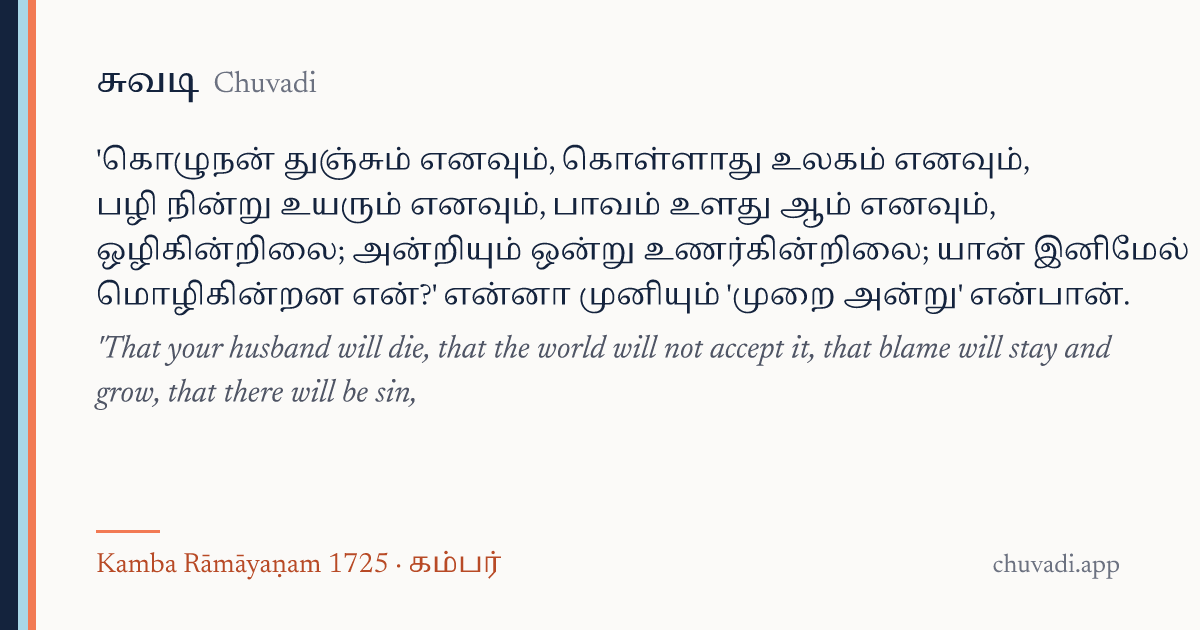
பாடல் · The poem
Tap a word to see its gloss in the commentary and where else it occurs.
பொருள் · Meaning in Tamil
முனியும் - வசிட்டனும் (கைகேயியை நோக்கி); “கொழுநன் துஞ்சும் எனவும் - கணவன் இறந்துபடுவான் என்றும், உலகம் கொள்ளாது எனவும் - உலகம் இக்கருத்தை ஏற்றுக்கொள்ளாது என்றும்; பழி நின்று உயரும் - (இம்மையில்) பழிச்சொல் நின்பால் தங்கி ஓங்கும் என்றும்; பாவம் உளது ஆம் எனவும் - (மறுமைக்கும்) பாவமும் இதனால் உண்டாகும் என்றும்; ஒழிகின்றிலை - (கருதி உன் கருத்தை) நீக்கிக்கொள்வாயல்லை; அன்றியும் ஒன்று உணர்கின்றிலை - அதன் மேலும் நான் சொல்லுகிற ஒன்றையும் உணர்வாய் அல்லை; யான் இனிமேல் மொழிகின்றன என்?” - நான் இனிமேல் உனக்குச் சொல்கின்ற வார்த்தைகளால் என்ன பயன்; ' என்னா - என்று சொல்லி; “முறை அன்று” என்பான் - 'நீ செய்யும் செயல் நேர்மையானது அல்ல” என்பானானான்.
“ஏவவும் செய்கலான் தான் தேறான்' என்பது போல (குறள் 848.) உள்ளாள் கைகேயி என்பது முனிவன் கருத்து. இறுதியாக நீ செய்யும் செயல் தர்மத்துக்கும் நியாயத்துக்கும் ஒத்தது அன்று என்று கைகேயியை நோக்கிக் கடிந்துரைத்தான் வசிட்டன்.
ஆங்கிலம் · English translationAI
Translation
- 'That your husband will die, that the world will not accept it,
- that blame will stay and grow, that there will be sin,
- none of this makes you give it up; nor do you heed a single thing;
- what use is it for me to speak further?' And the sage said, 'This is not right.'
What the poem says
Vacittaṉ gives up on persuasion. He has warned Kaikēyi that her husband will die, that the world will condemn her, that blame will cling to her in this life and sin in the next, yet she neither yields nor listens.
The commentary compares her to the person the Kuṟaḷ describes, who will neither act on advice nor think for themselves. Finally the sage declares plainly that what she does is neither just nor right.