



கம்பராமாயணம் 1726 · அயோத்தியா 4.44
பாடல் · The poem
Tap a word to see its gloss in the commentary and where else it occurs.
பாட வேறுபாடு · Project Madurai reads
பொருள் · Meaning in Tamil
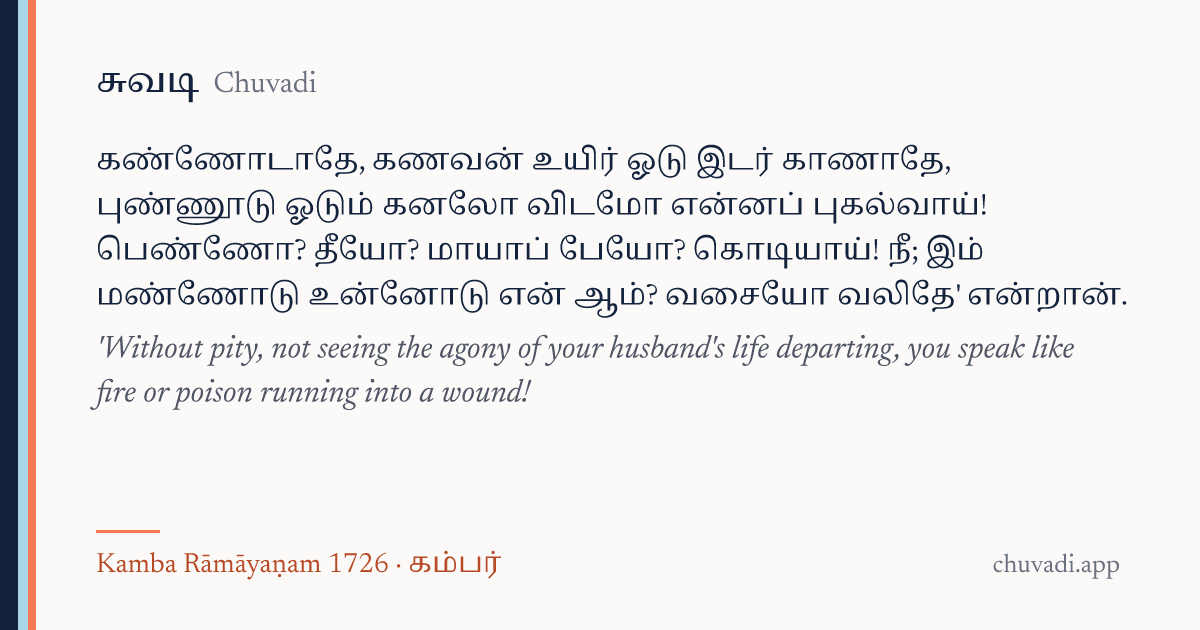
“கண்ணோடாதே - இரக்கம் இல்லாமல்; கணவன் - தயரதனது; உயிர் ஓடு இடர் காணாதே - உயிர் உடலைவிட்டுச் செல்லும் துன்பத்தையும் அறியாமல்; “புண்ணூடு ஓடும் கனலோ விடமோ?” என்னப் புகல்வாய்- புண்ணிற் புகும் நெருப்போ, விடமோ என்று கருதும்படி பேசுகிறாய்; பெண்ணோ? - அல்லது என்றும் அழியாத பேயோ; நீ கொடியாய்! - நீ கொடியவள்; இம்மண்ணோடு உன்னோடு என்னாம் - இந்த மண்ணோடு உனக்கு என்ன உறவு இருக்கிறது; வசையோ வலிது- உனக்கு வர இருக்கும் பழியோ மிக வலிது; என்றான்.
உலகோர் கருத்தும், ஆன்றோர் கருத்தும், கணவன் உயிரும் கருதாமல் செயலிழைக்கும் உனக்கு இந்த உலகத்தோடு என்ன உறவு இருக்ககிறது என்றான் வசிட்டன். 'வெந்த புண்ணில் வேல் செருகியது போல' என்னும் பழமொழியை ஒருபுடை கருதி, 'புண்ணூடு ஓடும் கனலோ விடமோ' என்பது வந்தது. 'வலிதே' “ஏ' காரம் தேற்றம்.
ஆங்கிலம் · English translationAI
Translation
- 'Without pity, not seeing the agony of your husband's life departing,
- you speak like fire or poison running into a wound!
- Are you a woman? Fire? An undying demon? Cruel one, you!
- What have you to do with this earth? The blame indeed is heavy,' he said.
What the poem says
Vacittaṉ turns on Kaikēyi in anger. Blind to her husband's dying agony, she speaks words like fire or poison poured into a wound, an image the commentary links to the proverb about thrusting a spear into a burnt wound.
He asks whether she is a woman at all, or fire, or a deathless demon, and what bond she can have with this world when she cares nothing for its opinion, the counsel of the wise, or her husband's life. The infamy awaiting her, he says, will be heavy.