



கம்பராமாயணம் 1727 · அயோத்தியா 4.45
பாடல் · The poem
Tap a word to see its gloss in the commentary and where else it occurs.
பாட வேறுபாடு · Project Madurai reads
பொருள் · Meaning in Tamil
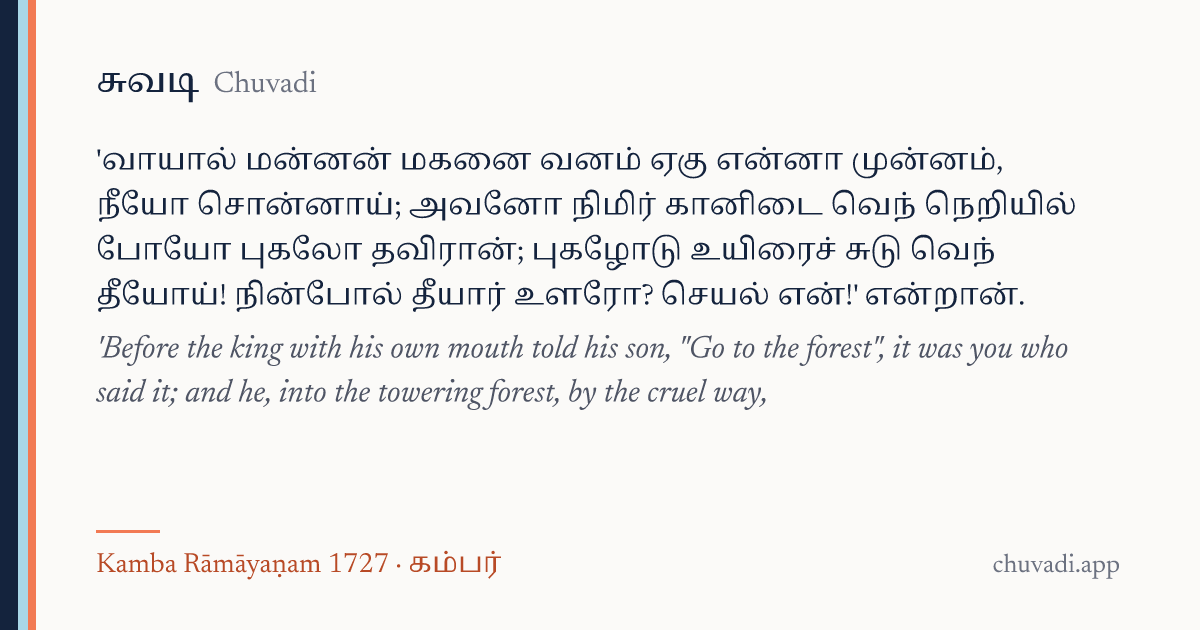
“புகழோடு உயிரைச் சுடு வெந்தீயோய்! - புகழையும் உயிரையும் எரிக்கும் கொடுநெருப்பானவளே; மன்னன் - தயரதன்; வாயால் - தன் வாயால்; மகனை - இராமனை; “வனம் ஏகு' - காட்டிற்குச் செல்; என்னா முன்னம் - என்று சொல்வதற்கு முன்னாலேயே; நீயோ சொன்னாய் - நீதான் சொன்னாய்; அவனோ - அந்த இராமனோ; நிமிர் கானிடை - உயர்ந்த காட்டில்; வெந் நெறியில் - கொடிய வழியில்; போயோ புகலோ தவிரான்- போவதையோ புகுவதையோ ஒழியான்; நின்போல் தீயார் உளரோ? - உன்னைப் போல் கொடியவர்கள் இருக்கிறார்களா?; செயல் என்?' - இதைக் காட்டிலும் கொடிய செயல் வேறு என்ன இருக்கிறது;' என்றான் -.
அரசன் கூறுவதற்கு முன் நீ கூறிவிட்டாய். ஆகையால், இதில் அரசன் சத்தியம் தவறுதல் எங்ஙனம்? என்று வினாவை எழுப்பி, “அரசன் மெய்யில் திரிவான் என்னின்' என்று கைகேயி முன்னர்க் கூறியதை (1647) மறுத்தான் வசிட்டன் என்க. அரசன் இறப்பது உறுதி, இனி வேறு செயல் என்ன இருக்கிறது என்றும் “செயல் என்'
ஆங்கிலம் · English translationAI
Translation
- 'Before the king with his own mouth told his son, "Go to the forest",
- it was you who said it; and he, into the towering forest, by the cruel way,
- will not hold back from going or entering it; O fierce fire that burns
- fame and life together! Are there any as evil as you? What is left to do?' he said.
What the poem says
Vacittaṉ points out that the king never told Irāmaṉ to go; Kaikēyi gave the order herself before Tacarataṉ could say a word. So her claim that the king would be breaking his truth makes no sense.
Irāmaṉ, once told, will not hold back from the forest. The sage calls her a fierce fire that burns away both the king's fame and his life, and asks whether anyone could be crueller, or what could now be done, since the king's death is certain.