



கம்பராமாயணம் 1728 · அயோத்தியா 4.46
பாடல் · The poem
Tap a word to see its gloss in the commentary and where else it occurs.
பொருள் · Meaning in Tamil
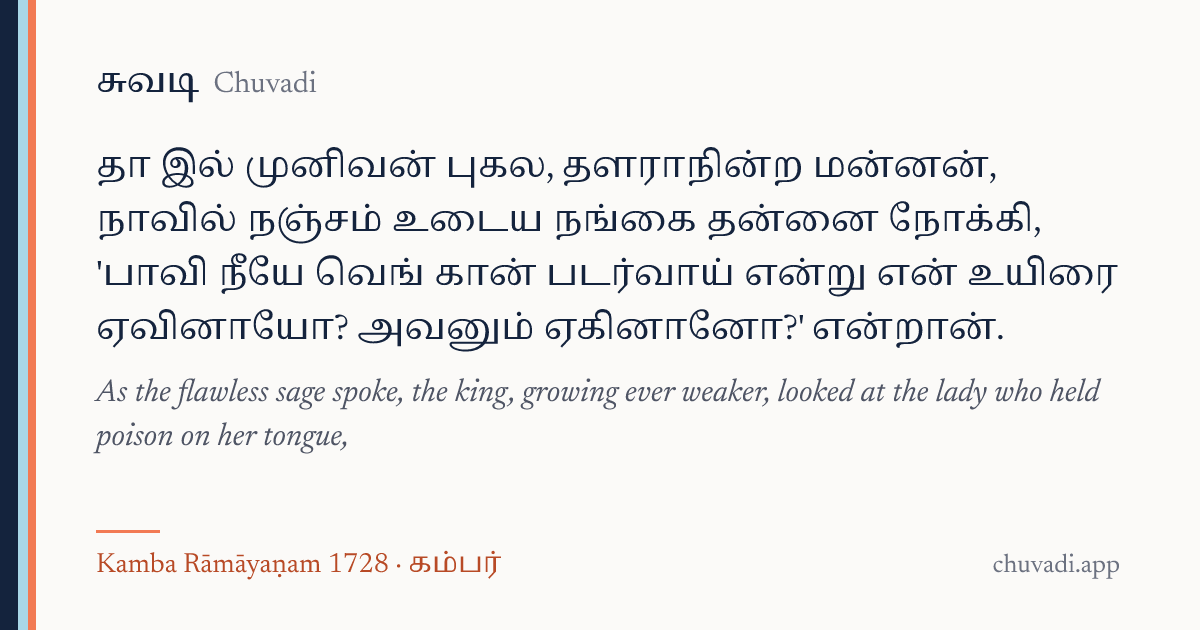
தா இல் முனிவன் புகல - குற்றமற்ற வசிட்டமுனிவன் இவ்வாறு சொல்ல; தளராநின்ற மன்னன் - வருத்தத்தால் தளர்கின்ற சக்கரவர்த்தி; நாவில் நஞ்சம் உடைய நங்கை தன்னை நோக்கி - நாக்கிலே விடம் உடைய பெண்ணாகிய கைகேயியைப் பார்த்து; “பாவி! நீ என் உயிரை வெங்கான் படர்வாய்' என்று- பாவியாகிய நீ என் உயிராகிய இராமனைக் கொடிய காட்டிற்குச் செல்க என்று; ஏவினாயோ! - கட்டளையிட்டாயோ; அவனும் ஏகினானோ?- அந்த இராமனும் காட்டிற்குச் சென்றுவிட்டானோ,' என்றான்.
"நாகம் எனும் கொடியாள்தன் நாவின் வந்த சோகவிடம்” என முன்னும் (/50.5.) வந்துள்ளதை நாவில் நஞ்சம் உடைய நங்கை' என்பதனுடன் ஒப்பிடுக. 'நீயே' “ஏ' காரம் பிரிநிலை. 'ஓ'காரம் வினாப் பொருட்டு.
ஆங்கிலம் · English translationAI
Translation
- As the flawless sage spoke, the king, growing ever weaker,
- looked at the lady who held poison on her tongue,
- 'Sinner! Did you yourself order my life to set off
- into the cruel forest? And has he gone?' he said.
What the poem says
Hearing Vacittaṉ, the failing king turns to Kaikēyi, whose tongue holds poison, and learns for the first time that she herself told Irāmaṉ to go.
He calls his son 'my life' and asks in horror whether she sent him and whether he has already gone. The commentary links 'poison on her tongue' to an earlier image of Kaikēyi as a serpent whose tongue released the venom of grief.