



கம்பராமாயணம் 1730 · அயோத்தியா 4.48
பாடல் · The poem
Tap a word to see its gloss in the commentary and where else it occurs.
பொருள் · Meaning in Tamil
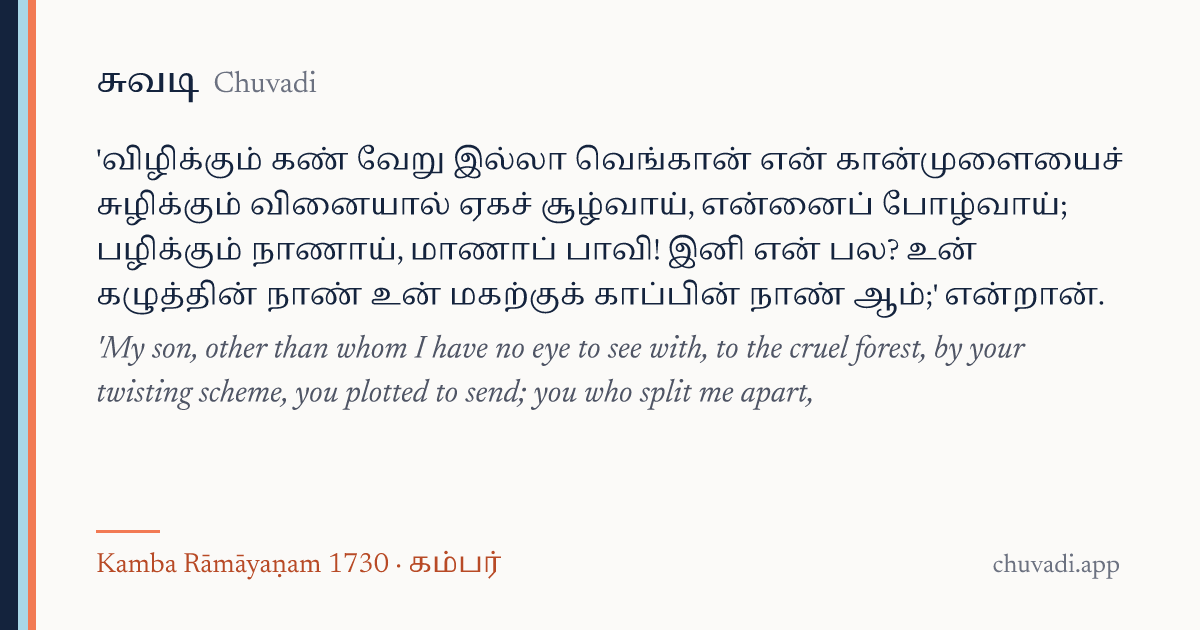
“விழிக்கும் கண் வேறு இல்லா என் கான்முளையை - விழித்துப் பார்க்கும் கண் இராமனையன்றி வேறாகப் பெற்றிராத என்னுடைய மகனாகிய இராமனை; வெங் கான் - கொடிய காட்டிற்கு; சுழிக்கும் வினையால் - சூழ்வினையால்; ஏக - போகும்படி; சூழ்வாய்! - தீய ஆலோசனை செய்தவளே; என்னைப் போழ்வாய் - என்னைப் பிளப்பவளே; பழிக்கும் நாணாய் - வருகின்ற பழிக்குச் சிறிதும் நாணமுறாதவளே; மாணாப் பாவி - மாட்சிமை இல்லாத பாவியே; இனி என் பல? - இனிப் பல பேசிப் பயன் என்ன; உன் கழுத்தின் நாண் - உன் கழுத்தில் நான் கட்டிய மங்கலக் கயிறு; உன் மகற்கு - உன் பிள்ளையாகிய பரதனுக்கு; காப்பின் நாண் ஆம்! - பட்டாபிஷேக காலத்தில் கையில் கட்டுகின்ற ரக்ஷாபந்தனமாகிய காப்புக் கயிறாக ஆகும்,' என்றான் -.
"என் மகன் என்கண் என்னுயிர்” என்று முன் சொல்லியது போல(/526) விழிக்கும் கண் இராமனையன்றி எனக்கு வேறில்லை என்றான் தயரதன். வரத்தை வலியுறுத்தலால் உன் கணவனாகிய யான் இறப்பேன்; அப்போது நீ அறுத்ததெறிகின்ற தாலிக்கயிறு உன் மகனுக்குக் காப்புக் கயிறு ஆக உதவும் என்று கூறினான்.
ஆங்கிலம் · English translationAI
Translation
- 'My son, other than whom I have no eye to see with, to the cruel forest,
- by your twisting scheme, you plotted to send; you who split me apart,
- who feel no shame at blame, worthless sinner! What more is there to say? The cord
- on your neck will be the protective cord for your son,' he said.
What the poem says
Tacarataṉ heaps reproaches on Kaikēyi: Irāmaṉ is the only eye he has, and she has schemed to send him into the cruel forest, splitting the king's heart, with no shame at the infamy.
His bitterest words come last. The marriage cord round her neck, which she will break as a widow when he dies, will serve as the protective thread tied on her son Paratan's wrist at his coronation.