



கம்பராமாயணம் 1733 · அயோத்தியா 4.51
பாடல் · The poem
Tap a word to see its gloss in the commentary and where else it occurs.
பொருள் · Meaning in Tamil
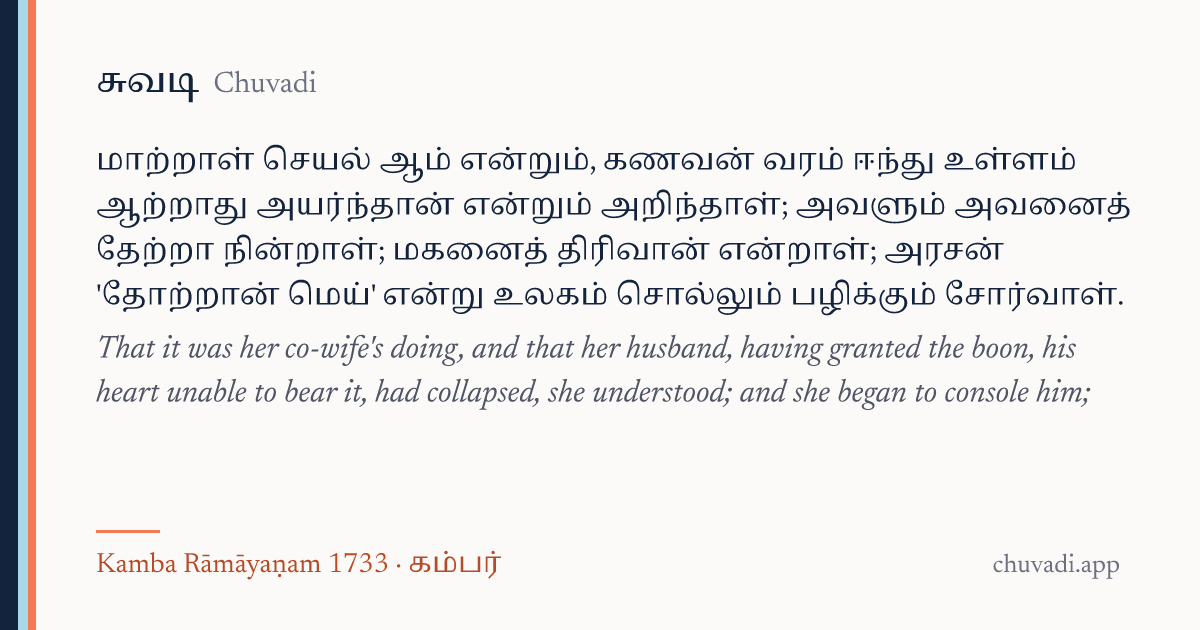
மாற்றாள் செயல் ஆம் என்றும்- (இது) மாற்றாளாகிய கைகேயியின் செயலாகும் என்றும், கணவன் வரம் ஈந்து உள்ளம் ஆற்றாது அயர்ந்தான் என்றும் - கணவனாய தயரதன் கைகேயிக்கு வரம் கொடுத்து அதனால் மனம் பொறுக்கமாட்டாமல் சோர்வடைந்தான் என்றும்; அறிந்தாள் - அறிந்துகொண்ட; அவளும் - கோசலையும்; அவனைத் தேற்றாநின்றாள் - தசரதனைத் தெளிவித்த வண்ணமிருந்தாள்; மகனைத் திரிவான் என்றாள் - தன் மகனாகிய இராமனைப் பற்றி அவன் காட்டகத்தே திரிவான் (வேறு வழி இல்லை எனத் தன்னுள் சொல்லிக் கொள்வாள்; “அரசன் மெய் தோற்றான்' என்று - தசரதன் சத்தியத்தில் தவறினான் என்று; உலகம் சொல்லும் பழிக்கும் சோர்வாள் - உலகத்தார் சொல்லும் பழிச்சொல் கருதியும் மனம் சோர்கின்றவளானாள்.
மகனைக் காட்டுக்குப் போக வரம் ஈந்து மன்னன் இறந்துபடும் நிலையில் வருந்துகிறான். மகனைக் காட்டுக்குச் செல்ல வேண்டாம் என்றாலோ மன்னன் சத்தியம் தவறினான் என்று உலகம் பழி சொல்லும்; என்கின்ற அறச் சங்கடத்தில் அகப்பட்டுத் தவிக்கிறாள் கோசலை என்றவாறாம்.
ஆங்கிலம் · English translationAI
Translation
- That it was her co-wife's doing, and that her husband, having granted the boon, his heart
- unable to bear it, had collapsed, she understood; and she began to console him;
- of her son she said, 'He will wander'; and at the blame the world would speak,
- 'The king has failed his truth,' she grew faint.
What the poem says
Kōcalai now grasps the whole story: Kaikēyi, her co-wife, is behind it, and the king collapsed because he could not bear the boon he had been made to grant.
She tries to comfort him, resigning herself to her son's wandering in the forest. She is caught in a moral bind: if Irāmaṉ goes, the king will die of grief; if he stays, the world will say the king broke his word.