



கம்பராமாயணம் 1735 · அயோத்தியா 4.53
பாடல் · The poem
Tap a word to see its gloss in the commentary and where else it occurs.
பாட வேறுபாடு · Project Madurai reads
பொருள் · Meaning in Tamil
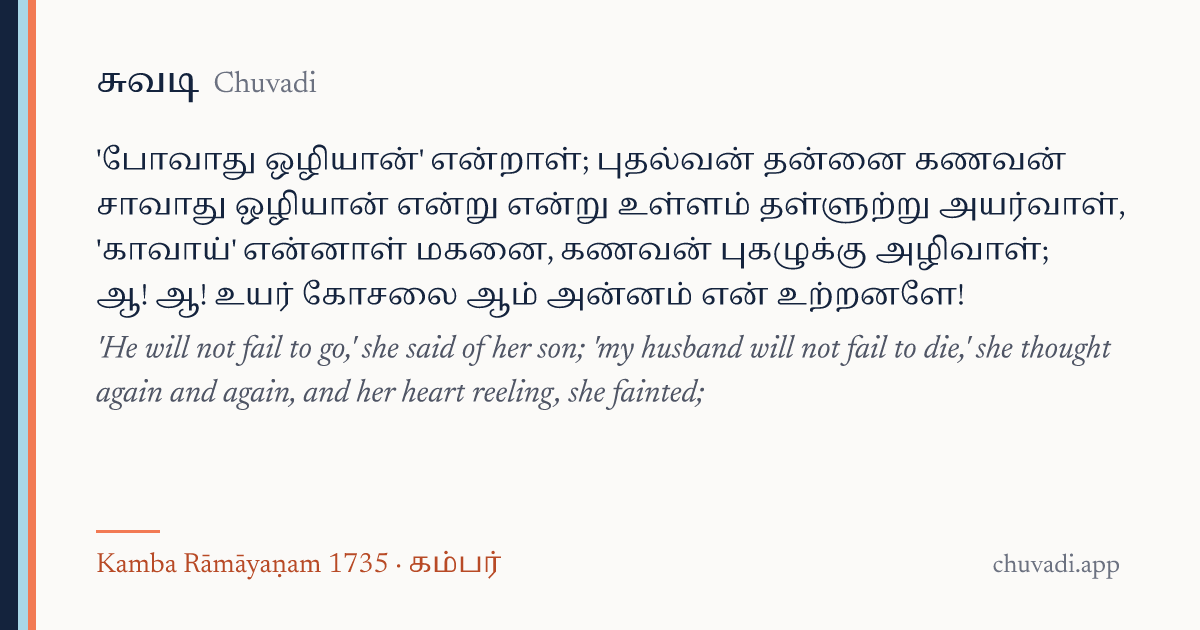
புதல்வன்தன்னை - மகனாகிய இராமனை; “போவாது ஒழியான்' என்றாள் - வனம் போகாமல் இருக்கமாட்டான் என்று சொன்னாள்; கணவன் “சாவாது ஒழியான்' என்று என்று- (அப்படி இராமன் காடு செல்லின் கணவனாய தயரதன் சாகாமல் இருக்க மாட்டான் என்று கருதி; உள்ளம் தள்ளுற்று அயர்வாள் - மனம் தடுமாறிச் சோர்வாள்; “மகனைக் காவாய்' என்னாள் - வனம் போகாமல் இருந்து தந்தையின் உயிரைக் காப்பாற்றுவாய் என்று மகனைப் பார்த்துச் சொல்லமாட்டாள்; கணவன் புகழுக்கு அழிவாள் - தயரதனது புகழுக்குக் கேடு வருமோ என்று மனம் வருந்துவாள்; ஆ! ஆ!- ; உயர் கோசலை ஆம் அன்னம் - உயர்ந்த கோசலையாகிய அன்னம் போல்வாள்; என் உற்றனள் - என்ன துன்பப்பட்டாள்.
மகனைத் தடுத்தால் கணவன் புகழுக்கு அழிவு, மகனைத் தடுக்காது விட்டால் கணவன் உயிர்க்கு அழிவு. இரண்டில் எதனையும் செய்ய இயலாது உள்ளம் தடுமாறினாள். ஆ! ஆ! இரக்கக் குறிப்பு. அந்தோ, ஐயகோ என்னும் பொருளது.
ஆங்கிலம் · English translationAI
Translation
- 'He will not fail to go,' she said of her son; 'my husband
- will not fail to die,' she thought again and again, and her heart reeling, she fainted;
- she would not tell her son, 'Save him'; she grieved for her husband's fame;
- alas, alas! What did that swan, the noble Kōcalai, suffer!
What the poem says
The poet steps in with pity for Kōcalai. She knows Irāmaṉ will go and that the king will then die. She cannot ask her son to stay and save his father's life, because that would ruin her husband's fame for truthfulness.
To stop her son destroys his honour; to let him go destroys his life. Torn between the two, she reels. The cry 'ā, ā' is an exclamation of pity, like 'alas'.