



கம்பராமாயணம் 1736 · அயோத்தியா 4.54
பாடல் · The poem
Tap a word to see its gloss in the commentary and where else it occurs.
பொருள் · Meaning in Tamil
இணர் ஆர்தரு தார் அரசன்- பூங்கொத்துகள் பொருந்திய மாலை அணிந்த தயரதமன்னன்; அனையாள் உரையால் - அந்தக் கோசலையின் வார்த்தையால்; “உயர்ந்தான் உரைசால் குமரன் - உயர்ந்தவனாகிய புகழ் பெற்ற இராமன்; நிலமே புணரான் - நிலத்தை ஆள மாட்டான்; வனமே போவானே ஆம்! - தா டிற்கு! ர போபவனே ஆவான்; என்னா - எனக் கருதி; இடரால் அயர்வான் - துன்பத்தால் சோர்கின்றவன்; “வினையேன் துணைவா! துணைவா' என்றான் - தீவினையேனாகிய என்னுடைய தோழனே தோழனே என்றான்; “தோன்றால்! தோன்றாய் - மகனே என்முன் வருவாயாக; என்றான் -.
'துணைவா துணைவா' புலம்பலில் வந்த அடுக்கு.
ஆங்கிலம் · English translationAI
Translation
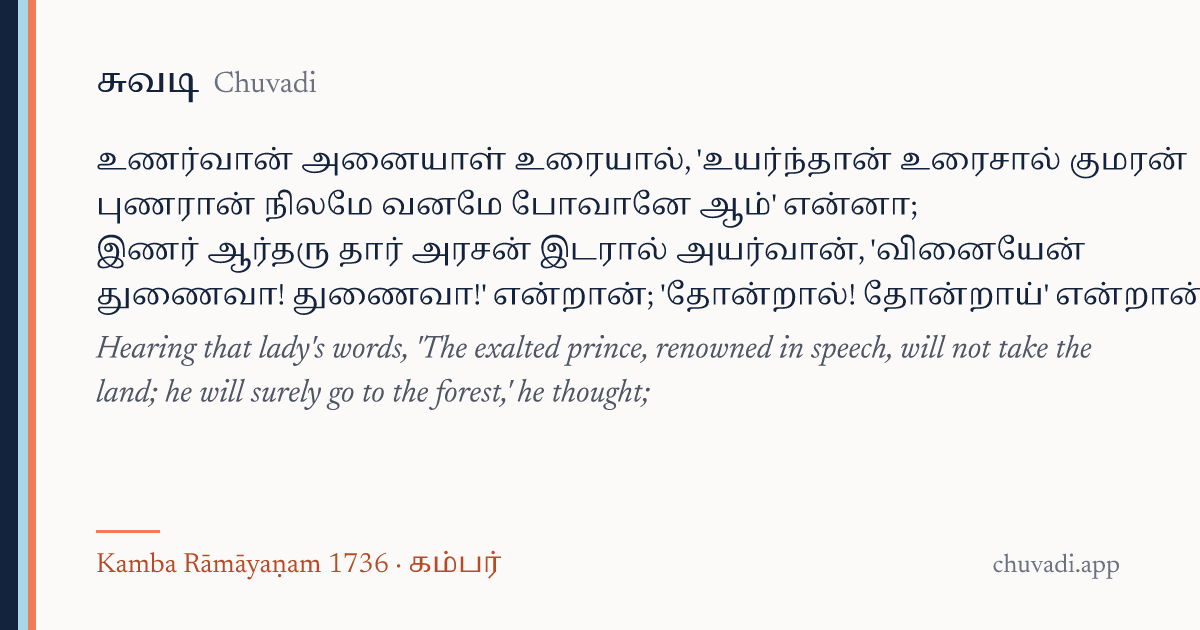
- Hearing that lady's words, 'The exalted prince, renowned in speech,
- will not take the land; he will surely go to the forest,' he thought;
- the king with the garland full of clustered blossoms, faint with grief, said, 'My friend,
- my friend, of me, the doomed!' and 'My son! Appear before me!'
What the poem says
From Kōcalai's words Tacarataṉ realises that Irāmaṉ will not rule but will certainly go to the forest.
Overwhelmed, he cries out to his absent son as 'my companion' and begs him to come before him. The repetition of 'my friend, my friend' is the doubling of lament.