



கம்பராமாயணம் 1741 · அயோத்தியா 4.59
பாடல் · The poem
Tap a word to see its gloss in the commentary and where else it occurs.
பொருள் · Meaning in Tamil
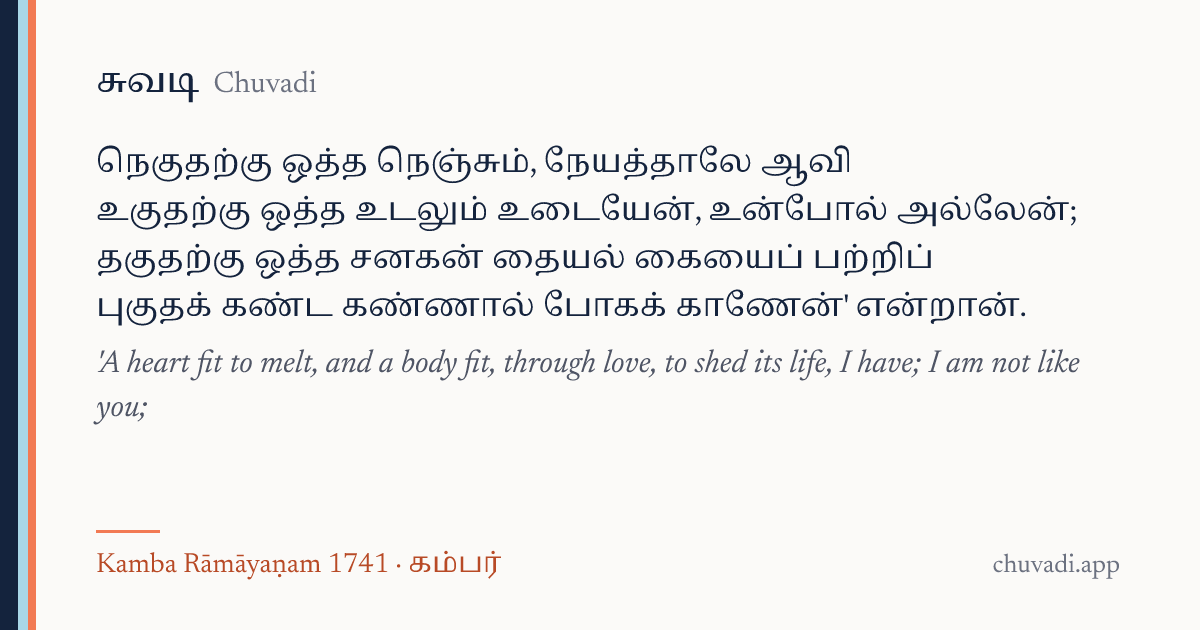
“நெகுதற்கு ஒத்த நெஞ்சும் - உருகுதற்குப் பொருந்திய மனமும்; நேயத்தாலே- அன்பினால்; ஆவி உகுதற்கு ஒத்த உடலும் உடையேன் - உயிர் விடுதற்குப் பொருந்திய உடலையும் உடையவன் யான்; உன்போல் அல்லேன் - உன்னைப்போல் வன்மனமும், வலிய உடலும் உடையேனல்லேன்; தகுதற்கு ஒத்த சனகன் தையல் கையைப் பற்றி - தகுதிக்கு ஒத்த சனக ராசனுக்கு மகளாகிய சானகியின் கையைப் பிடித்துக் கொண்டு; புகுதக் கண்ட கண்ணால் - அயோத்தி நகருக்குள் (நீ) புகுவதைப் பார்த்த கண்களால்; போகக் காணேன்'- (அயோத்தியைவிட்டுக்) காடு செல்வதைக் காண மாட்டேன்.' என்றான்.
“ஏ' காரம் அசை தன் நிலை இவ்வாறாகவும் இராமன் வனமேத் துணிந்தமை பற்றி உன்போல் அல்லேன்' என்று அவனை வன் மனமும் வல் உடலும் உடையவனாகக் குறித்தான் தயரதன்.
ஆங்கிலம் · English translationAI
Translation
- 'A heart fit to melt, and a body fit, through love,
- to shed its life, I have; I am not like you;
- with the eyes that saw you enter, holding the hand of Caṉakaṉ's worthy daughter,
- I will not watch you go,' he said.
What the poem says
The king contrasts himself with his son. He has a heart that melts and a body ready to give up its life out of love; he is not like Irāmaṉ, who, he says with reproachful pity, has a hard heart and a strong body that let him resolve on the forest.
The same eyes that watched Irāmaṉ enter Ayōttī holding the hand of his bride Cītai, Caṉakaṉ's daughter, will not watch him leave.