



கம்பராமாயணம் 1745 · அயோத்தியா 4.63
பாடல் · The poem
Tap a word to see its gloss in the commentary and where else it occurs.
பாட வேறுபாடு · Project Madurai reads
பொருள் · Meaning in Tamil
“மைந்தா! - இராமா!; கேட்டு இருந்தேன் எனினும் - நீ காட்டுக்குச் செல்வதைக் கேட்டுவைத்தும் இங்கிருந்தேன் ஆனாலும்; கிளர்வான் - ஒளிபடைத்த வானுலகத்தை; இன்றே அடையமாட்டேன் ஆகில் அன்றோ - இன்றைக்கே சென்று சேராமல் இருந்தால் அல்லவா; என்கண் வன்கண் - என்னிடம் கொடுமைத் தன்மை உளதாகும்; நீ காட்டே உறைவாய் - நீ வனத்தில் வசிப்பாய்; இக் கைகேசியையும் கண்டு- இந்தக் கைகேயியையும் பார்த்துக்கொண்டு; இந்நாட்டே உறைவேன் என்றால் - இந்த நாட்டிலேயே (நான்) வசிப்பேன் ஆனால்; என் நன்மை நன்று - எனதியல்பு நன்றாயிருந்தது;' என்றான்-
'இன்றே' ஏகாரம் தேற்றம். கேட்டே ஏகாரம் சிறப்பு. காட்டே, நாட்டே ஏகாரங்கள் அசை நன்று இகழ்ச்சிக் குறிப்பு.
ஆங்கிலம் · English translationAI
Translation
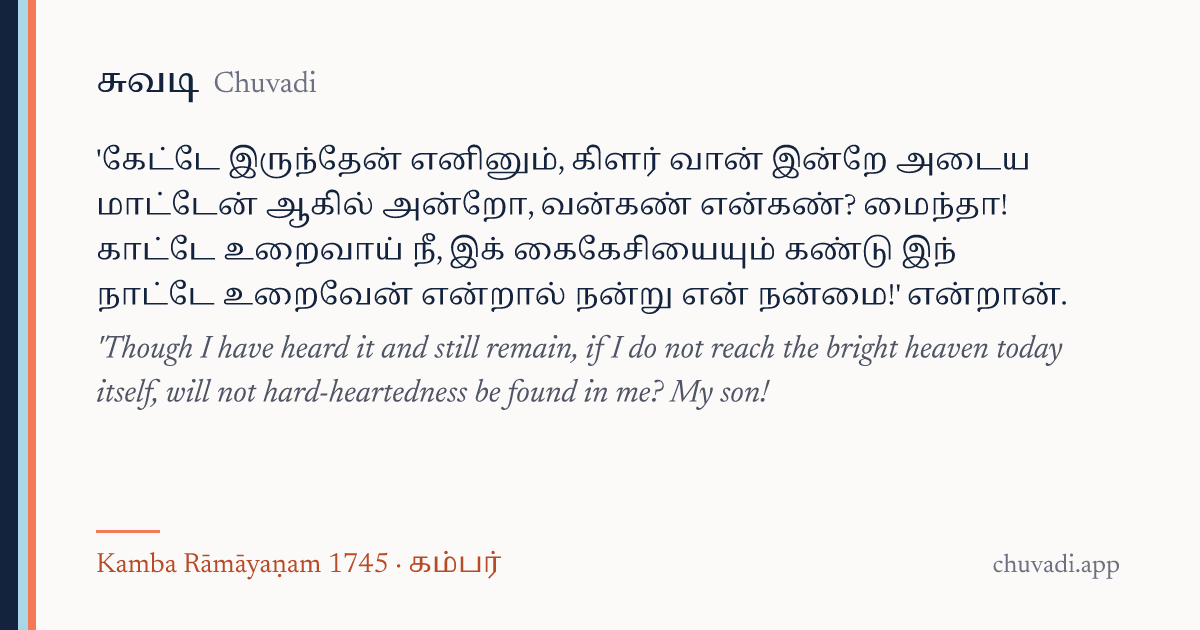
- 'Though I have heard it and still remain, if I do not reach the bright heaven today itself,
- will not hard-heartedness be found in me? My son!
- You will dwell in the forest, and I, looking on this Kaikēci, in this
- land shall dwell? If so, fine indeed is my goodness!' he said.
What the poem says
Tacarataṉ says that having heard of his son's exile and still being alive is shameful enough; if he does not die this very day, he will truly be hard-hearted.
The idea of Irāmaṉ living in the forest while he stays at home looking at Kaikēyi is unbearable. 'Fine indeed is my goodness' is bitter irony at his own expense.