



கம்பராமாயணம் 1753 · அயோத்தியா 4.71
பாடல் · The poem
Tap a word to see its gloss in the commentary and where else it occurs.
பாட வேறுபாடு · Project Madurai reads
பொருள் · Meaning in Tamil
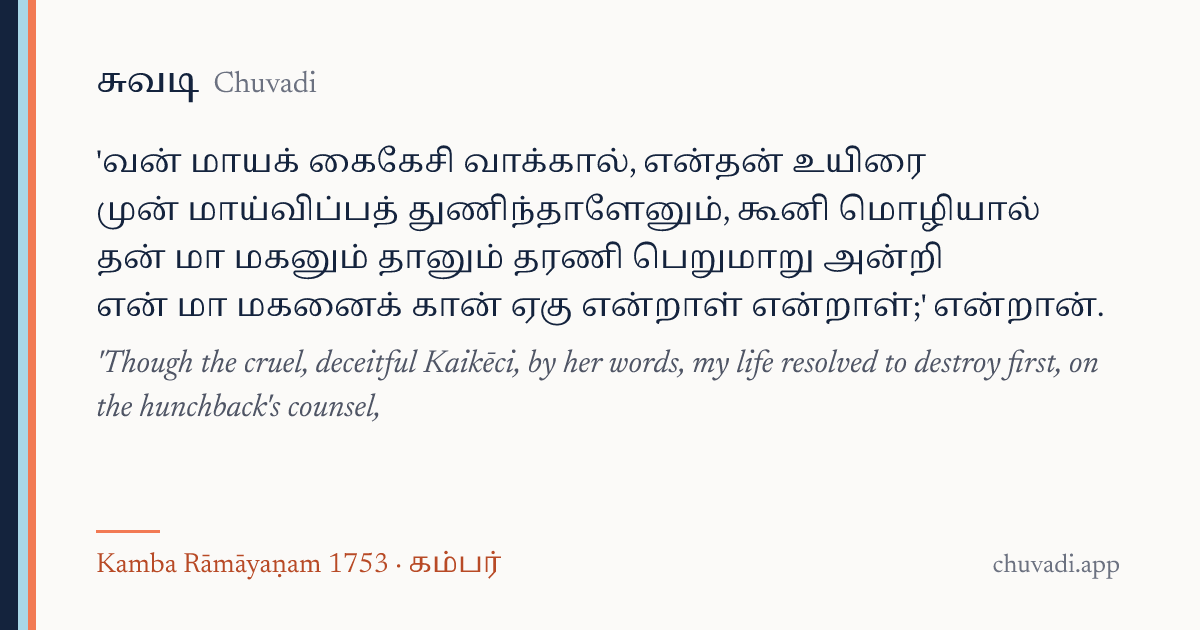
“வன் மாயக் கைகேசி வாக்கால் என்தன் உயிரை முன் மாய்விப்பத் துணிந்தாளேனும் - வலிய வஞ்சனை உள்ள கைகேயி தன் சொல்லால் என் உயிரை முன்னால் அழிக்கத் துணிந்தாள் ஆனாலும்; கூனி மொழியால் - கூனியின் துர்ப் போதனையால், தன் மா மகனும் தானும் தரணி பெறுமாறன்றி - தன் சிறந்த மகனாகிய பரதனும், அவளும் ஆட்சியைப் பெறுவது அல்லாமல்; என் மா மகனை - என் சிறந்த மகனாகிய இராமனை; “கான் ஏகு” என்றாள்; என்றாள் - காட்டிற்குச் செல் என்று சொன்னாள்; ' என்றான் -.
கூனி மொழியால்தான் கைகேயி வரம் கேட்டாள் என்பதைத் தசரதன் உணர்ந்தமை இதனால் புலப்படுகிறது. முன் கைகேசி சூழ்வினைப் படலத்து “பொய்ந்நிலையோர்கள் புணர்த்த வஞ்சம் உண்டோ' என்ற தசரதன் கேள்விக்கு, “எனக்கு வந்து தீயோர் இசைத்ததும் இல்லை' என்ற கைகேயி பதில் கூறினாள். ஆயினும் (1512, 1513) தசரதன் கூனியால்தான் கைகேயி மனம் மாறினாள் என்பதை உணர்ந்தபடியை அங்குக் கூறாது விட்ட கம்பர் இங்கே அவனால் அது உணரப்பட்டபடியைச் சொன்னார் எனக் கொள்க.
ஆங்கிலம் · English translationAI
Translation
- 'Though the cruel, deceitful Kaikēci, by her words, my life
- resolved to destroy first, on the hunchback's counsel,
- besides her great son and herself gaining the earth,
- she told my great son, "Go to the forest"; she told him,' he said.
What the poem says
Tacarataṉ now sees that Kaikēyi was led on by the hunchbacked maid Kūṉi (Mantharai). He could almost accept her plotting to kill him and to win the throne for herself and Paratan, but she also ordered his beloved son into the forest.
The commentary observes that earlier, when the king asked whether some deceitful person had put her up to it, Kaikēyi denied it; the poet held back the king's realisation until this moment.