



கம்பராமாயணம் 1773 · அயோத்தியா 4.91
பாடல் · The poem
Tap a word to see its gloss in the commentary and where else it occurs.
பொருள் · Meaning in Tamil
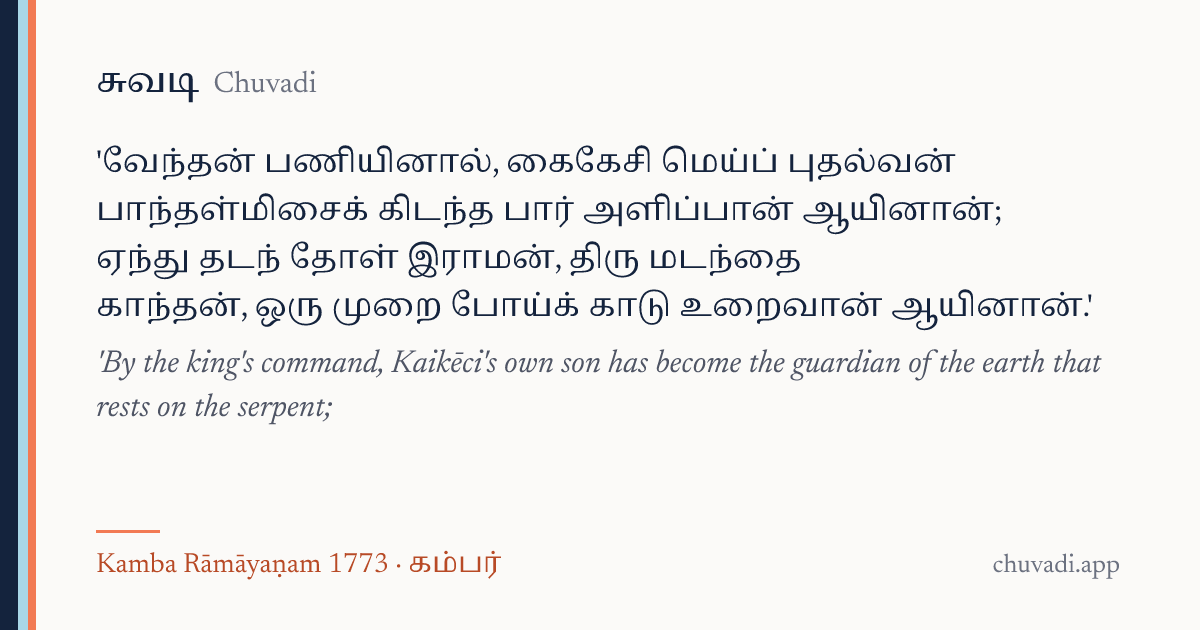
“வேந்தன் பணியினால் - சக்கரவர்த்தியின் கட்டளையால்; கைகேசி மெய்ப்புதல்வன் - கைகேயியின் சத்திய மைந்தனாகிய பரதன்; பாந்தள்மிசைக் கிடந்த பார் - ஆதிசேடன் தலைமேல் தங்கிய இப்பூமியை; அளிப்பான் ஆயினான் - காப்பாற்றும் அரசுரிமையை எய்தியவன் ஆனான்; ஏந்து தடந்தோள் இராமன் திருமடந்தை காந்தன் - உயர்ந்த அகன்ற தோள்களை உடைய இராமனாகிய திருமகள் கணவன்; ஒருமுறை காடு போய் உறைவான் ஆயினான் - ஒருமுறையாகக் காடு சென்று தங்குவான் ஆனான், (என்றான் முனிவன்.)
மேல்பாட்டின் மூலமாகவே மன்னர்களுக்கு இராமன் காடு செல்வதும், பரதன் நாடாள்வதும் அறிய வந்துவிடுகிறது. ஆயினும், முனிவன் அவைக்குக் கருத்து அறிவிக்க வேண்டியது முறை ஆதலின் முடிவு காட்டி இதனைக் கூறினானர்க்கே கூறியதாக்குக. ஒருமுறை எனக்கு தயரதன் தந்த வரத்தின்படி இராமன் காடு செல்வதும் ஒருவகையில் முறையானதே என்பதைச் சுட்டிற்று. (முறை - நீதி)
ஆங்கிலம் · English translationAI
Translation
- 'By the king's command, Kaikēci's own son
- has become the guardian of the earth that rests on the serpent;
- Irāmaṉ of the raised broad shoulders, husband of the Lady of fortune,
- is to go once, by rule, to the forest and dwell there.'
What the poem says
Vacittaṉ tells the assembled kings the news in plain terms: by Tacarataṉ's command, Paratan, Kaikēyi's son, is to rule the earth, which rests on the serpent Ātiśēṣaṉ, and Irāmaṉ, consort of the goddess of fortune, is to go and live in the forest for one fixed term.
The commentary notes that the phrase 'by rule' hints that, given the king's boon, even the exile follows a kind of lawful order.