



கம்பராமாயணம் 1779 · அயோத்தியா 4.97
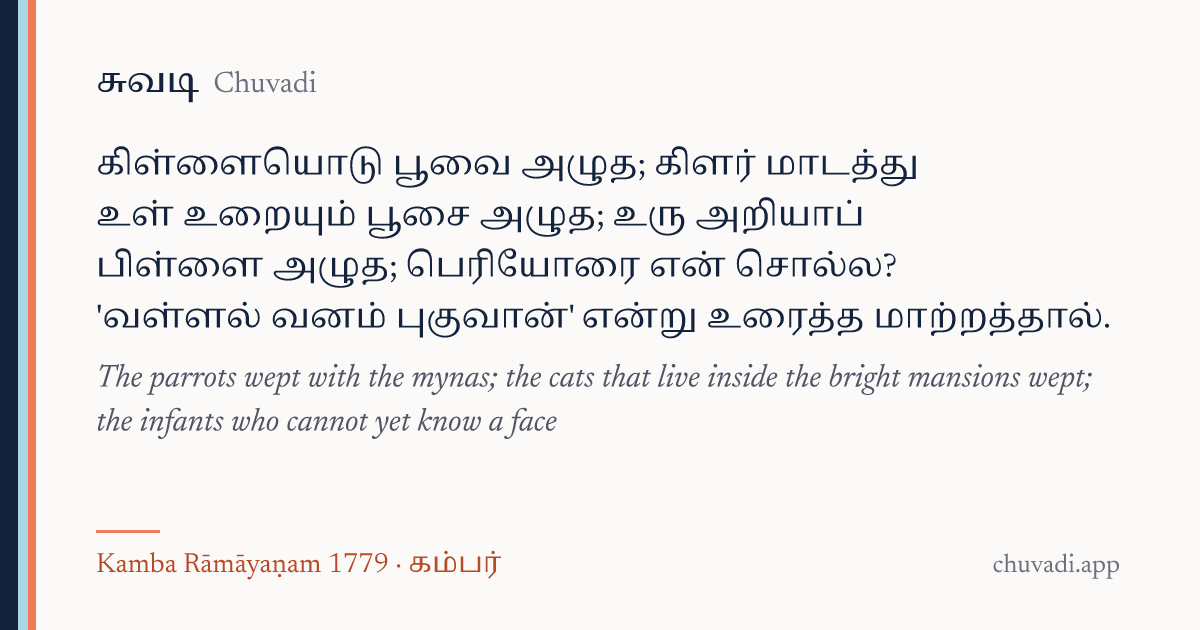
பாடல் · The poem
Tap a word to see its gloss in the commentary and where else it occurs.
பொருள் · Meaning in Tamil
வள்ளல் - இராமன்; “வனம் புகுவான் - காடு செல்வான்; ' என்று உரைத்த மாற்றத்தால் - என்று சொல்லிய சொல்லால்; கிள்ளையொடு பூவை அழுத - கிளியும், நாகணவாய்ப் பறவையும் அழுதன; கிளர் மாடத்து உள் உறையும் பூசை அழுத - விளங்குகின்ற மாளிகையின் உள்ளே வசிக்கின்ற வீட்டுப் பூனைகள் அழுதன; உரு அறியாப் பிள்ளை அழுத - வடிவத்தைப் பார்த்து அறிய மாட்டாத சிறு குழந்தைகள் அழுதன; பெரியோரை என் சொல்ல? - பெரியோர்கள் அழுதமையைப் பற்றி என்னவென்று சொல்வது?
அஃறிணைப் பொருள்களும் இராமன் பிரிவால் துயர் உறுவனவாகச் சொல்கிறார். “உரு அறியாப் பிள்ளை கருவில் இருக்கும் வடிவு காணாத குழந்தைகளும் அழுதன என்று துக்கத்தின் உச்சநிலையைக் காட்டிப் பொருள் உரைப்பினும் அமையும். இவையே இவ்வாறாயினமையின் பெரியோர்கள் அழுதமைபற்றிச் சொல்ல வேண்டுவதில்லை.
ஆங்கிலம் · English translationAI
Translation
- The parrots wept with the mynas; the cats that live inside
- the bright mansions wept; the infants who cannot yet know a face
- wept; what is there to say of the elders?
- at the words that the generous one would enter the forest.
What the poem says
The grief spreads beyond human beings. Pet parrots and mynas, the cats of the great houses, and babies too young to recognise anyone all weep at the news that Irāmaṉ is going to the forest.
If even these weep, the poet asks, what need is there to describe the grief of the grown? The commentary adds that 'infants who cannot know a face' may even mean babies still in the womb, showing the height of sorrow.