



கம்பராமாயணம் 1782 · அயோத்தியா 4.100
பாடல் · The poem
Tap a word to see its gloss in the commentary and where else it occurs.
பொருள் · Meaning in Tamil
“ஞானியும் உய்கலான்' என்னாதே - உலகில் பிறந்தார்க்குப் பிரிவும் சிறப்பும் இயல்பானவை என்பதைத் தெளிய உணர்ந்த ஞானியும் கூட இராமன் பிரிவால் பிழைக்க மாட்டான் என்று கருதாமல்; நாயகனைக் “கான் ஈயும்” என்று உரைத்த கைகேசியும் - தன் கணவனைப் பார்த்து (இராமனுக்குக்) காட்டைக் கொடும் என்று சொல்லிய கைகேயியும்; கொடிய கூனீயும் அல்லால் - அவளுக்குத் துர்ப்போதனை செய்த கூனியும் தவிர; பிறர் கொடியார் உளரோ? - வேறு யாரேனும் மிகக் கொடியவர்கள் இருக்கின்றார்களோ (மற்றவர்கள் அனைவரும்); மேனியும் இன்றி - உடம்பும் இல்லாமல்; வெறு நீரே ஆயினார் - வெறுமைத் தன்மை அடைந்தவர் ஆயினர்.
'கான் ஈயும்' என்பதற்கு ஏற்ப, ஞானி, கூனி, மேனி என்ற இகரங்கள் நீண்டன எதுகை நயம் பற்றி. “ஞானியே உய்கலான்' என்றால் மற்றவர் நிலை சொல்லவேண்டுவதில்லை என்றபடி.
ஆங்கிலம் · English translationAI
Translation
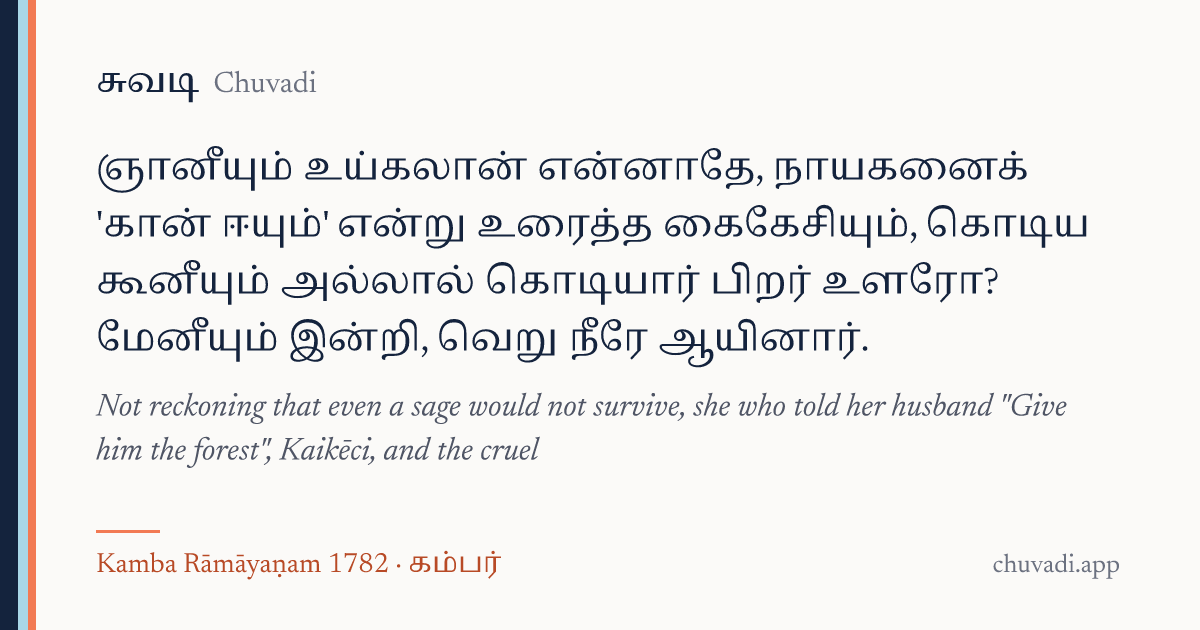
- Not reckoning that even a sage would not survive, she who told her husband
- "Give him the forest", Kaikēci, and the cruel
- hunchback, apart from these, were there any others so cruel?
- All the rest, without even a body left, became mere emptiness.
What the poem says
Kaikēyi did not consider that even a sage who knows that partings are natural could not survive losing Irāmaṉ. She told her husband to give the forest to his son.
Apart from her and the cruel hunchback who advised her, no one is so hard-hearted; everyone else is reduced to empty shells. The commentary notes that the final i in ñāṉi, kūṉi and mēṉi is lengthened to rhyme with īyum.