



கம்பராமாயணம் 1783 · அயோத்தியா 4.101
பாடல் · The poem
Tap a word to see its gloss in the commentary and where else it occurs.
பாட வேறுபாடு · Project Madurai reads
பொருள் · Meaning in Tamil
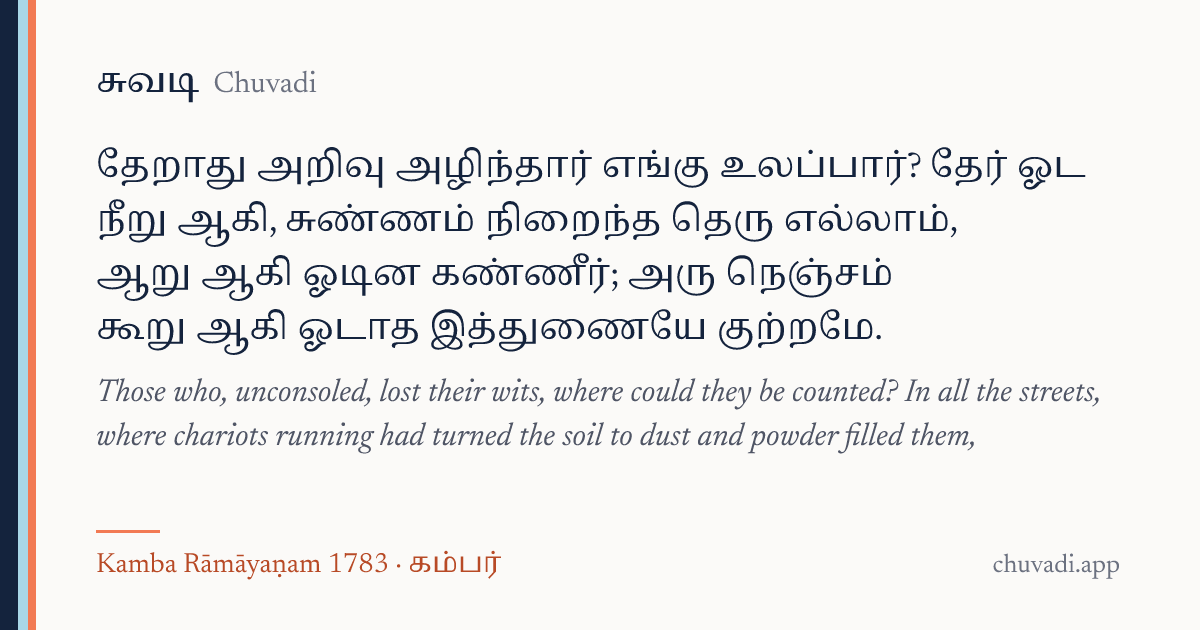
(இராமனது பிரிவால்) தேறாது - தெளியாமல்; அறிவு அழிந்தார் - அறிவு நீங்கப் பெற்றவர்கள்; எங்கு உலப்பார்? - எவ்விடத்து எந்நிலைமையால் கணக்கில் அடங்குவர்; தேர் ஓட நீறு ஆகிச் சுண்ணம் நிறைந்த தெரு எல்லாம் - தேர் ஓடுவதனால் புழுதி ஆகி மண் பொடி நிறைந்திருந்த தெருக்களில் எல்லாம்; கண்ணீர் - மக்கள் அழுத கண்ணீர்; ஆறு ஆகி ஓடின - ஆறு போலச் சென்று ஓடின; அரு நெஞ்சம் - அவர்களது அரிய மனம்; கூறு ஆகி ஓடாத இத் துணையே குற்றம் - பிளந்து பிரிந்து நீங்காத இவ்வளவே குற்றம்.
துயரத்தால் அறிவு மயங்கியவர்கள் கணக்கில் அடங்கார் என்பதை “எங்கு உலப்பார்' என்று குறித்தார். புழுதி நிறைந்த தெரு ஆறாகிவிட்டது என்றால் கண்ணீரின் பெருக்கத்தை அறிய முடிகிறது. நெஞ்சம் பிளந்து ஓடியதைப் பார்க்க முடியவில்லையே தவிர மற்றவை எல்லாம் நடந்து முடிந்துவிட்டன என்பார் இத்துணையே குற்றம் ' என்றார். “ஏ' காரம் ஈற்றசை
ஆங்கிலம் · English translationAI
Translation
- Those who, unconsoled, lost their wits, where could they be counted? In all the streets,
- where chariots running had turned the soil to dust and powder filled them,
- tears ran like rivers; that their precious hearts
- did not split apart and flee, this alone was the fault.
What the poem says
Those driven senseless by grief are beyond counting. The streets, ground to dust by chariot wheels, become rivers of tears.
Everything that could happen in such grief has happened; the only thing missing is that their hearts did not actually split apart. The commentary takes this as a measure of how extreme the sorrow was.