



கம்பராமாயணம் 1784 · அயோத்தியா 4.102
பாடல் · The poem
Tap a word to see its gloss in the commentary and where else it occurs.
பொருள் · Meaning in Tamil
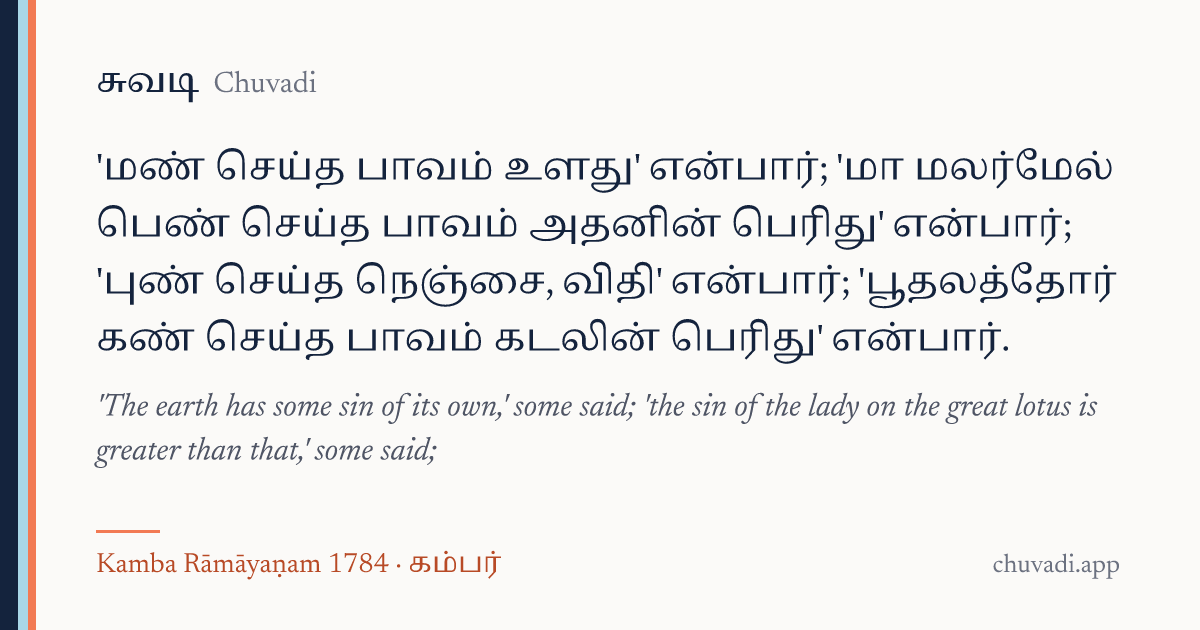
(நகர மாந்தர்) “மண்செய்த பாவம் உளது” என்பார் - “நிலமகள் செய்த தீவினை மிகுதியாக உள்ளது” என்பர்; “மாமலர் மேல் பெண் செய்த பாவம் அதனின் பெரிது” - சிறந்த தாமரை மலர்மேல் வீற்றிருக்கும் திருமகள் செய்த தீவினை அதைக்காட்டிலும் மிகுதி; என்பார்; “புண் செய்த நெஞ்சை விதி - புண்பட்ட மனத்தைப் பார்த்து இது விதியால் விளைந்தது; ' என்பார்- ; பூதலத்தோர் கண் செய்த பாவம் கடலின் பெரிது” - இப்பூமியில் உள்ளவர்களின் கண் செய்த தீவினை கடலைக்காட்டிலும் மிகுதி; என்பார்- .
இராமனால் ஆளப் பெறாமையால் பூமியும், அனுபவிக்கப் பெறாமையால் செல்வமகளும் பாவம் செய்தவர் ஆயினர். மணி முடி தரித்துச் செல்லும் காட்சியைக் காணவேண்டிய கண்கள் மரவுரி தரித்துக் காடு செல்லும் காட்சியைக் காண நேரிட்டமையின் கண் செய்த பாவம் மிகுதியாம்.
ஆங்கிலம் · English translationAI
Translation
- 'The earth has some sin of its own,' some said; 'the sin of the lady
- on the great lotus is greater than that,' some said;
- 'It is fate,' some said of their wounded hearts; 'the sin
- of the eyes of the people of this world is greater than the sea,' some said.
What the poem says
The citizens search for someone to blame. The Earth must have sinned, since she will not be ruled by Irāmaṉ; the goddess of fortune on her lotus must have sinned more, since she will not be enjoyed by him.
Others say it is fate. And the eyes of the people, which should have seen him crowned and must instead see him leave in bark garments, carry a sin greater than the ocean.