



கம்பராமாயணம் 1798 · அயோத்தியா 4.116
பாடல் · The poem
Tap a word to see its gloss in the commentary and where else it occurs.
பாட வேறுபாடு · Project Madurai reads
பொருள் · Meaning in Tamil
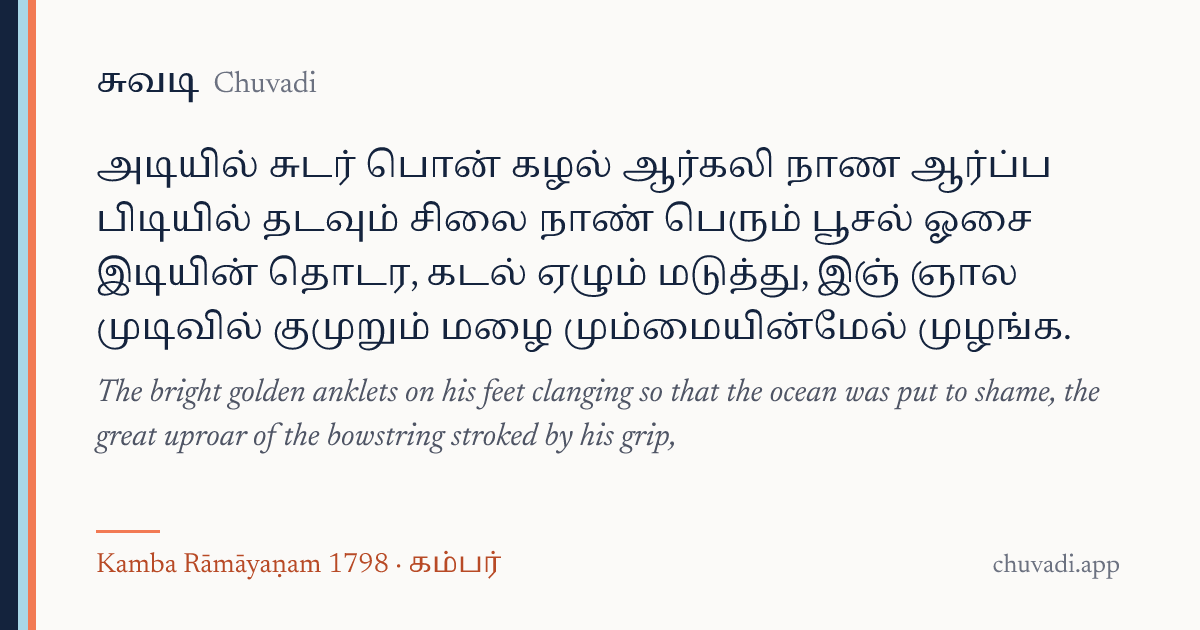
அடியில் சுடர் பொன் கழல் ஆர்கலி நாண ஆர்ப்ப - பாதங்களில் ஒளிவீசும் பொன்னால் ஆகிய வீரக்கழலை கடல் வெட்கமுறும் படி பேரொலி செய்ய; பிடியில் தடவும் - கைப்பிடியால் தடவப் பெறுகின்ற; சிலை நாண் பெரும் பூசல் ஓசை - வில்லினது கயிற்றைத் தெறிப்பதால் உளதாகும் பெரிய ஆரவார ஒலி; இஞ்ஞால முடிவில் - இந்த உலக முடிவில்; கடல் ஏழும் மடுத்து - ஏழு கடல்களையும் குடித்து; இடியின் தொடர- இடிகளோடு தொடர்ந்து; குமுறும்- முழங்குகின்ற; மழை - மழையைக்காட்டிலும்; மும்மையின் மேல் முழங்க- மூன்று மடங்கு அதிகமாக ஒலிக்க.
வில்லில் நாண் ஏற்றிய பிறகு நாணின் இறுக்கத்தைச் சோதித்துத் தெறிப்பர்; தெறிக்கும்போது எழும் ஓசை பேரொலியாக உண்டாகும். அதை வருணிப்பது கவிமரபு.
ஆங்கிலம் · English translationAI
Translation
- The bright golden anklets on his feet clanging so that the ocean was put to shame,
- the great uproar of the bowstring stroked by his grip,
- following on like thunder, sounded three times louder than the cloud
- that drinks up all seven seas and rumbles at the end of this world.
What the poem says
Ilakkuvaṉ's preparations make a deafening noise. His golden warrior's anklets ring louder than the sea, and when he tests his bowstring, its twang thunders three times louder than the storm clouds that swallow the seven oceans at the end of the world.
The commentary notes that an archer plucks the string after stringing his bow to test its tension, and that describing this sound is a poetic convention.