



கம்பராமாயணம் 1799 · அயோத்தியா 4.117
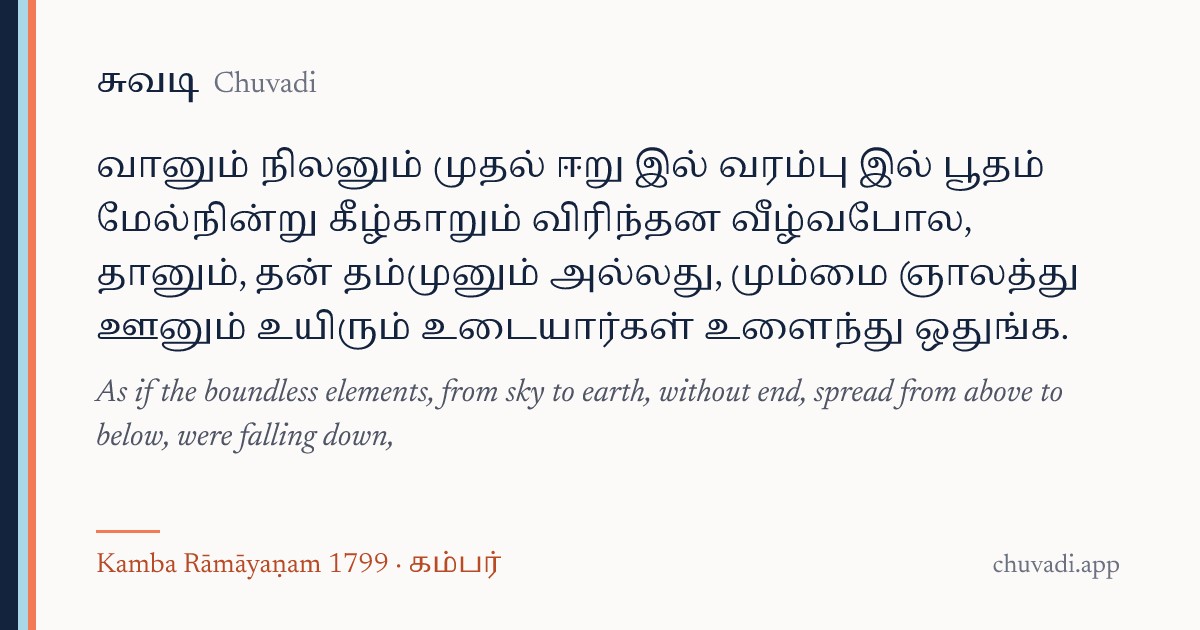
பாடல் · The poem
Tap a word to see its gloss in the commentary and where else it occurs.
பொருள் · Meaning in Tamil
தானும் தன் தம்முனும் அல்லது - இலக்குமணனும், அவனுக்குத் தமையனாகிய இராமனும் அல்லாமல்; மும்மை ஞாலத்து - மூன்று உலகங்களிலும் உள்ள; ஊனும் உயிரும் உடையார்கள் - உடம்பும் உயிரும் உடைய அனைவரும்; வானும் நிலனும் முதல் ஈறு இல் மேல்நின்று கீழ்காறும் விரிந்தன - வானும், நிலமும் முதலிய, அழிவற்ற, மேலிருந்து கீழ்வரை விரிந்துள்ளனவாகிய; வரம்பில் பூதம் - கணக்கில்லாத பூதங்கள்; வீழ்வ போல - விழுகின்றன போலக் கருதி; உளைந்து ஒதுங்க - வருந்தி விலக.
நிலம் நீர் தீ காற்று ஆகாயம் முதலிய ஐந்து பெரும் பூதங்களும் அழிவற்றவை. மேலிருந்து கீழ்வரை விரிந்துள்ளவை. அப்பூதங்கள் விழுவனவாகக் கருதினர் அனைவரும் என்பதாம். ஐம்பூதங்களில் முதலதான வானும் இறுதியதான நிலனும் கட்டி, ஐந்தையும் பெறவைத்தார். இலக்குவனது சீற்ற ஆவேசம் அப்படி இருந்தது என்றார்.
ஆங்கிலம் · English translationAI
Translation
- As if the boundless elements, from sky to earth, without end,
- spread from above to below, were falling down,
- all but himself and his elder brother, in the three worlds,
- all who have flesh and life shrank back in dread.
What the poem says
Every living being in the three worlds, except Ilakkuvaṉ and Irāmaṉ, cowers in fear, as though the five great elements that stretch from the sky down to the earth were collapsing.
By naming sky, the first element, and earth, the last, the poet includes all five. This is how terrifying Ilakkuvaṉ's fury appears.