



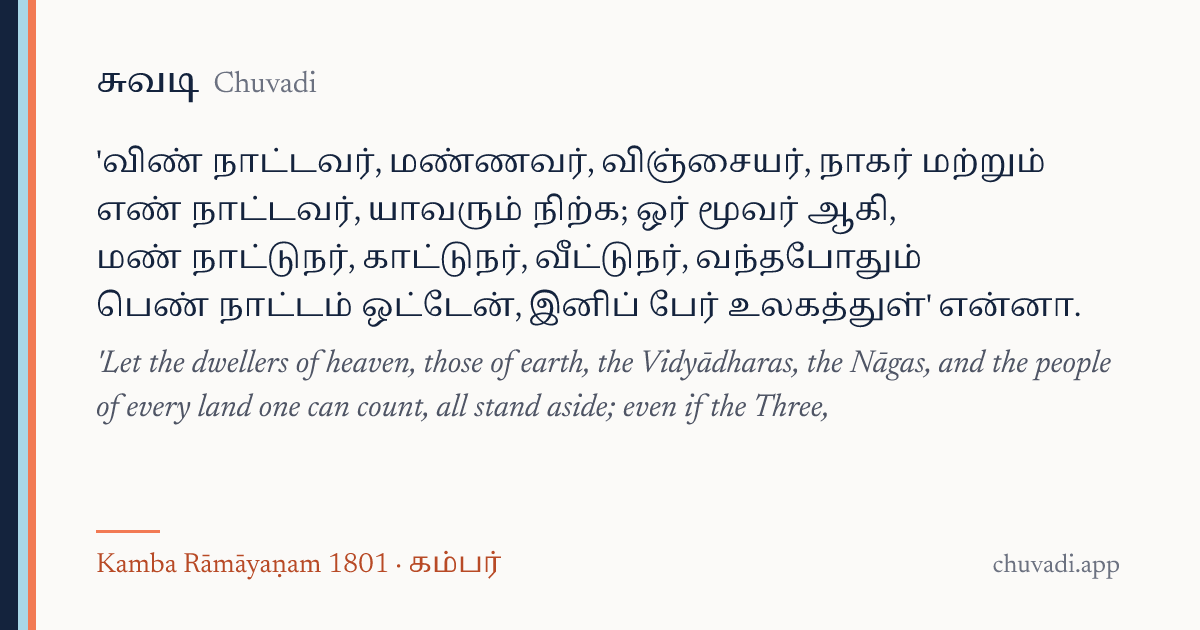
கம்பராமாயணம் 1801 · அயோத்தியா 4.119
பாடல் · The poem
Tap a word to see its gloss in the commentary and where else it occurs.
பொருள் · Meaning in Tamil
“விண் நாட்டவர் - தேவர் உலகத்துள்ளவர்; மண்ணவர் - மண்ணுலகில் உள்ளவர்; விஞ்சையர் - வித்தியாதரர்; நாகர் - பாதல உலகத்தில் வசிப்போர்; மற்றும் - வேறாக; எண் நாட்டவர் - எண்ணப்படும் நாட்டில் உள்ளவர்; யாவரும் - அனைவரும்; நிற்க - கிடக்கட்டும்; (அவரினும் மேம்பட்டு) ஓர் மூவர் ஆகி - மூன்று பேராக இருந்து; மண் நாட்டுநர் - உலகத்தை நிலை நிறுத்ததிக்காக்ககின்ற திருமாலும்; காட்டுநர் - படைக்கின்ற பிரமனும்; வீட்டுநர் - அழிக்கின்ற உருத்திரனும் ஆகிய மூவர் (துணையாக); வந்த போதும் - வந்தாலும்; இனிப் பேர் உலகத்துள் பெண் நாட்டம் - இனி இவ்வுலகில் பெண்ணின் மனக்கருத்துக்கு; ஒட்டேன் - உடன்படேன்; என்னா - என்று சொல்லி.
யார் துணையாக வரினும் கைகேயியின் மனக்கருத்து நிறைவேற விடமாட்டேன் என்பான் இவ்வாறு கூறினான். நாட்டுதல் - நிலைபெறுத்தல் - நிலைநிறுத்தல் அதாவது காத்தலாம். “உலகம் யாவையும் தாம் உளவாக்கலும், நிலை பெறுத்தலும், நீக்கலும்” என்பது (1.) காண்க.
ஆங்கிலம் · English translationAI
Translation
- 'Let the dwellers of heaven, those of earth, the Vidyādharas, the Nāgas, and
- the people of every land one can count, all stand aside; even if the Three,
- he who sustains the world, he who creates it, and he who destroys it, come together,
- I will not let a woman's design prevail in this great world from now on,' he said.
What the poem says
Ilakkuvaṉ declares that he does not care who opposes him: gods, humans, Vidyādharas, serpent beings, or anyone else.
Even if the three great gods, Tirumāl who preserves, Piramaṉ who creates and Uruttiraṉ who destroys, came together to help her, he would not let Kaikēyi's plan succeed. The commentary links these three functions to the opening verse of the epic.