



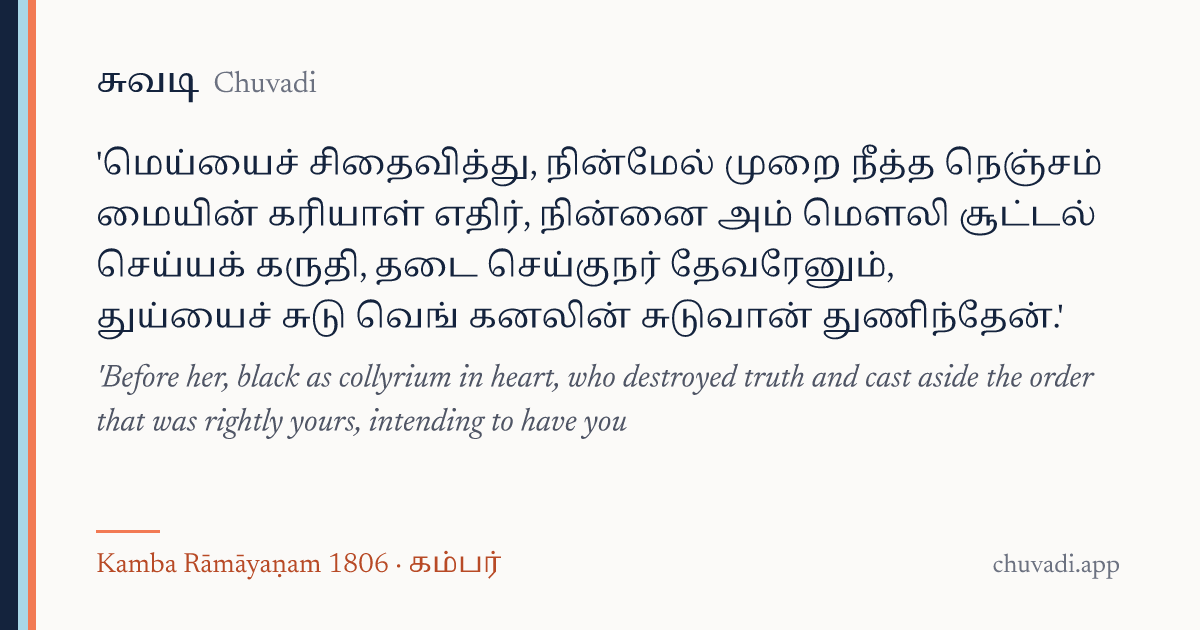
கம்பராமாயணம் 1806 · அயோத்தியா 4.124
பாடல் · The poem
Tap a word to see its gloss in the commentary and where else it occurs.
பொருள் · Meaning in Tamil
“மெய்யைச் சிதைவித்து - சத்தியத்தை அழியச் செய்து; நின் மேல் முறை - உன்னுடைய சிறப்பான அரசு முறைமையை நீத்த - நீக்கின; நெஞ்சம் மையின் கரியாள் எதிர் - மனத்தால் மை போலக் கரியவளான கைகேயியின் எதிரே; நின்னை - உன்னை; அம் மெளலி சூட்டல் செய்யக் கருதி - அந்த மகுடத்தை அணிந்து கொள்ளுதல் செய்ய நினைத்து; தடை செய்குநர் தேவரேனும் - தடை செய்பவர்கள் தேவராயினும்; துய்யைச் சுடு - பஞ்சை எரிக்கின்ற; வெங் கனலின் - கொடு நெருப்புப் போல; சுடுவான் - எரித்திட; துணிந்தேன் - உறுதி செய்தேன். '
“நின் மேல் முறை'- “உன் மேல் உள்ள மகன் என்கின்ற அன்பு முறைமையை” என்றும் பொருள் உரைக்கலாம்; இது காறும் கைகேயியின் அன்பு மகன் என இராமன் வளர்ந்ததை அவனும் அறிவான் ஆதலின். 'இமையோரை முனிந்திலாதாய்' இன்று முனிவானேன் என்ற இராமன் வினாவிற்கு; தடை செய்குநர் தேவரேனும்' என்பது இலக்குவன் உரைத்த பதில் எனக் கொள்ளின், 'இமையோரை' என்னும் பாடம் வன்மை பெற இதுவும் ஒரு சான்றாகும்.
ஆங்கிலம் · English translationAI
Translation
- 'Before her, black as collyrium in heart, who destroyed truth and cast aside
- the order that was rightly yours, intending to have you
- crowned with that crown, I am resolved to burn those who stand in the way, even if they are gods,
- as fierce fire burns cotton.'
What the poem says
Ilakkuvaṉ answers Irāmaṉ's question. Kaikēyi, black-hearted, has destroyed truth and overturned the rightful order by which the crown was Irāmaṉ's.
He means to crown Irāmaṉ in front of her, and anyone who tries to stop him, even the gods, he will burn like cotton in a fire. The commentary notes that this reply about the gods supports the reading 'never angry with the gods' in Irāmaṉ's question.