



கம்பராமாயணம் 1812 · அயோத்தியா 4.130
பாடல் · The poem
Tap a word to see its gloss in the commentary and where else it occurs.
பொருள் · Meaning in Tamil
“மைந்த! - மகனே!; நறும் புனல் இன்மை - (என்றும் நீர் உள்ள ஆற்றிலே ஒரு சில காலங்களில்) நல்ல நீர் இல்லாமல் வற்றிப் போவது; நதியின் பிழை அன்று - அவ் ஆற்றின் குற்றம் அன்று; அற்றே - அது போலவே; பதியின் பிழை அன்று - (என்னைக் காடு செல்லும்படி சொன்னது) தந்தையின் குற்றம் அன்று; பயந்து நமைப் புரந்தாள் - (காடு செல்லும்படி வரம் வாங்கியது) பெற்று நம்மைக் காப்பாற்றி வளர்த்தவள் ஆகிய கைகேயியின்; மதியின் பிழை அன்று - அறிவினது குற்றமும் அன்று; மகன் பிழை அன்று - அவள் மகனாகிய பரதனது குற்றம் அன்று; விதியின் பிழை - விதியால் (நமது ஊழ்வினையால்) விளைந்த குற்றமே ஆகும். இங்ஙனம் இதனை ஆராயாது; நீ இதற்கு வெகுண்டது என்னை?” - நீ இந்தச் செயலுக்கு இவர்களைக் காரணமாக்கிக் கோபித்தது ஏன்? ' என்றான் -.
ஊழ்வினை செலுத்தத் தாயும் தந்தையும் அவ்வினையின் கருவியாக இருந்து செயல்பட்டனரே அன்றி அவர்களாக நம்மேல் பகை கொண்டு செய்தாரில்லை. மழைநீர் வரத்து இன்மையால் சிலகாலம் ஆற்றில் நீர் வற்றுவது போல் வினைவலியால் பெற்றோர் அன்பின்மை உடையார் போலத் தோன்றுவர், அவ்வளவே என்றானாம். மூவரையும் தாயர் என ஒப்பக் கருதல் பற்றிக் 'கைகேயியைப் பயந்து நமைப் புரந்தாள்' என்றான் இராமன்.
ஆங்கிலம் · English translationAI
Translation
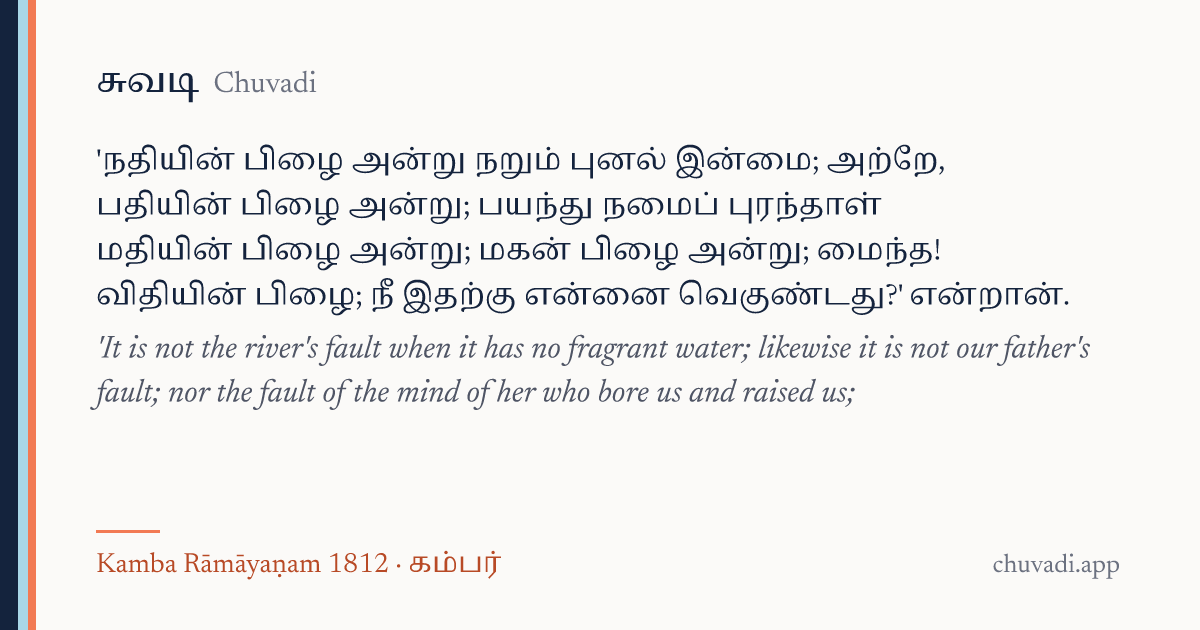
- 'It is not the river's fault when it has no fragrant water; likewise
- it is not our father's fault; nor the fault of the mind of her who bore us and raised us;
- nor is it her son's fault; my child!
- It is the fault of fate; why are you angry at this?' he said.
What the poem says
Irāmaṉ offers one of the best-known images of the epic. When a river runs dry, it is not the river's fault but the failure of the rains.
In the same way, their father is not to blame, nor Kaikēyi, whom he calls the mother who bore and raised them because he regards all three queens equally, nor her son Paratan. Destiny, the working of past deeds, has used them as its instruments. So why be angry with them?