



கம்பராமாயணம் 1814 · அயோத்தியா 4.132
பாடல் · The poem
Tap a word to see its gloss in the commentary and where else it occurs.
பாட வேறுபாடு · Project Madurai reads
பொருள் · Meaning in Tamil
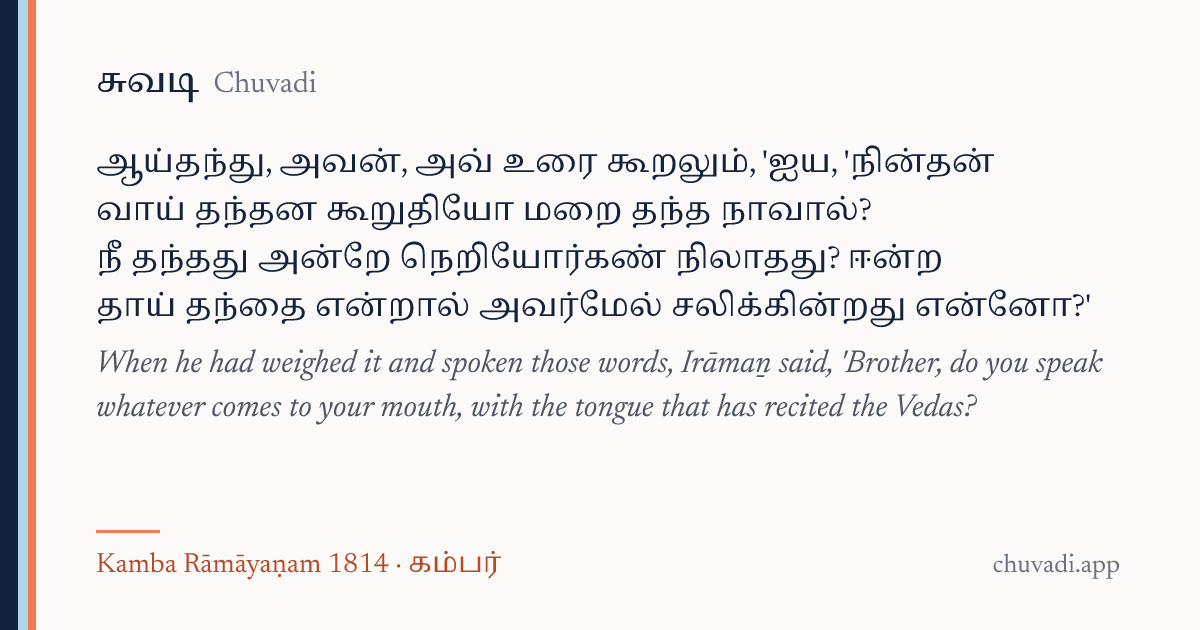
அவன் - இலக்குவன்; ஆய்தந்து - ஆராய்ந்து; அவ் உரை கூறலும் - அந்தச் சொற்களைச் சொன்ன அளவில் (இராமன் அவனை நோக்கி); “ஐய! - தம்பி; மறை தந்த நாவால் - வேதங்களைச் சொன்ன நாக்கினால்; நின்தன் வாய்தந்தன கூறுதியோ? - உன் வாயில் வந்தவைகளைக் கூறுகின்றாயே; நீ தந்தது - நீ இப்பொழுது (உன் வாயால்) தந்த சொல்; நெறியோர்கண் நிலாதது அன்றே? - நல்நெறியில் நடப்பவர்கள் இடத்தில் நிற்கத்தகாத சொல் அல்லவா; ஈன்ற தாய் தந்தை என்றால் - (உன் கருத்திற்கு மாறாக நடப்பவர்) பெற்ற தாயும் தந்தையும் ஆனால்; அவர் மேல் சலிக்கின்றது - அவரிடத்தில் கோபிப்பது; என்னோ?” - எப்படிப் பொருந்தும்.
வேதத்தைக் கற்றுணர்ந்த இலக்குமணன். அன்னையும் பிதாவும் முன்னறி தெய்வம்” என்று அறிந்துள்ளவன். ஆகவே, அன்னைக்கும் தந்தைக்கும் மாறாக வாய்தந்த வார்த்தைகளைப் பேசுதல் நெறியற்றோர் செயலாகும் என்பது இராமன் சொல்லியதாகும்.
ஆங்கிலம் · English translationAI
Translation
- When he had weighed it and spoken those words, Irāmaṉ said, 'Brother, do you
- speak whatever comes to your mouth, with the tongue that has recited the Vedas?
- Is not what you have said something never found in those who walk the right path? When they are
- the mother and father who bore us, how can you be angry with them?'
What the poem says
Irāmaṉ reproves Ilakkuvaṉ more sternly. A tongue that has recited the Vedas should not speak just anything that comes to mind, and such words are never found among people of right conduct.
Ilakkuvaṉ knows the teaching that mother and father are the first gods; to speak against them, Irāmaṉ says, is the act of people without dharma.