



கம்பராமாயணம் 1818 · அயோத்தியா 4.136
பாடல் · The poem
Tap a word to see its gloss in the commentary and where else it occurs.
பொருள் · Meaning in Tamil
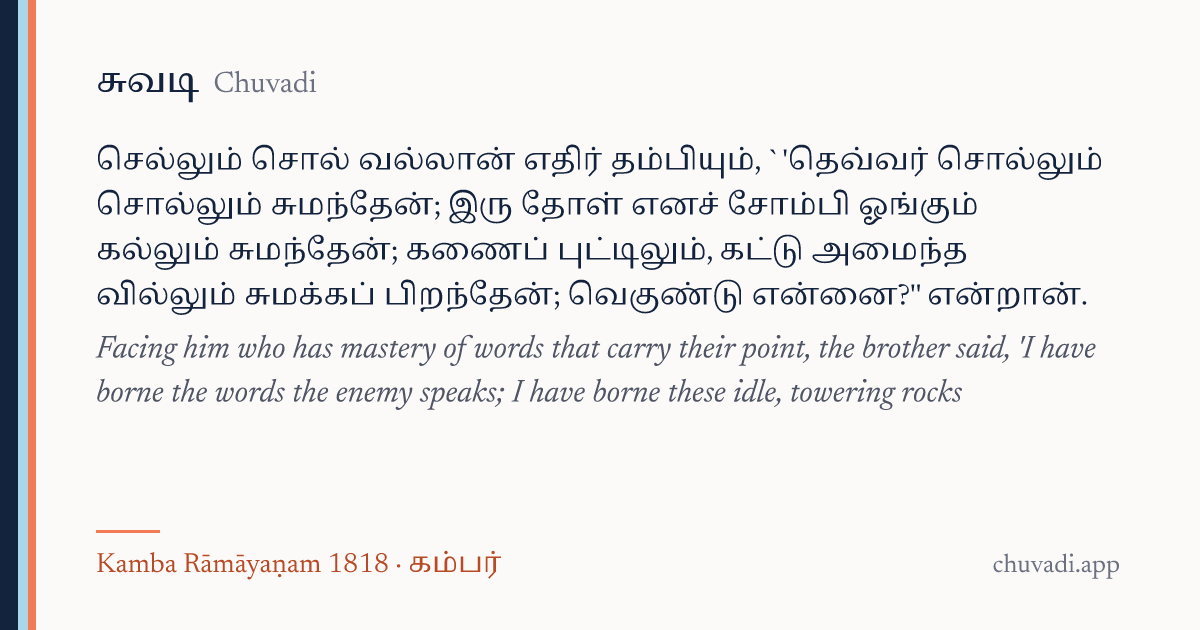
செல்லும் சொல் வல்லான் எதிர் - (குறித்த செயலை) நிறைவேற்ற வல்ல சொற்களைக் கூறுதல் வல்ல இராமன் எதிரே; தம்பியும் - இலக்குவனும்; “தெவ்வர் சொல்லும் சொல்லும் சுமந்தேன் - உன் பகைவர்களாகிய கைகேயி முதலியவர்கள் சொல்கின்ற சொல்லையும் தாங்கினேன்; இரு தோள் எனச் சோம்பி ஓங்கும் கல்லும் சுமந்தேன் - (அப் பகைவர்களை அழிக்க முயலாது) இரண்டு தோள் எனப் பெயர்பெற்று வேலையின்றி ஓய்ந்து கிடக்கும் மலைகளையும் தாங்கியுள்ளேன்; கணைப் புட்டிலும், கட்டு அமைந்த வில்லும் - அம்பு அறாத தூணியும், நன்கு கட்டிச் செய்யப்பெற்ற வில்லும் ஆகியவற்றையும்; சுமக்கப் பிறந்தேன் - பயனின்றித் தூக்கிக்கொண்டு கிடக்கப் பிறவி எடுத்தேன் (இத்தகைய துர்ப்பாக்கியனாகிய யான்); வெகுண்டு என்னை?” - கோபிப்பதால் என்ன பயன்; என்றான் -.
“தெவ்வர் சொல்லும் சொல்லும் சுமந்தேன்' என்பதற்கு இதுவரை பகைவர்களால் புகழப்படும் சொல்லைச் சுமந்தேனாகிய யான் என்று இலக்குவன் கூறியதாகப் பொருள் கோடலும் உண்டு. ஆயினும், இங்கே இலக்குவன் கூற்றில் வரும் மூன்றும் சினத்தாற் பயனில்லை என்கிற அவலநிலையில் கூறுவதாக ஒரு தொடராகப் பொருள் கோடலே சிறப்பாதல் கூர்ந்து அறிக. 'சொலல்வல்லன் சோர்விலன் அஞ்சான் அவனை, இகல்வெல்லல் யார்க்கும் அரிது' வெகுண்டு என்னை?' என்றான். 135
இராமன் வெறுப்புரை
ஆங்கிலம் · English translationAI
Translation
- Facing him who has mastery of words that carry their point, the brother said, 'I have borne the words
- the enemy speaks; I have borne these idle, towering rocks
- called my two shoulders; I was born only to carry a quiver of arrows
- and a well-bound bow; what use is my anger?'
What the poem says
Ilakkuvaṉ yields, but bitterly. Before Irāmaṉ's persuasive words he cannot win. He says he must now bear the enemies' insults, carry his two mighty shoulders like useless boulders, and lug his quiver and bow around for nothing.
What good is his anger then? The commentary prefers to read all three clauses as one cry of helpless frustration, and recalls the Kuṟaḷ saying that no one can defeat a man skilled in speech, untiring and fearless.