



கம்பராமாயணம் 1820 · அயோத்தியா 4.138
பாடல் · The poem
Tap a word to see its gloss in the commentary and where else it occurs.
பொருள் · Meaning in Tamil
(இலக்குவன்) மறை நான்கு என வாங்கல் செல்லா நால் தெண் திரை வேலையின் நம்பிதன் ஆணையால் - வேதங்கள் நான்கு என்று என்றும் குறைவுபடாத நான்கு கடல்களை உடைய ஆடவர் திலகமாகிய இராமனது கட்டளையால்; சீற்றம் துறந்தான் - சினத்தைக் கைவிட்டான்; எதிர் நின்று - (இராமன்) எதிரில் இருந்து; தெரிந்து - ஆராய்ந்து; செப்பும் - கூறுகின்ற; மாற்றம் - (தர்க்கவாத) வார்த்தைகளை; துறந்தான் - கைவிட்டான்; ஏற்றம் தொடங்காக் கடலின் - கரையைக் கடவாத கடல் போல; தணிவு எய்தி நின்றான் - (சினம்) அடங்கி நின்றான்.
“என்றும் வற்றாத நாற்பெருங் கடல் போன்ற நான்கு வேதங்களை உடைய நம்பி” என இயைக்க. சீற்றத் தணிவுக்குக் கடல் உவமை. அலை ஓயாது; ஆயினும் கட்டுக்குள் நிற்கும். இலக்குவன் உணர்ச்சி ஓயாது; ஆயினும், இராமபிரானின்
சொல்லுக்குக்கட்டுப்பட்டான்.
ஆங்கிலம் · English translationAI
Translation
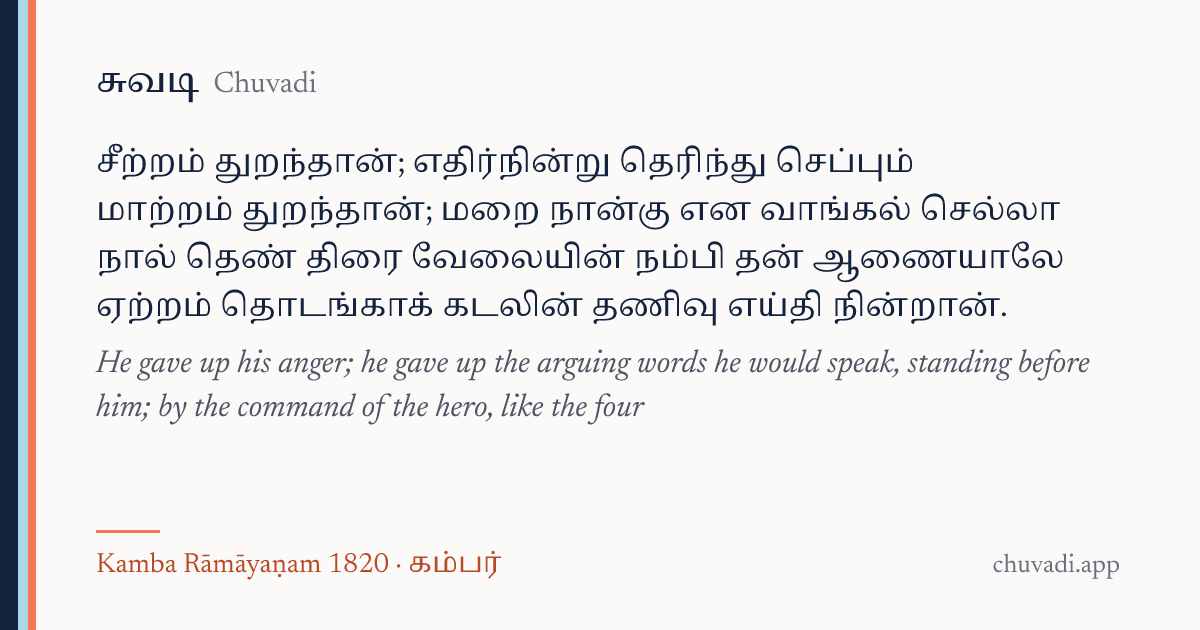
- He gave up his anger; he gave up the arguing words
- he would speak, standing before him; by the command of the hero, like the four
- clear-waved oceans that, like the four Vedas, never diminish,
- he grew calm and stood, like a sea that does not begin to rise.
What the poem says
Ilakkuvaṉ obeys his brother's command. He gives up his anger and stops arguing, and stands calm like a sea that does not overflow its shore.
Irāmaṉ is likened to the four undiminishing oceans, or, as the commentary prefers to construe it, is the hero who holds the four Vedas, inexhaustible as the four seas. The sea image fits Ilakkuvaṉ: its waves never rest, yet it stays within bounds; his feelings do not die, but he keeps within his brother's word.