



கம்பராமாயணம் 1822 · அயோத்தியா 4.140
பாடல் · The poem
Tap a word to see its gloss in the commentary and where else it occurs.
பொருள் · Meaning in Tamil
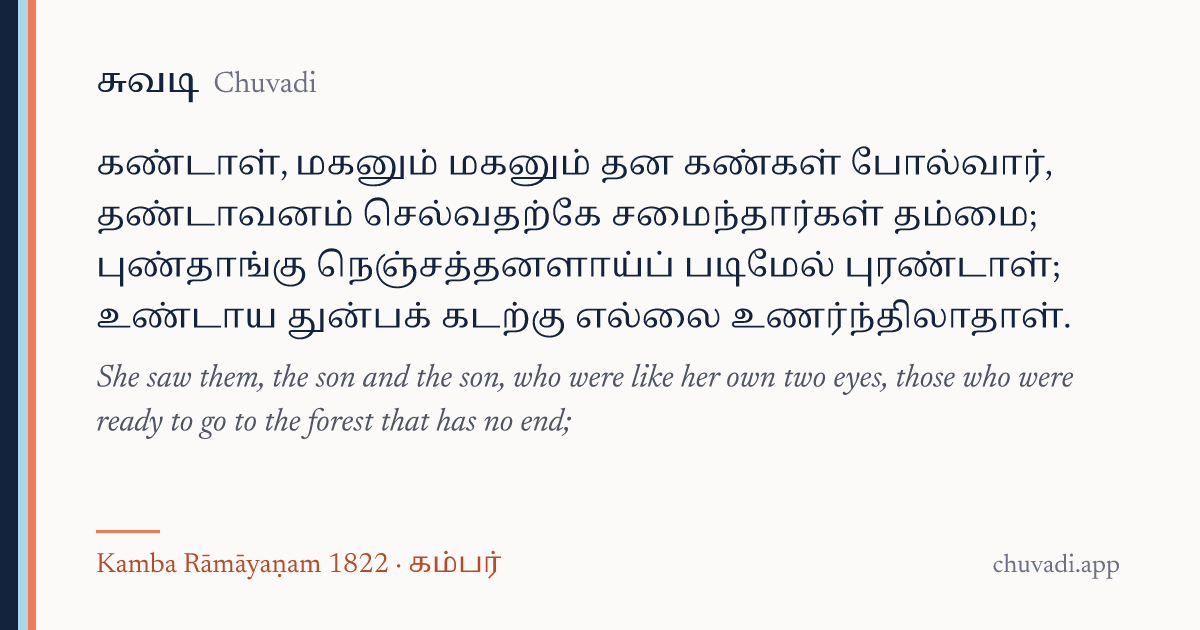
(சுமித்திரை) தண்டா வனம் செல்வதற்கே சமைந்தார்கள் - தடைபடாத காட்டுக்குச் செல்வதற்கு உறுதி செய்தவர்களாகிய; மகனும் மகனும் - இராமனும் இலக்குவனும்; ஆகிய தன கண்கள் போல்வார் தம்மை - தன் இரண்டு கண்களையும் போன்றவர்களை; கண்டாள் - பார்த்தாள்; புண்தாங்கு நெஞ்சத்தனளாய் - புண்பட்ட மனம் உடையவளாய்; உண்டாய துன்பக் கடற்கு எல்லை உணர்ந்திலாதாள் - தோன்றிய துன்பம் எனும் கடலுக்கு முடிவு காண மாட்டாது; படிமேல் - மண்ணின் மேல்; புரண்டாள் - விழுந்து புரண்டாள்.
தண்டா வனம் - எனப் பிரிக்காது ஒன்றாக்கித் தண்டகாரணியம் என்பதாகவும் உரைக்கலாம். சுமித்திரை இந்நிலையில் குறிப்பிட்டு ஓர் இடத்தைச் சுட்டுவது பொருத்தமாய் இராது என்பதால் தண்டா வனம் என்பதாகப் பிரித்துப் பொருள் உரைக்கப் பெற்றது. தண்டகாரணியம் என்பது விந்திய மலைக்கும் சைவல மலைக்கும் இடையில் உள்ள காடு.
ஆங்கிலம் · English translationAI
Translation
- She saw them, the son and the son, who were like her own two eyes,
- those who were ready to go to the forest that has no end;
- with a wounded heart she rolled upon the ground,
- she who could find no shore to the sea of grief that had risen.
What the poem says
Cumittirai sees Irāmaṉ and her own son Ilakkuvaṉ, both dear to her as her two eyes, ready to leave for the forest.
Heartbroken, she falls and rolls on the ground, lost in a sea of sorrow without end. The commentary notes that 'taṇṭā vaṉam' could be read as the Daṇḍaka forest between the Vindhya and Śaivala mountains, but prefers 'the endless forest', since she would hardly name a particular place at such a moment.