



கம்பராமாயணம் 1824 · அயோத்தியா 4.142
பாடல் · The poem
Tap a word to see its gloss in the commentary and where else it occurs.
பொருள் · Meaning in Tamil
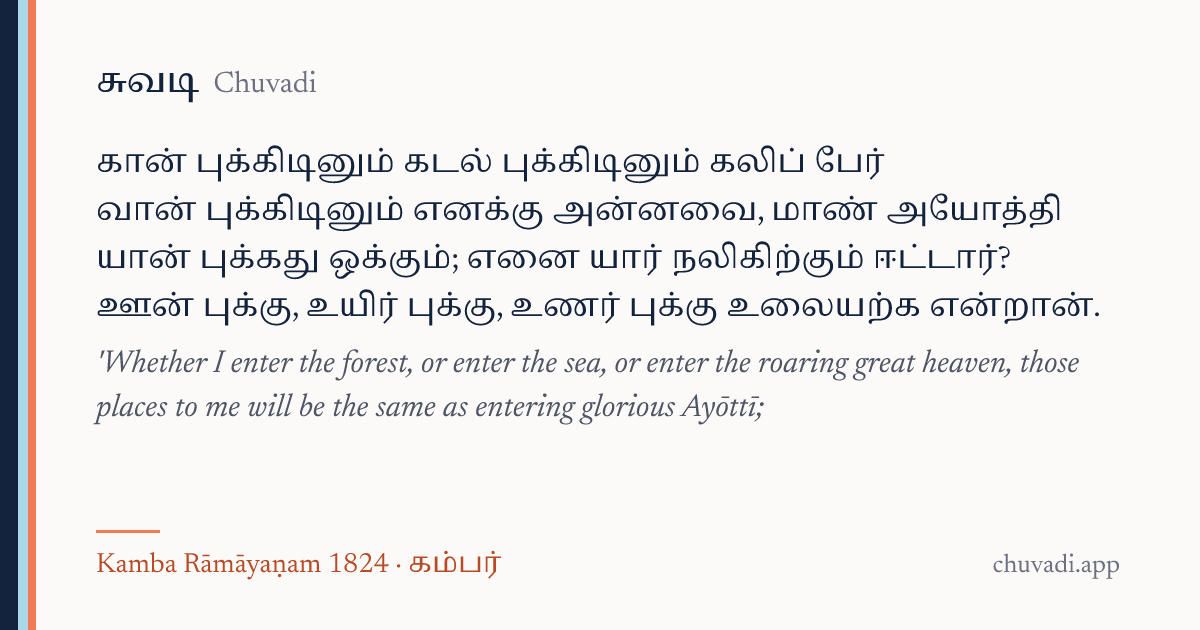
(அம்மா!) “கான் புக்கிடினும் - காட்டில் சென்றாலும்; கடல் புக்கிடினும் - கடலிற் சென்றாலும்; கலிப் பேர் வான் புகினும் - ஆரவாரத்தையும் பெருமையையும் உடைய தேவலோகத்தை அடைந்தாலும்; எனக்கு -; அன்னவை - அந்த இடங்கள்; யான் மாண் அயோத்தி புக்கது ஒக்கும் - யான் சிறந்த அயோத்தி நகரத்துக்குள் இருப்பதைப் போலவே ஆகும்; எனை நலிகிற்கும் ஈட்டார் யார்? - என்னைத் துன்புறுத்தும் ஆற்றல் உடையவர் யார் உளர்; ஊன்புக்கு, உயிர்புக்கு, உணர்புக்கு உலையற்க” - உடம்பு, உயிர் உணர்வு ஆகியவற்றுக்குள் (துயரம்) ஊடுருவித் தளராதொழிக; என்றான் -.
எந்நிலையில் இருந்தாலும் ஒரே தன்மையான மனம் உடையவன் ஆதலால் எல்லாம் எனக்கு அயோத்தியே என்றான். இத்தகைய சுத்த சாத்துவிக மனம் உடையானைத் துன்புறுத்த வல்லார் யார்? ஆகவே, மனம் தளராதீர்கள் என்று சுமித்திரையைத் தேற்றினான். உணர்பு உக்கு எனப் பிரித்து உணர்வழிந்து என உரைப்பினும் அமையும். ஊன் கெட்டு, உயிர் கெட்டு, உணர்வு கெட்டு, என் உள்ளமும் போய் நான் கெட்டவா பாடி" என்ற (திருவா. திருத்தெள். /8.) மணிவாசகர் பாடலில் இவ்வரிசை அமைதல் காண்க.
ஆங்கிலம் · English translationAI
Translation
- 'Whether I enter the forest, or enter the sea, or enter the roaring great
- heaven, those places to me will be the same as entering glorious Ayōttī;
- who has the strength to harm me? Do not let grief enter your flesh,
- enter your life, enter your mind, and wear you down,' he said.
What the poem says
Irāmaṉ consoles Cumittirai: wherever he goes, forest, sea or heaven, it will be the same to him as being in Ayōttī, since his mind stays the same in every condition.
No one can harm a person of such pure and steady mind, so she must not let grief seep into her body, life and feelings. The commentary compares a line of Māṇikkavācakar with the same sequence of flesh, life and feeling.