



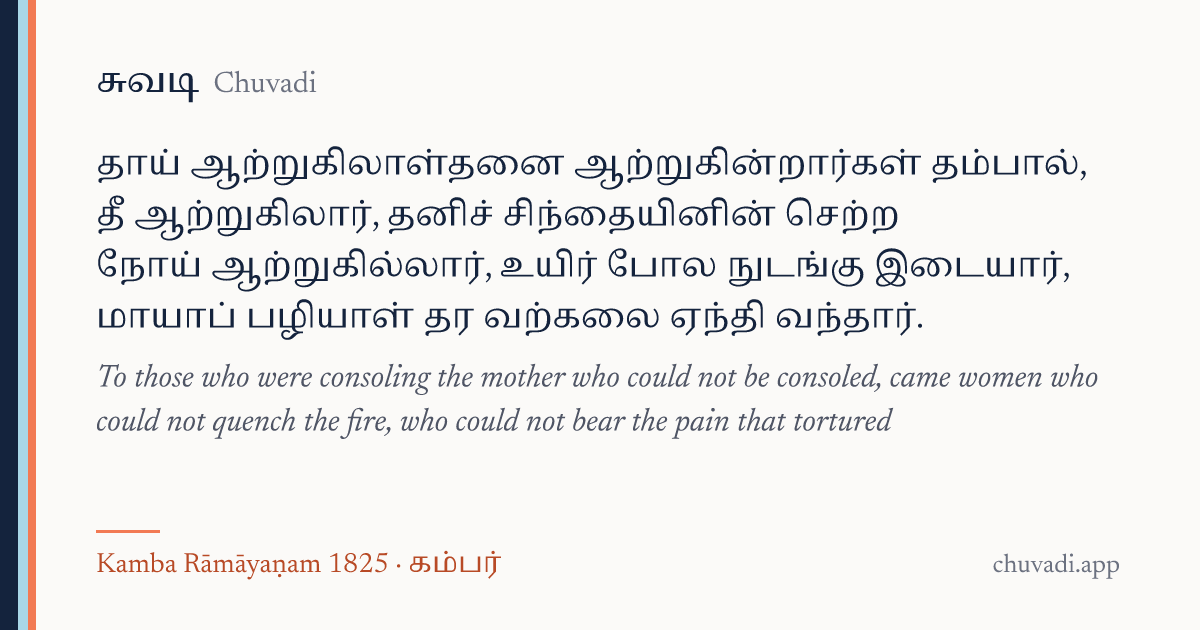
கம்பராமாயணம் 1825 · அயோத்தியா 4.143
பாடல் · The poem
Tap a word to see its gloss in the commentary and where else it occurs.
பாட வேறுபாடு · Project Madurai reads
பொருள் · Meaning in Tamil
ஆற்றுகிலாள் தாய்தனை - துயரத்தை ஆற்றமாட்டாதவளாய் உள்ள தாய் சுமித்திரையை; ஆற்றுகின்றார்கள் தம்பால் - தேற்றித் தெளிவிக்கின்ற அந்த இராமலக்குவர்கள் இடத்தில்; தீ ஆற்றுகிலார்- பிரிவுத் தீயை அணைக்கமாட்டார்; தனிச்சிந்தையினின்று செற்ற நோய் - துணையற்ற தனித்த மனத்திலிருந்து கொல்லுகின்ற வேதனையை; ஆற்றுகில்லார் - ஆற்ற மாட்டாத; உயிர் போல நுடங்கு இடையார் - நுண்ணியதாகிய உயிர்போலத் துவளுகின்ற இடையை உடைய மகளிர்; மாயாப் பழியாள் தர - என்றும் அழியாத பழியை உடைய கைகேயியானவள் கொடுத்தனுப்ப; வற்கலை ஏந்தி வந்தார் - மரவுரியைச் சுமந்து வந்தார்கள்.
ஏவல் மகளிர் ஆயினும் அவரும் இராமன் பிரிவுத் துயரத்தால் துடிக்கின்றனர். அவர்கள் கையில் மரவுரி கொடுத்து அனுப்பினாள் கைகேயி என்பதாம். முன்பும் “கைகேசியும் கொடிய கூனியும் அல்லாமல் கொடியார் பிறர் உளரோ” என்ற (1704.) படியாள் இவ்விருவர் தவிர மற்றவர் அனைவரும் துயரால் துடிக்கின்றவர்களே என்பது போந்தது. 'மாயாப் பழியாள்' கைகேயி. பின்பும் பரதன் “மாயா வன்பழி தந்தீர்' (2177.) என்பது காண்க. வன் கலை - வலிய ஆடை, மரவுரி - 'வற்கலா' என்னும் வடசொல் வற்கலை எனத் தமிழ்முடிபு பெற்றது எனலாம்.
ஆங்கிலம் · English translationAI
Translation
- To those who were consoling the mother who could not be consoled,
- came women who could not quench the fire, who could not bear the pain that tortured
- their lonely hearts, whose waists swayed slender as life itself,
- carrying bark garments, sent by her whose infamy will never die.
What the poem says
While Irāmaṉ and Ilakkuvaṉ comfort Cumittirai, maidservants arrive carrying garments of tree bark, sent by Kaikēyi, whose disgrace will never fade.
The women themselves burn with grief at Irāmaṉ's going and can hardly bear it. As the commentary says, everyone except Kaikēyi and the hunchback suffers; Paratan too will later speak of Kaikēyi's undying shame.