



கம்பராமாயணம் 1827 · அயோத்தியா 4.145
பாடல் · The poem
Tap a word to see its gloss in the commentary and where else it occurs.
பாட வேறுபாடு · Project Madurai reads
பொருள் · Meaning in Tamil
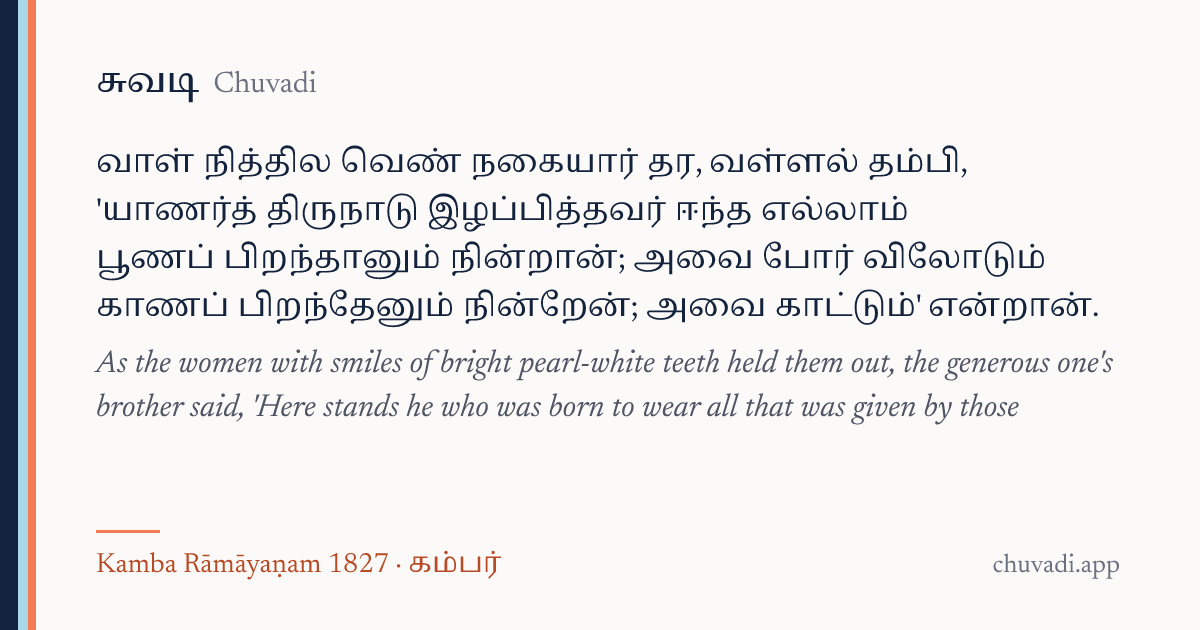
வாள் நித்தில வெண் நகையார் தர - ஒளியுடைய முத்துப் போலும் வெள்ளிய பற்களை உடையாராய ஏவல் மகளிர் கொடுக்க; வள்ளல் - இராமன் தம்பியாய இலக்குவன்; “யாணர்த் திருநாடு இழப்பித்தவர் - புதிய வருவாய்களைச் சிறந்த கோசல நாட்டை இழக்கும்படி செய்த கைகேயி; ஈந்த எல்லாம் - கொடுத்த எல்லாப் பொருளையும்; பூணப் பிறந்தானும் நின்றான் - அணிந்து கொள்ளப் பிறந்தவனாகிய என் தமையனும் இருக்கின்றான்; அவை - அந்தக் காட்சிகளை; போர் விலோடும் - போரில் ஆற்றல் காட்டும் வில்லைச் சுமந்து கொண்டே; காணப் பிறந்தேனும் நின்றேன் - காண்பதற்குப் பிறந்த நானும் இருக்கின்றேனே; அவை காட்டும்” - அவற்றைக் காண்பியுங்கள்; என்றான் -
நாடு இழப்பித்த கைகேயியை ஒன்றும் செய்ய இயலாத எனக்குப் “போர்வில்' எதற்காக என்று தன்னிரக்கமாகக் கூறியது “போர்விலோடும்' என்ற தொடர்.
ஆங்கிலம் · English translationAI
Translation
- As the women with smiles of bright pearl-white teeth held them out, the generous one's brother said,
- 'Here stands he who was born to wear all that was given by those
- who made him lose the rich and splendid land; and here stand I, born
- to watch it, with my war-bow in hand; show them to us.'
What the poem says
Ilakkuvaṉ answers the maidservants with bitter irony. His brother, it seems, was born to put on whatever Kaikēyi, who took the kingdom from him, chooses to hand him.
And he himself, a warrior with a bow, was born merely to stand by and watch. 'Show them to us,' he says, asking for the bark garments. The commentary hears self-pity in the phrase 'with my war-bow': what use is a bow to one who can do nothing to Kaikēyi?