



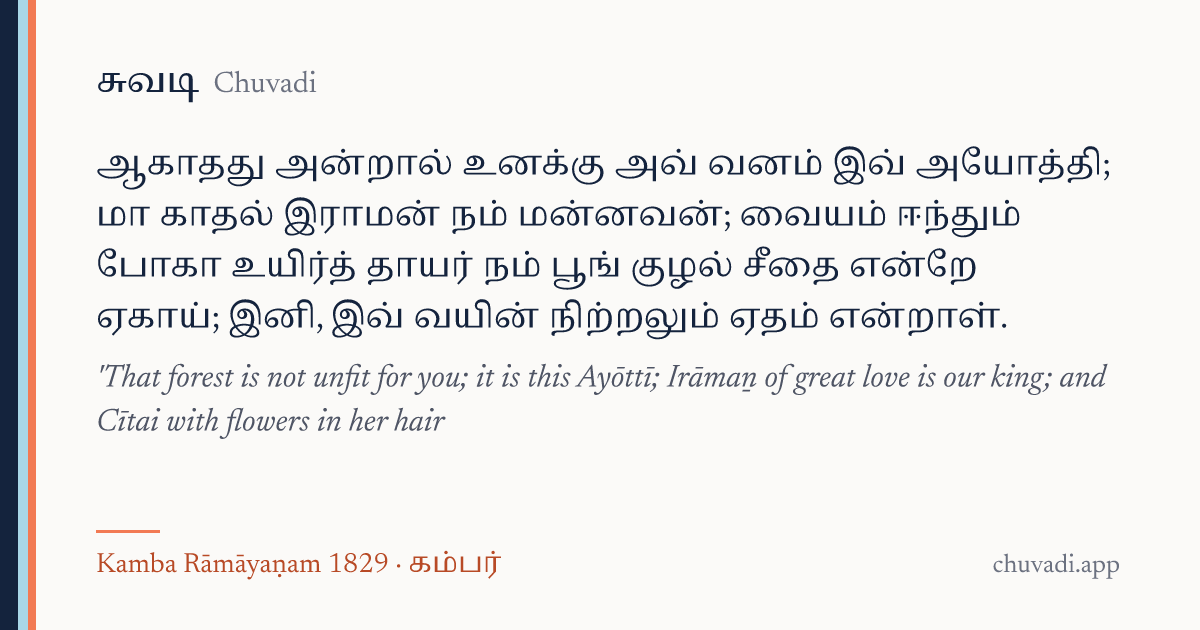
கம்பராமாயணம் 1829 · அயோத்தியா 4.147
பாடல் · The poem
Tap a word to see its gloss in the commentary and where else it occurs.
பொருள் · Meaning in Tamil
(இராமனுக்கு ஆகிய) அவ்வனம் - அந்தக் காடு; உனக்கு ஆகாதது அன்றால் - நீ செல்லுதற்குத் தகாதது அன்று; இவ் அயோத்தி - இந்த அயோத்தி மாநகர் போன்றதே ஆகும்; மா காதல் இராமன் நம் மன்னவன் - சிறந்த அன்பினை உடைய இராமனே (உனக்கு இனி) நம் மன்னனாகிய தயரதன் ஆம்; நம் பூங்குழல் சீதை - நம்முடைய பூக்கள் அணிந்த கூந்தலை உடைய சீதையே; வையம் ஈந்தும் - இராமன் பூமியைப் பரதனுக்குக் கொடுத்துக் காடு செல்லத் துணிந்த பின்னும்; போகா உயிர்த் தாயர் - போகாத உயிரையுடைய தாய்மார்கள் ஆவர்; என்று - எனக் கருதி; ஏகாய் - வனத்திற்கு இராமனுடன் செல்வாயாக; இனி இவ்வயின் நிற்றலும் ஏதம்” - இனிமேல் இங்கே நீ நின்று தாமதிப்பதும் குற்றமாகும்; என்றாள் -
‘இராமன் இருக்கும் இடம் அயோத்தி என்னும் உலக வழக்கையே சுமித்திரை மகனுக்குக் கூறினாள். இராமனையும் சீதையையும் தந்தை தாயாகவும், வனத்தை அயோத்தியாகவும் கருதி இங்குள்ளது போலவே வனத்தில் இரு என்றாளாம். “என்றே” “ஏ” காரம் தேற்றம்.
ஆங்கிலம் · English translationAI
Translation
- 'That forest is not unfit for you; it is this Ayōttī;
- Irāmaṉ of great love is our king; and Cītai with flowers in her hair
- is the mothers whose lives did not leave them even when he gave away the world;
- thinking so, go; even to stand here longer is a fault,' she said.
What the poem says
Cumittirai gives Ilakkuvaṉ her blessing in one of the epic's famous speeches. He should think of the forest as Ayōttī, Irāmaṉ as his king and father Tacarataṉ, and Cītai as his mothers, who, unlike Cumittirai herself, did not die of grief when Irāmaṉ gave up the kingdom.
She draws on the saying that wherever Irāmaṉ is, there is Ayōttī. He must go at once; even to linger is wrong.