



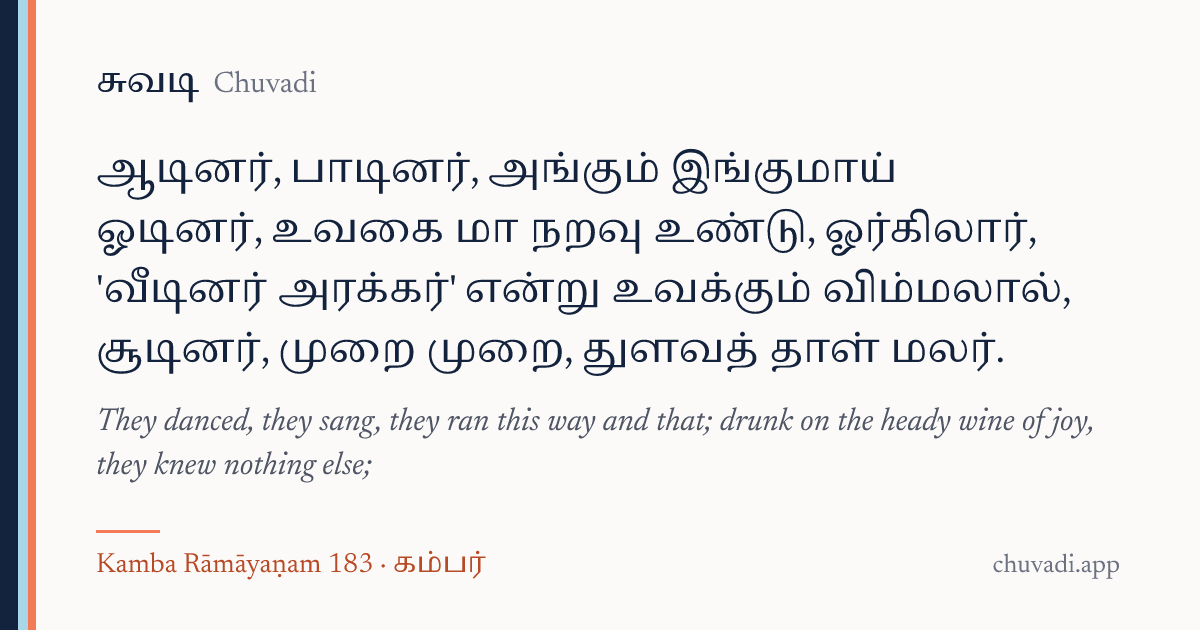
கம்பராமாயணம் 183 · பால 5.15
பாடல் · The poem
Tap a word to see its gloss in the commentary and where else it occurs.
பொருள் · Meaning in Tamil
அரக்கர் வீடினர் என்று உவக்கும் விம்மலால் - அசுரர்கள் இறந்து பட்டார்கள் என மனம் மகிழும் பொருமலால்; உவகையாம் நறவுஉண்டு ஓர்கிலார் - (அத்தேவர்கள்) மகிழ்ச்சி என்னும் தேனைப் பருகி, எதுவும் அறியாதவர்களாய்; ஆடினர் பாடினர் அங்கும் இங்குமாய் ஓடினர் - ஆடியும், பாடியும் அங்கும் இங்குமாய் ஓடினவர்களாக, துளவத்தாள் மலர்முறை முறை சூடினர் - அப்பரமனது துழாய் மணக்கும் பாத மலர்களை வரிசை வரிசையாகச் சென்று வணங்கித் தலையில் சூடிக்கொண்டார்கள்.
களிப்பு மிகுந்தவர்கள் ஆடுதலும் பாடுதலும் இயற்கையாம். ‘பரமனது தரிசனமே தமது துயரைப் போக்கும்’ என்ற நம்பிக்கை உடையவராதலால் துயருக்கே காரணமான அரக்கர் அழிவர் என்ற மகிழ்ச்சி மிகுதியால் ஆடிப்பாடி உவந்தனர் என்பது கருத்து. உவகையை நறவாக உருவகித்தார். விம்மல்: பொருமல்.
ஆங்கிலம் · English translationAI
Translation
- They danced, they sang, they ran this way and that;
- drunk on the heady wine of joy, they knew nothing else;
- in the swell of gladness, crying 'The demons are finished!',
- they took his tulasi-scented lotus feet upon their heads, one after another.
What the poem says
The gods are drunk with happiness. Merely seeing Viṣṇu convinces them that the demons are as good as dead, so they dance, sing and run about.
They take turns placing his feet, fragrant with sacred basil (tulasi), on their heads, the highest gesture of reverence.