



கம்பராமாயணம் 1835 · அயோத்தியா 4.153
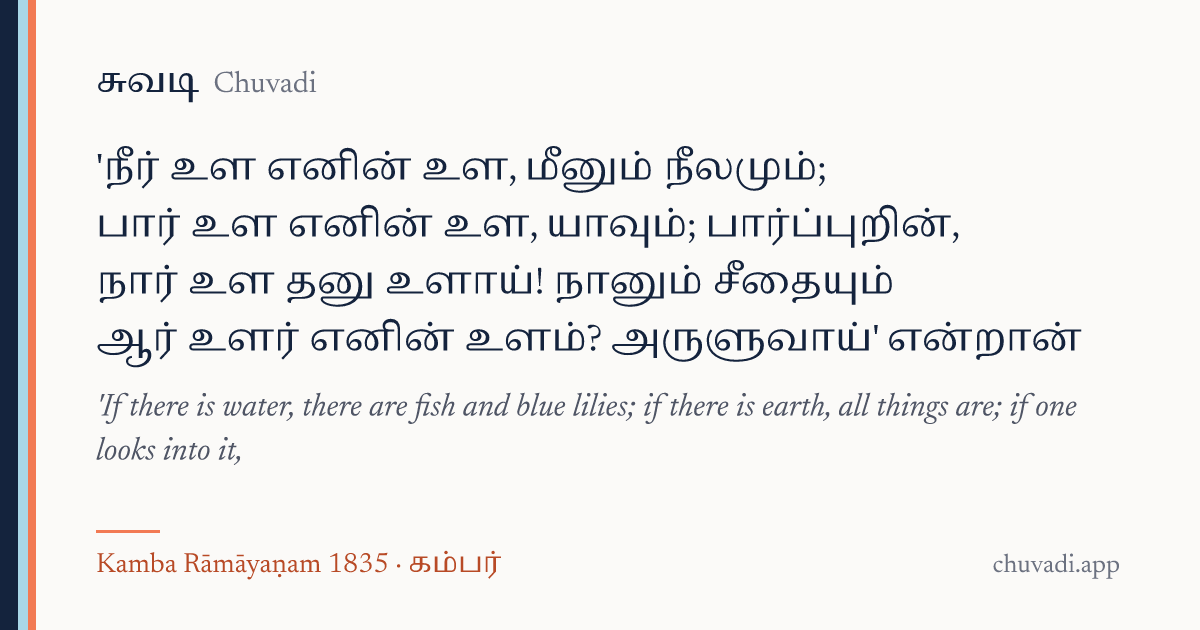
பாடல் · The poem
Tap a word to see its gloss in the commentary and where else it occurs.
பொருள் · Meaning in Tamil
“நார் உள தனு உளாய்! - நாணை உடைய வில்லை ஏந்தியவனே; பார்ப்புறின் - ஆராய்ந்து பார்த்தால்; நீர் உள எனின் - தண்ணீர் இருக்குமானால்; மீனும் நீலமும் உள - மீன்களும், கருங்குவளையும் உள்ளனவாம்; பார் உள எனின் - இந்தப் பூமி இருக்கும் எனில்; யாவும் உள - எல்லாப் பொருளும் உள்ளனவாம் (அவை போலவே); நானும் சீதையும் -; ஆர் உளர் எனின் உளம் - யார் இருந்தால் இருக்கின்றவர்கள் ஆவோம்; அருளுவாய்” - கூறுவாயாக, ” என்றான்.
தண்ணீர் உள்ள வரை மீனும் நீலமும் இருக்கும். அதுபோல, இராமன் உள்ளதுணையும் இலக்குவனும் சீதையும் உளர் என்பதாம். மீன் நீர் உள்ள அளவும் இருந்து நீர் வற்றி இல்லாமற் போனால் இறந்துபட்டொழியும். அது இலக்குவனுக்கு உவமை. நீலம் நீர் உள்ளதுணையும் வாழும் நீர் வற்றி இல்லாமற் போனால் காய்ந்து கிழங்காகக் கிடக்கும்; மீண்டும் நீர் வந்துழி முளைவிட்டுத் தளிர்த்து மேல் வந்து பூக்கும். அது சீதைக்கு உவமை. பின்னர்ச் சிலகாலம் இராமனைப் பிரிந்து அசோக வனத்தில் இருந்து வற்றிக் கிடந்து மீண்டும் இராமனைக் கண்டு கூடித் தளிர்த்தாள் ஆதலின், சிறிதளவு கூடத் தன்னால் பிரிந்து வாழ இயலாது என்பான் இலக்குவன் தன்னை மீனாகச் சொல்லிக்கொண்டான் என்பது நயம். பூமி இருந்தால் எல்லாப் பொருளும் இருக்கும். அது போல இராமன் இருந்தால் அனைவரும் வாழ்வர். 'அருளுவாய்' என்று இராமனையே பதில் கூறும்படி வைத்த இலக்குவனது சாதுரியம் ஈண்டு நுகரத்தக்கது.
ஆங்கிலம் · English translationAI
Translation
- 'If there is water, there are fish and blue lilies;
- if there is earth, all things are; if one looks into it,
- you who bear the strung bow, I and Cītai —
- on whose being do we depend for ours? Tell me,' he said.
What the poem says
Ilakkuvaṉ answers with two images. Fish and blue water lilies live only while there is water; all things exist only because the earth exists. In the same way, he and Cītai live only while Irāmaṉ is with them, so how can he be asked to stay behind?
The two images are carefully matched. A fish dies at once when the water dries up, and that is Ilakkuvaṉ, who cannot survive even a short separation. A water lily shrivels to its root in a dry season but sprouts and flowers again when the water returns, and that foreshadows Cītai, who will later waste away in captivity and revive when she sees Irāmaṉ again. Ilakkuvaṉ cleverly leaves Irāmaṉ to give the answer himself.