



கம்பராமாயணம் 1836 · அயோத்தியா 4.154
பாடல் · The poem
Tap a word to see its gloss in the commentary and where else it occurs.
பொருள் · Meaning in Tamil
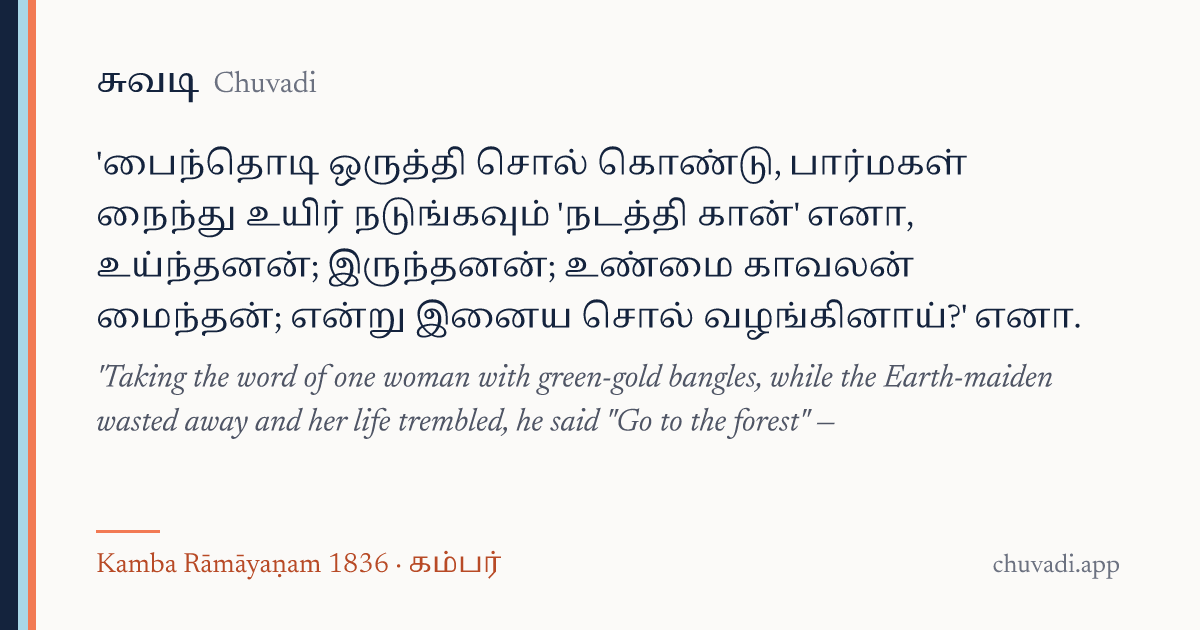
“பைந்தொடி ஒருத்தி சொல் கொண்டு - பசிய பொன்னால் ஆகிய வளையல்களை அணிந்த ஒரு கைகேயியின் வார்த்தையை வைத்து; பார்மகள் - நிலமகள்; நைந்து உயிர் நடுங்கவும் - தேய்ந்து உயிர் தடுமாறவும் (அது கருதாது); “கான் நடத்தி எனா” - காட்டிற்குச் செல் என்று (உன்னை ஏவி), உய்ந்தனன் இருந்தனன் உண்மை காவலன் - பிழைத்து உயிர்வாழும் சத்தியத்தைக் காக்கின்ற மன்னனது; மைந்தன் என்று - மகன் தானே என்று கருதி; இனைய சொல் வழங்கினாய்?” - (என்னைப் பிரிந்து அயோத்தியில் இரு என) இத்தகைய கொடுஞ் சொல்லைச் சொன்னாய்; எனா - என்று சொல்லி,
“நின்கண் பரிவு இல்லவர்' என்ற (1732) செய்யுளோடு இதனை ஒப்பிட்டால் இலக்குவன் கூற்றுத் தெளிவாகும். “தந்தையர் ஒப்பர் மக்கள் என்பதனால்” இவ்வாறு கூறினாயோ என்றான் இலக்குவன். “உண்மை காவலன்' இங்கு இலக்குவன் நோக்கில் இகழ்ச்சிக் குறிப்பாம்.
ஆங்கிலம் · English translationAI
Translation
- 'Taking the word of one woman with green-gold bangles, while the Earth-maiden
- wasted away and her life trembled, he said "Go to the forest" —
- and lived on, and stayed alive, that guardian of truth;
- is it because I am his son that you speak such words to me?' he said.
What the poem says
Ilakkuvaṉ's reply turns bitter against his father. Tacarataṉ, on the word of one woman, Kaikēyi, sent Irāmaṉ to the forest while the whole earth grieved, and yet went on living. Calling him the guardian of truth is here a sneer. Ilakkuvaṉ asks whether Irāmaṉ thinks that he, being that king's son, is equally able to abandon the one he loves and carry on.