



கம்பராமாயணம் 1838 · அயோத்தியா 4.156
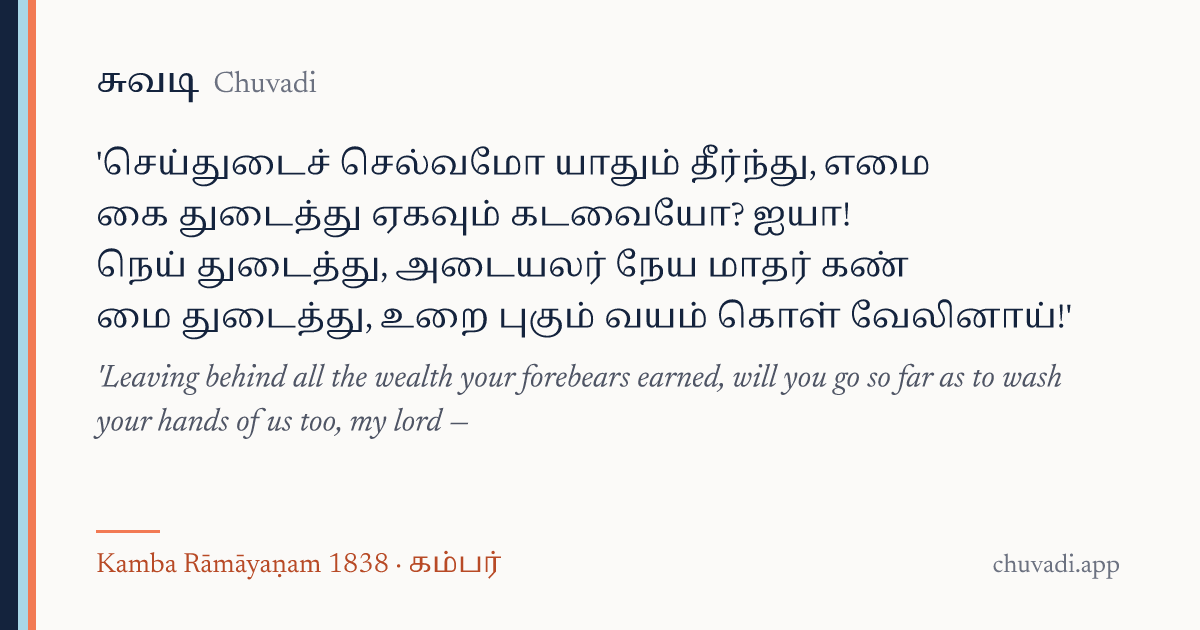
பாடல் · The poem
Tap a word to see its gloss in the commentary and where else it occurs.
பொருள் · Meaning in Tamil
“ஐயா! -; நெய் துடைத்து - நெய்யால் துடைக்கப்பட்டு; அடையலர் - பகைவரது; நேய மாதர் - அன்புடை மனைவியரது; கண் மை துடைத்து - கண்ணில் எழுதிய மையை அழித்து; உறை புகும் - உறையின்கண் தங்குகின்ற; வயம் கொள் - வலிமை கொண்ட; வேலினாய்! - வேலை உடையவனே; செய்துடைச் செல்வமோ - நின் முன்னோர்களால் தேடப்பெற்றுப் பரம்பரை முறையால் நினக்குரியதாகி உள்ள செல்வமாகிய; யாதும் தீர்ந்து - எல்லாவற்றையும் நீங்கி; எமைக் கை துடைத்து - எங்களையும் கைவிட்டு; ஏகவும் கடவையோ? - (காட்டிற்குப்) போவதற்கும் கடவாயோ.
துருப் பிடிக்காமைப் பொருட்டு வேலுக்கு நெய் பூசுதல் வழக்கம் ஆதலின், “நெய்யால் துடைத்து' என்றார் பகைவரைப் போரில் கொல்லுதலின் அவர் காதலியர் அழுத அழுகையால் அவர்தம் கண் மை கரைந்து அழியும் ஆதலின், 'கண்மை துடைத்தது' வேல் என்று எண்ணினேன், எங்களையும் கைவிட்டுச் செல்லத் தயாராகி விட்டாயோ? என்றான் - எமை என்றது சீதையையும் உளப்படுத்தியதாகும்.
ஆங்கிலம் · English translationAI
Translation
- 'Leaving behind all the wealth your forebears earned,
- will you go so far as to wash your hands of us too, my lord —
- you whose mighty spear, wiped with ghee, wipes the collyrium
- from the eyes of your enemies' loving wives, and goes back into its sheath?'
What the poem says
Ilakkuvaṉ protests that Irāmaṉ is giving up not only his ancestral kingdom but also his brother. He addresses him by his warlike spear: it is wiped with ghee to keep off rust, and in battle it wipes away the dark eye-paint of enemy wives, washed off by their tears when their husbands fall. The 'us' Irāmaṉ would abandon includes Cītai as well.