



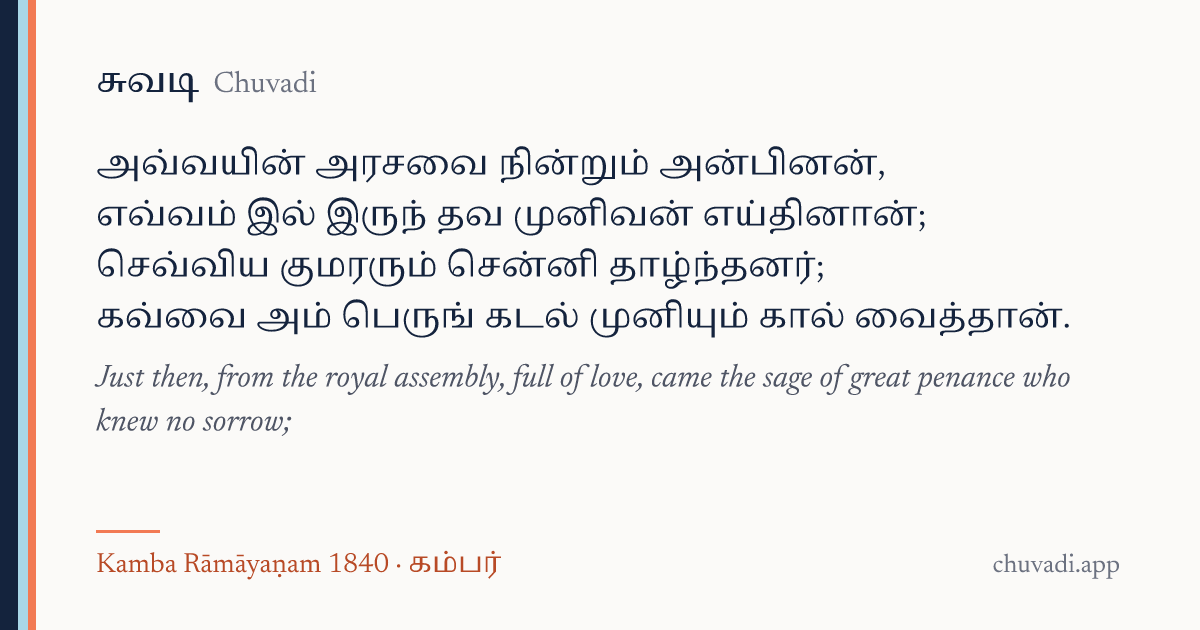
கம்பராமாயணம் 1840 · அயோத்தியா 4.158
பாடல் · The poem
Tap a word to see its gloss in the commentary and where else it occurs.
பொருள் · Meaning in Tamil
எவ்வம் இல் அருந்தவ முனிவன் - துன்பமற்ற அரிய தவத்தைச் செய்த முனிவனாய வசிட்டன்; அரசவை நின்றும் - அரச சபை மண்டபத்திலிருந்தும்; அன்பினன் - இராமனிடத்து அன்பை உடையனாய்; அவ்வயின் - அச் சுமித்திரை மாளிகையின்கண்; எய்தினான் - அடைந்தான்; செவ்விய குமரரும் - நேரிய மைந்தர்களாய இராமலக்குவர்களும்; சென்னி தாழ்ந்தனர் - தலையால் வணங்கினார்கள்; முனியும் - வசிட்டனும்; கவ்வை அம் பெருங்கடல் - துன்பம் என்னும் பெரிய கடலில்; கால்வைத்தான் - இறங்கத் தொடங்கினான்.
துன்பம் ஏதும் எய்தாது அருந்தவம் முடித்தவன் அன்பினால் இப்போது துன்பக் கடலில் கால்வைத்தான் என்றது ஒரு நயம். அன்னமும் துயர்க்கடல் அடி வைத்தாள் அரோ (2401.) என்று பின்வருவதும் காண்க.
ஆங்கிலம் · English translationAI
Translation
- Just then, from the royal assembly, full of love,
- came the sage of great penance who knew no sorrow;
- the noble princes bowed their heads to him;
- and the sage too set foot in a vast sea of grief.
What the poem says
Vacittaṉ, the royal preceptor, comes from the king's council hall to Cumittirai's palace, where the brothers are, and they bow to him. The poet notes the irony that this sage, who had completed his austerities without ever knowing sorrow, now steps into an ocean of grief out of love for Irāmaṉ. A later verse uses the same image for Cītai.