



கம்பராமாயணம் 1846 · அயோத்தியா 4.164
பாடல் · The poem
Tap a word to see its gloss in the commentary and where else it occurs.
பாட வேறுபாடு · Project Madurai reads
பொருள் · Meaning in Tamil
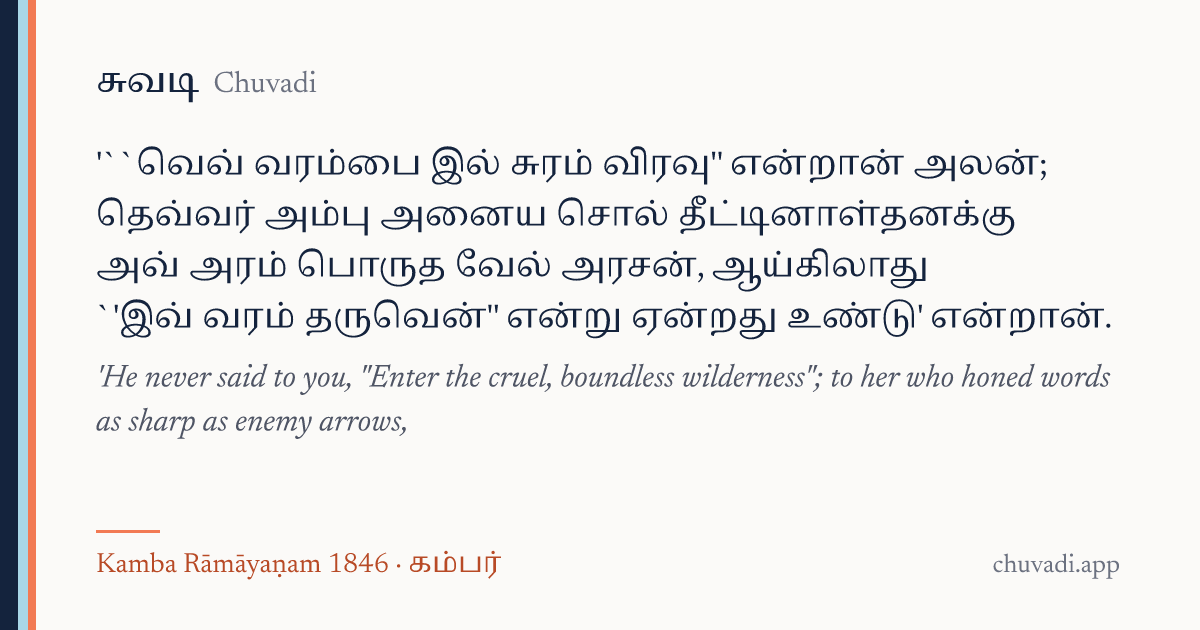
(அது கேட்ட வசிட்டன் இராமனை நோக்கி) “வெவ் - கொடிய; வரம்பை இல் - எல்லை இல்லாத; சுரம் - காட்டை; விரவு” - சேர்வாய்; என்றான் அலன்' - என்று உன்னைப் பார்த்து அரசன் சொன்னானில்லை; தெவ்வர் அம்பு அனைய சொல் தீட்டினாள் தனக்கு - பகைவரது கணையை ஒத்த கொடிய வார்த்தையை மேலும் கொடுமையாகச் சொன்ன கைகேயிக்கு; அவ் அரம் பொருத வேல் அரசன் - அந்த அரத்தால் அராவிக் கூர்மை செய்யப்பெற்ற வேலை உடைய தசரதன்; ஆய்கிலாது - ஆராயாமல்; “இவ் வரம் தருவென்' என்று ஏன்றது உண்டு - இந்த வரத்தைத் தருவேன் என்று ஒப்புக்கொண்டது உண்டு அவ்வளவே, என்றான் -
தயரதன் உன்னைக் காட்டுக்கு ஏகும்படி நேராக ஆணையிடவில்லை. கைகேயிக்கு வரம் தந்தேன் என்று ஒப்புக்கொண்ட அளவேதான். ஆகவே, இதில் அரசனது ஆணையை மீறல் என்பது இல்லை என்று இராமனுக்கு வசிட்டன் கூறினான். வரம்பை; வரம்பு; ஐகாரம் சாரியை.
ஆங்கிலம் · English translationAI
Translation
- 'He never said to you, "Enter the cruel, boundless wilderness";
- to her who honed words as sharp as enemy arrows,
- the king whose spear is ground keen on the file, without weighing it,
- only agreed, "I will grant this boon" — that is all,' he said.
What the poem says
Vacittaṉ argues that Irāmaṉ is not bound to go. Tacarataṉ never ordered him into the wilderness himself. He only agreed, without thinking, to grant Kaikēyi a boon when she pressed him with words as sharp as an enemy's arrows. Staying would therefore not be disobeying the king.