



கம்பராமாயணம் 1847 · அயோத்தியா 4.165
பாடல் · The poem
Tap a word to see its gloss in the commentary and where else it occurs.
பாட வேறுபாடு · Project Madurai reads
பொருள் · Meaning in Tamil
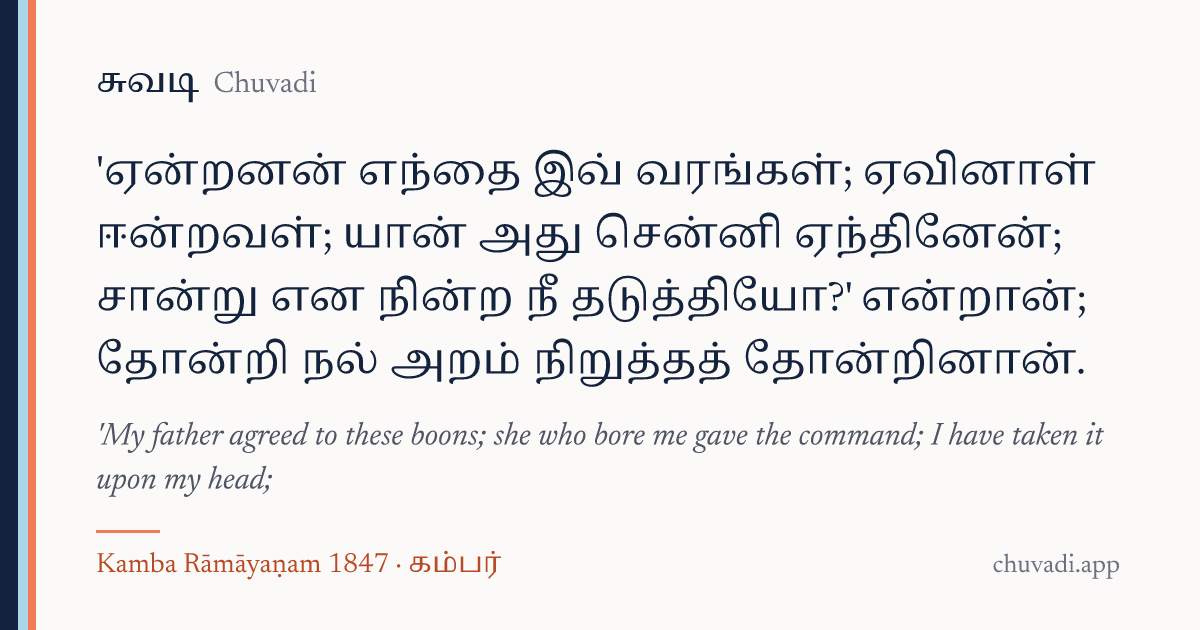
தோன்றிய நல் அறம் நிறுத்தத் தோன்றினான் - விளங்கிய நல்ல தருமத்தை உலகில் நன்கு நிலைபெறுத்த அவதாரம் செய்த இராமன் (வசிட்டனை நோக்கி); “எந்தை - என் தந்தையாகிய தசரதன்; இவ்வரங்கள் - இந்த இரண்டு வரங்களையும்; ஏன்றனன் - தருவதாக - தந்ததாக ஒப்புக்கொண்டான்; ஈன்றவள் - என் தாய்; ஏவினாள் - ஆணை இட்டாள்; அது - அந்த உத்தரவை; யான் -; சென்னி ஏந்தினேன் - தலைமேல் தாங்கினேன்; சான்று என நின்ற நீ - இவற்றுக்கெல்லாம் சாட்சியாக இருந்த நீ; தடுத்தியோ? - இதனை விலக்குகிறாயோ? ' என்றான் -.
வரம் கொடுப்பதாக ஒப்புக்கொண்ட பிறகு அரசன் “என்னை நேராகக் காட்டுக்குச் செல்' என்று பார்த்துச் சொல்லவில்லை; ஆதலின், காடு செல்வது அரசன் ஆணையன்று என்று வாதிடுவது பொருந்துமா? ' என்கிறான் இராமன். 'சகல சாத்திரங்களும் அறிந்தவனாகிய நீ இப்படிச் சொல்லலாமா' என்பான் “சான்று என நின்ற நீ' என்றான் என்பதும் ஆம்.
ஆங்கிலம் · English translationAI
Translation
- 'My father agreed to these boons; she who bore me
- gave the command; I have taken it upon my head;
- will you, who stood as witness, now stand in the way?' said
- he who had come into being to set good dharma firmly in place.
What the poem says
Irāmaṉ rejects Vacittaṉ's argument. His father granted the boons, Kaikēyi, whom he calls his mother, gave the order, and he has accepted it. Vacittaṉ himself witnessed all this; can he now try to block it? The phrase 'you who stood as witness' may also mean 'you who are the authority on all the scriptures'. The poet describes Irāmaṉ as the one who was born to establish righteousness.