



கம்பராமாயணம் 1856 · அயோத்தியா 4.174
பாடல் · The poem
Tap a word to see its gloss in the commentary and where else it occurs.
பொருள் · Meaning in Tamil
இரு கையின் கரி நிகர் எண் இறந்தவர் - இரண்டு கைகளை உடைய யானையை ஒத்த கணக்கற்ற வீரர்கள்; பெருகு ஐயில் - பெரிய கைவாளினால்; தலையைப் பேணலர் - தலையை விரும்பாதவர்களாய்; பெயர்த்தனர் - பேர்த்து எடுத்து; ஒரு கையில் கொண்டனர் - ஒரு கையில் வைத்துக் கொண்டு; உருட்டுகின்றனர் - உருள விடுகின்றார் (வேறுசிலர்); சுரிகையின் - குற்றுடை வாளால்; கண் மலர் - மலராகிய கண்ணை; சூன்று - குடைந்து; நீக்கினார் - போக்கினார்.
ஆடவ வீரர்க்கு “இரு கையின் கரி' என உவமை கூறினார். “இருகை வேழத்து இராகவன்' என்பது பாலகாண்டத்தொடர். மகளிர் செயல் கூறியவர் இதனால் ஆடவ வீரர் செயலைக் கூறினார். ஐயில்; அயில் - முதற் போலி.
ஆங்கிலம் · English translationAI
Translation
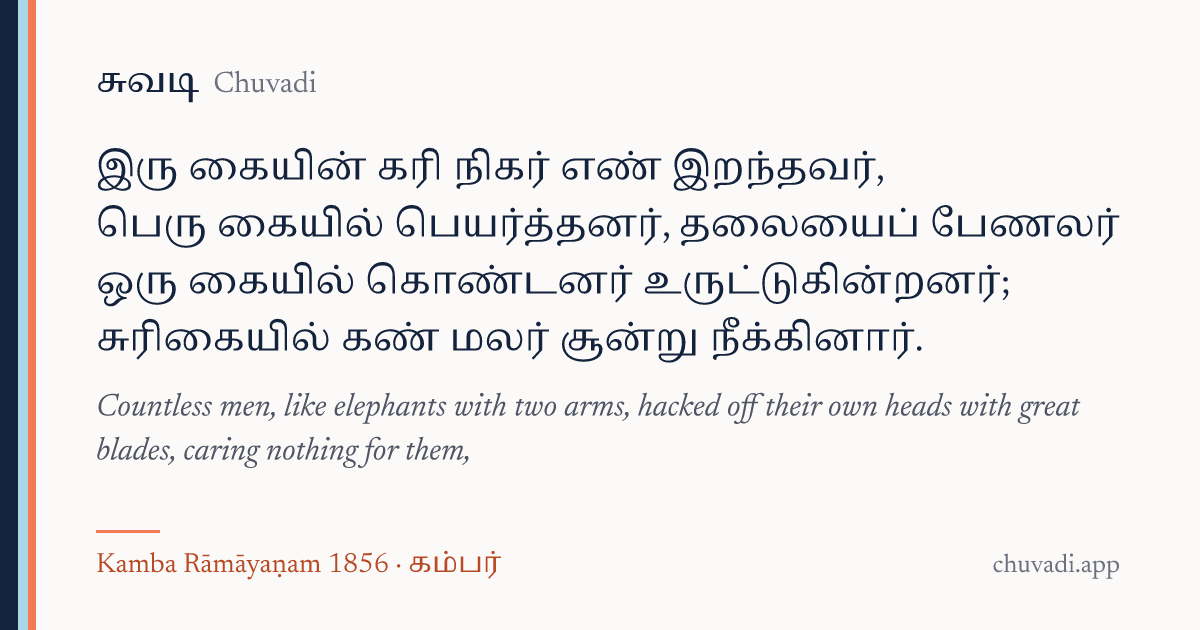
- Countless men, like elephants with two arms,
- hacked off their own heads with great blades, caring nothing for them,
- took them up in one hand and rolled them on the ground;
- others gouged out their flower-like eyes with daggers.
What the poem says
Having described the women, the poet turns to the warriors of the city, men compared to elephants with two arms, a phrase used for Irāmaṉ himself in an earlier book. In their despair some cut off their own heads and roll them along the ground, and some dig out their eyes with daggers rather than watch Irāmaṉ leave. The violence is meant as hyperbole for unbearable grief.