



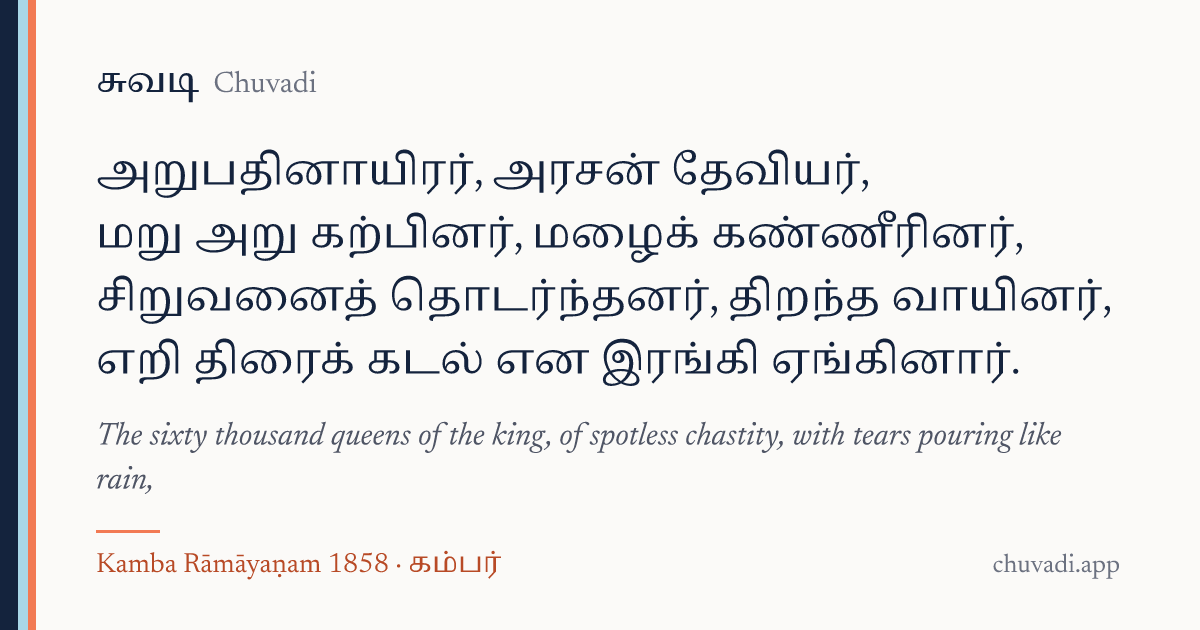
கம்பராமாயணம் 1858 · அயோத்தியா 4.176
பாடல் · The poem
Tap a word to see its gloss in the commentary and where else it occurs.
பொருள் · Meaning in Tamil
மறு அறு கற்பினர் - குற்றமற்ற கற்பினை உடைய; அறுபதினாயிரர் அரசன் தேவியர் - அறுபதினாயிரம் பேராகிய தசரதனுடைய மனைவியர்; மழைக் கண் நீரினர் - மழை போன்ற கண்ணீரை உடையவராய்; சிறுவனைத் தொடர்ந்தனர் - இராமனைப் பின்தொடர்ந்து; திறந்த வாயினர் - வாய் திறந்து; எறி திரைக்கடல் என இரங்கி ஏங்கினார் - அலை வீசும் கடல் போல அழுது வருந்தினார்கள். இவர் உரிமை மகளிர் ஆவர் பரசுராமனிடம் இருந்து தன்னைக் காத்துக் கொள்ள ஒவ்வொரு ஆண்டும் மணக் கோலத்துடன் இருக்க வேண்டிய; தயரதன் அறுபதினாயிரம் மகளிரை அறுபதினாயிரம் ஆண்டுகளில் மணந்தான் என்று ஒரு கதை உண்டு. இதுவே வான்மீகத்தில் முந்நூற்றைம்பதின்மர் எனப் பேசப்பெற்றுள்ளது. மூவரே பட்டத்தரசியர் ஆவர்.
ஆங்கிலம் · English translationAI
Translation
- The sixty thousand queens of the king,
- of spotless chastity, with tears pouring like rain,
- followed the young prince with open mouths, wailing,
- and lamented like the sea with its crashing waves.
What the poem says
Tacarataṉ's sixty thousand wives, weeping like rain, follow Irāmaṉ and wail like the roaring sea. A story says that to protect himself from Paracurāmaṉ the king had to be in wedding dress every year, and so he married one woman each year over sixty thousand years. Vālmīki's version speaks of three hundred and fifty wives. Only three, Kōcalai, Kaikēyi and Cumittirai, are chief queens.