



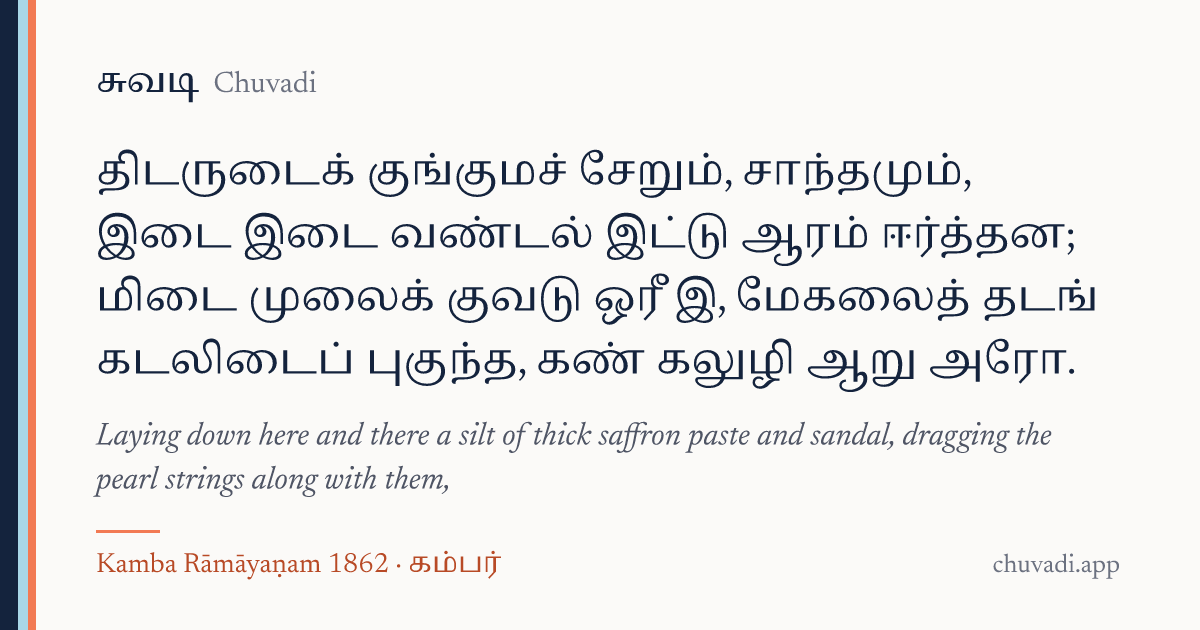
கம்பராமாயணம் 1862 · அயோத்தியா 4.180
பாடல் · The poem
Tap a word to see its gloss in the commentary and where else it occurs.
பொருள் · Meaning in Tamil
கண் கலுழி ஆறு - (அம் மகளிரது) கண்ணீர்ப் பெருக்காகிய கலங்கிய ஆற்றுவெள்ளம்; திடர் உடைக் குங்குமச் சேறும், சாந்தமும் இடை இடை வண்டல் இட்டு - திட்டுத் திட்டாகப் பொருந்திய (மார்பகத்தில் பூசப்பெற்ற) குங்குமச் சேறும் செஞ்சாந்தமும் ஆகியவற்றை நடுநடுவே சேற்றுக் குழம்பாகக் கொண்டு; ஆரம் ஈர்த்தன - (அவர்கள் மார்பில் அணிந்துள்ள) முத்துமாலையை இழுத்துக்கொண்டு; மிடைமுலைக் குவடு ஒரீஇ - நெருங்கியுள்ள முலைச் சிகரங்களிலிருந்து கீழ் இறங்கி; மேகலைத் தடங் கடலிடைப் புகுந்த - மேகலையாகிய அகன்ற கடலுக்குள் நுழைந்து பாய்ந்தன.
கலுழி - கலங்கிய நீர். ஆரம் - ஆற்றை நோக்கின் சந்தனமாம். மகளிரை நோக்க முத்தாரமாம். இங்கு முத்துவடம் சிலேடையாக அமைந்தது. மற்றவை உருவகம்.
ஆங்கிலம் · English translationAI
Translation
- Laying down here and there a silt of thick saffron paste
- and sandal, dragging the pearl strings along with them,
- leaving the peaks of their close-set breasts, into the wide sea of their girdles
- poured the muddy rivers flowing from their eyes.
What the poem says
The women's tears are pictured as muddy rivers. Starting from the mountain peaks of their breasts, they carry down the saffron and sandal paste smeared there as silt and drag the pearl necklaces along. Then they pour into the broad sea of the jewelled girdle at the waist. The word for the pearl strings also means sandalwood, so the river sweeps along both, a deliberate double meaning.