



கம்பராமாயணம் 1865 · அயோத்தியா 4.183
பாடல் · The poem
Tap a word to see its gloss in the commentary and where else it occurs.
பொருள் · Meaning in Tamil
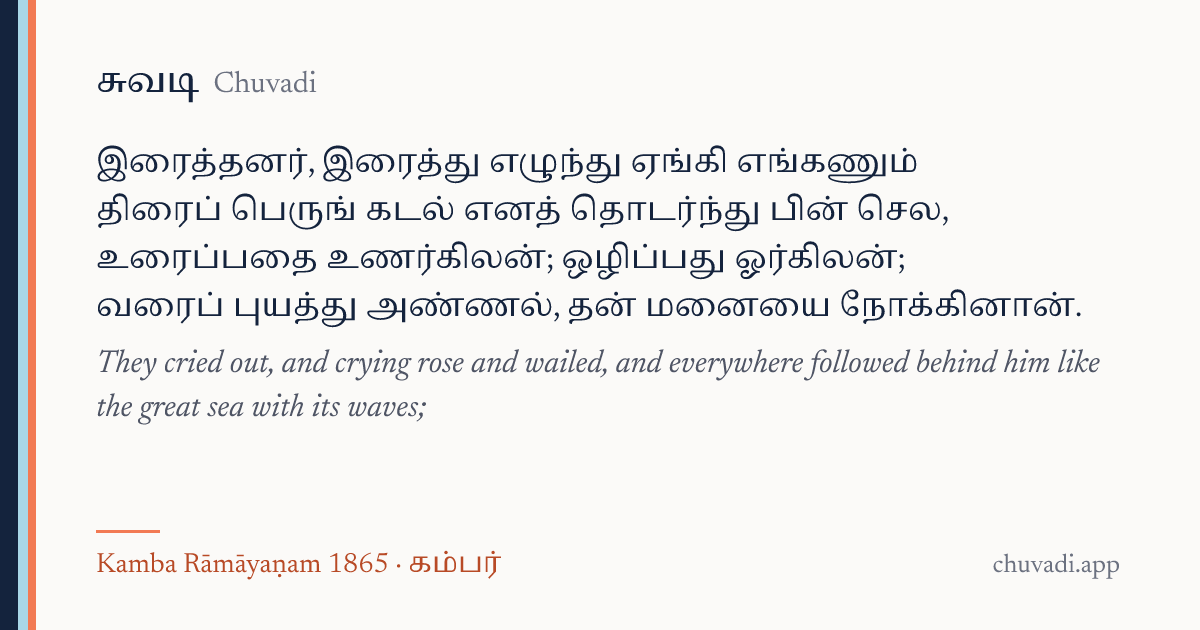
(அனைவரும்) இரைத்தனர் - அழுதனர்; இரைத்து எழுந்து ஏங்கி - அழுது மெல்ல எழுந்து புலம்பி; எங்கணும் - எவ்விடத்தும்; திரைப் பெருங்கடல் என - அலை வீசுகின்ற பெருங்கடல் (தொடர்வது) போல; தொடர்ந்து பின் செல - (இராமனைப்) பின்பற்றித் தொடர்ந்து செல்ல; வரைப்புயத்து அண்ணல் - மலைபோன்ற தோளை உடைய தலைவனாகிய இராமன்; உரைப்பதை உணர்கிலன் - (அவர்களுக்கு) ஆறுதல் சொல்வதை அறியாமலும்; ஒழிப்பது ஓர்கிலன் - (அவர்களை) வராமல் தடுப்பதுபற்றி ஆராயாமலும்; தன் மனையை நோக்கினான் - தன் இல்லத்தை நோக்கிச் சென்றான்.
பின்பற்றி வருவாரைத் தடுத்து நிறுத்தி ஆறுதல் கூறி அகற்ற இயலாமல் இராமன் தன் மனைக்குச் சென்றான் என்பதாம். 'உரைப்பதை' என்பதற்கு அவர்கள் புலம்பிக் கூறுவதை உணராதவனாய் என உரைப்பினும் அமையும்.
ஆங்கிலம் · English translationAI
Translation
- They cried out, and crying rose and wailed, and everywhere
- followed behind him like the great sea with its waves;
- knowing nothing to say to them, unable to think how to turn them back,
- the lord with mountain shoulders set out for his own house.
What the poem says
The weeping crowd surges after Irāmaṉ like the waves of the sea. He finds no words of comfort to give them and no way to stop them following, so he simply heads for his own palace. The line may also mean that he could not take in what they were crying out to him.