



கம்பராமாயணம் 1866 · அயோத்தியா 4.184
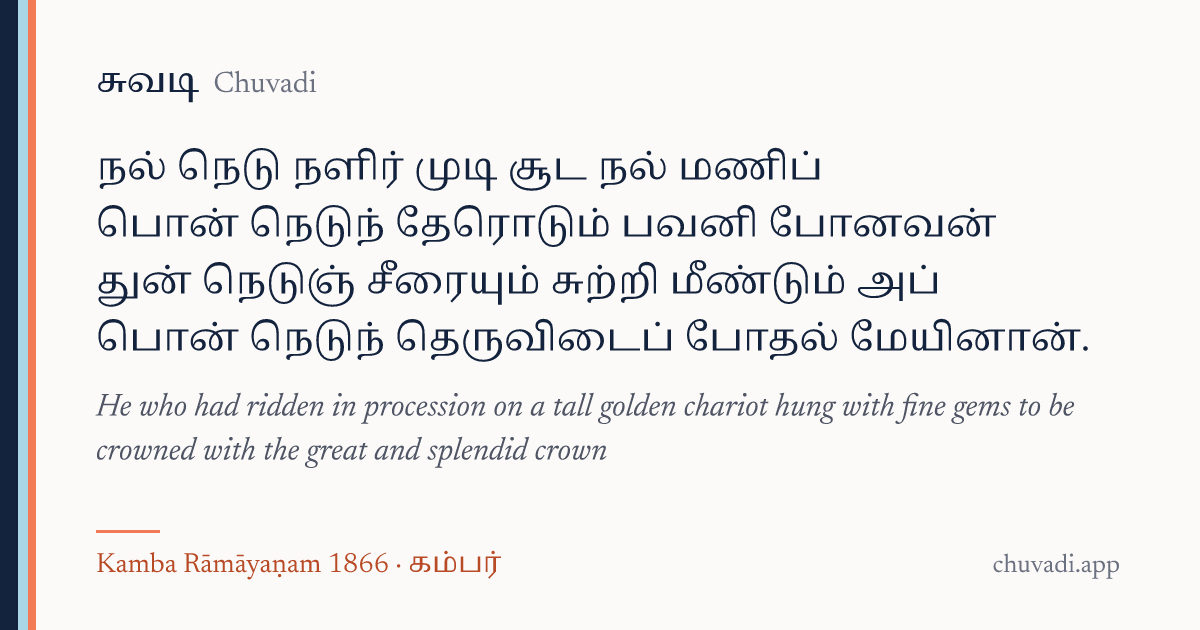
பாடல் · The poem
Tap a word to see its gloss in the commentary and where else it occurs.
பொருள் · Meaning in Tamil
நல் நெடு நளிர் முடி சூட - சிறந்த பெரிய பெருமை உடைய மகுடத்தைச் சூடிக்கொள்ள; நல் மணிப் பொன் நெடுந் தேரொடும் பவனி போனவன் - நல்ல மணிகள் கட்டப்பெற்ற பொன்னால் ஆகிய பெரிய தேரின்மீது உலாச் சென்ற இராமன்; மீண்டும் - திரும்பவும்; அப் பொன் நெடுந் தெருவிடை - பொலிவுபெற்ற அதே பெருவீதியில்; துன் நெடுஞ் சீரையும் சுற்றி - நெருங்கிய பெரிய மரவுரியைச் சுற்றிக் கொண்டு; போதல் மேயினான் - போவதைப் பொருந்தினான்.
தேரொடு சென்றவன், சீரையொடு கொண்டு வந்தான் என்பது ஒரு சொல் நயம். இரண்டையும் இணைத்துக் காட்டி அவலத்தை மேலும் அதிகமாக்கினார் கம்பர். “கீழ்த்திசை வாயில் கணவனொடு புகுந்தேன், மேற்றிசை வாயில் வறியேன் பெயர்க்கு' (சிலப். 23:182 - 3) என்ற கண்ணகி நிலையை ஒப்பிடுக.
ஆங்கிலம் · English translationAI
Translation
- He who had ridden in procession on a tall golden chariot hung with fine gems
- to be crowned with the great and splendid crown
- now, wrapped in coarse bark cloth, went again
- along that same broad, golden street.
What the poem says
Only a day before, Irāmaṉ rode through this very street in a jewelled golden chariot on his way to be crowned. Now he walks down the same street dressed in bark cloth. The poet sets the two scenes side by side to deepen the pathos, recalling Kaṇṇaki in the Cilappatikāram, who entered Maturai by the east gate with her husband and left by the west gate alone.