



கம்பராமாயணம் 1867 · அயோத்தியா 4.185
பாடல் · The poem
Tap a word to see its gloss in the commentary and where else it occurs.
பாட வேறுபாடு · Project Madurai reads
பொருள் · Meaning in Tamil
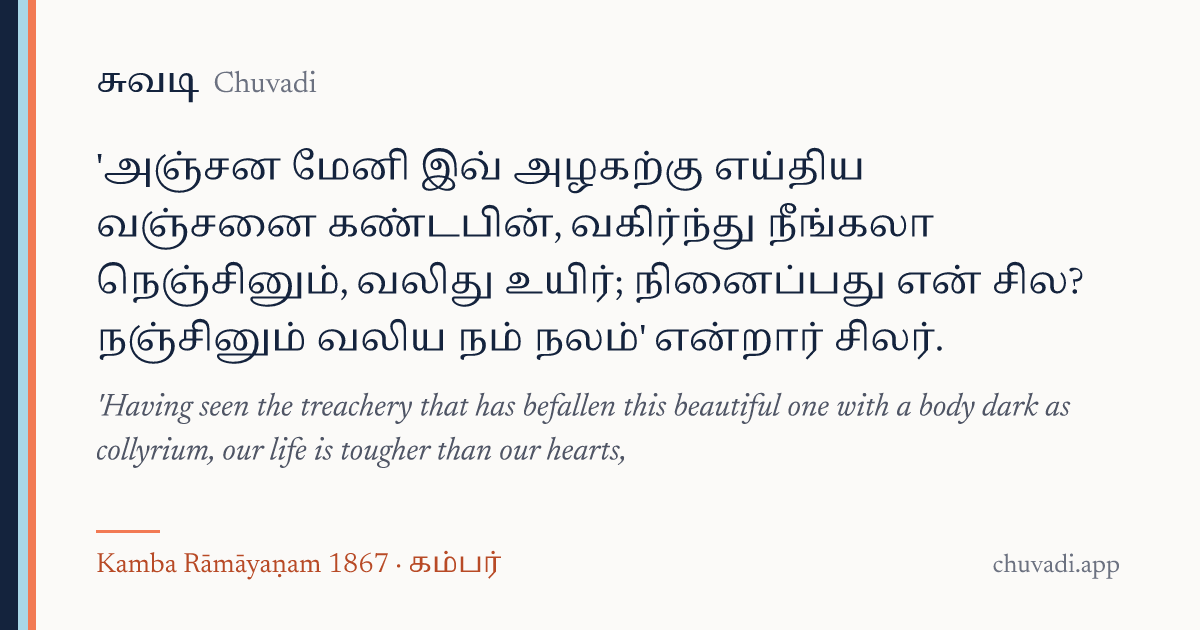
சிலர்; “அஞ்சன மேனி இவ் அழகற்கு எய்திய - மை போன்ற உடம்பினை உடைய இந்த எழிலையுடைய இராமனுக்குப் பொருந்திய; வஞ்சனை - பொல்லாங்கை; கண்டபின் - பார்த்த பிறகும்; வகிர்ந்து நீங்கலா நெஞ்சினும் - பிளவுண்டு போகாத மனத்தைக்காட்டிலும்; உயிர் வலிது - நம் உயிர் வலிமையாக இருக்கிறது; சில நினைப்பது என்? - வேறு சில நினைப்பதனால் பயன் என்ன; நம் நலம் - நமது நன்மை; நஞ்சினும் வலிய” - விடத்தினும் வலியதாயிராநின்றது; ' என்றார்.
இராமனுக்கு நிகழ்ந்த இக் கொடுமை கண்ட பிறகும், நம் நெஞ்சு பிளக்க வில்லை. உயிர் போகவில்லை, நமது நலம் அழகாயிருந்தது என்று தம்மைத்தாமே நொந்துகொள்கின்றனர்.
ஆங்கிலம் · English translationAI
Translation
- 'Having seen the treachery that has befallen this beautiful one with a body dark as collyrium,
- our life is tougher than our hearts,
- which have not split apart and gone; what more is there to think?
- Our fine state is stronger than poison,' said some.
What the poem says
Some onlookers reproach themselves. They have seen the wrong done to the dark, beautiful Irāmaṉ, yet their hearts have not burst and their lives have not ended. Their lives must be tougher than their hearts, and this well-being of theirs is deadlier than poison. The praise is bitter self-mockery.